Trump Announces ‘Iron Gate’ to Increase Pressure on Iran
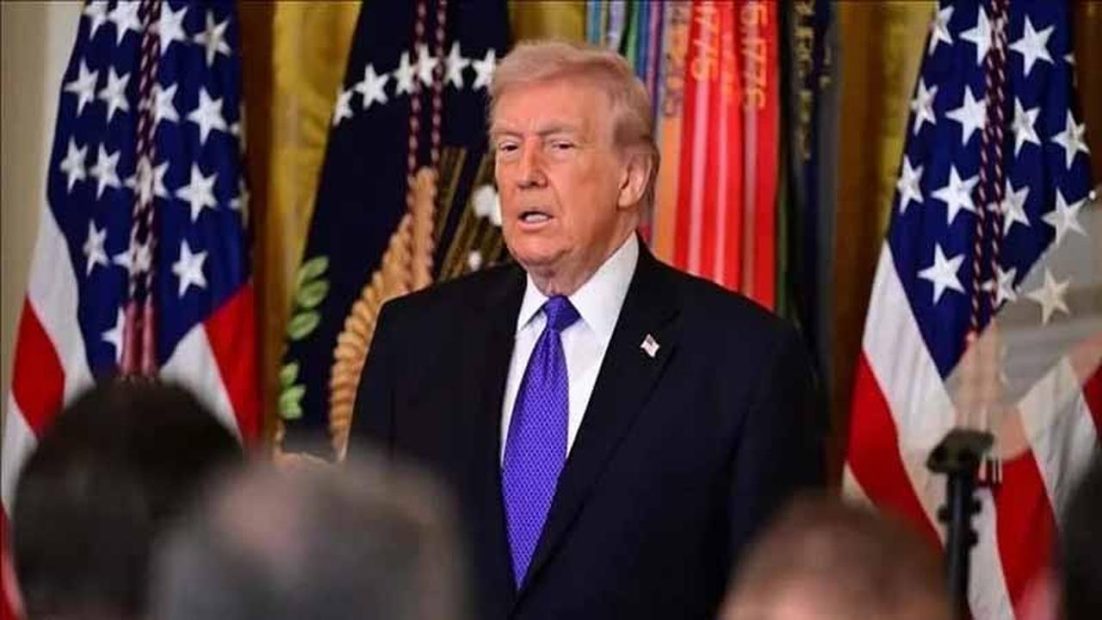
US President Mr. Donald Trump has announced the launch of ‘Task Force Iron Gate’ to further increase pressure on Iran. He claimed that the US naval blockade had severely restricted the movement of goods into and out of Iran. Washington has now taken steps to control routes used to transport Iranian goods and military equipment through land borders and the Caspian Sea. Mr. Trump made the announcement in a post on his social media platform Truth Social on Sunday (November 8).
He said, “Task Force Iron Gate is fully operational in the Islamic Republic of Iran. Combined with the largest naval blockade in history, this initiative has left very little room for goods to enter or leave Iran.”
However, despite announcing the new initiative, Mr. Trump indicated that further military strikes against Iran might not be necessary if diplomatic negotiations make progress. He said the possibility of renewed attacks would be very low if Iran agreed to a “very strong deal” on its nuclear programme and reopening the Strait of Hormuz.
In an interview with CNN, Mr. Trump said renewed military operations should not be necessary if negotiations progressed. However, he warned that the United States had the capability to destroy 38 bridges in Iran within an hour if attacks resumed.
Mr. Trump said, “If necessary, I will do it. But we have already hit them very hard.” He claimed that US strikes had significantly weakened Iran’s military and economic capabilities.
What Is the Task Force Iron Gate?
‘Task Force Iron Gate’ is a new US initiative aimed at preventing the transportation of weapons, military technology and sanctioned goods, as well as illegal financial transactions through Iran’s land routes.
It was established last Saturday (November 7) under the direction of Admiral Brad Cooper, head of the US Central Command (CENTCOM). The task force will operate from Tampa, Florida, with around 20 civilian and military officials.
Its main objective is to prevent the movement of advanced weapons systems, dual-use technology products, sanctioned goods and illicit financial flows through Iran’s land borders and the Caspian Sea. To achieve this, the task force will coordinate activities among various US government agencies.
However, it is not a new military operation or an initiative to deploy troops on the battlefield. Rather, it is a mechanism to coordinate the activities of various US agencies to bring Iran’s alternative supply routes under control.
Pressure on Land Routes Alongside Naval Blockade
‘Iron Gate’ will expand the existing US naval blockade. Under the blockade, ship movements at Iranian ports along the Persian Gulf and Gulf of Oman are being restricted.
According to CENTCOM, Iran has been unable to export more than $25 billion worth of crude oil in recent months due to the naval blockade. However, this figure comes from the US military authorities and could not be independently verified.
While the primary objective of the naval blockade is to restrict Iran’s maritime trade, Washington plans to increase surveillance of land borders and communication routes connected to the Caspian Sea through Iron Gate.
As a result, the United States will seek to restrict the transportation of Iranian military equipment and sanctioned goods through both sea and land routes. Washington aims to put further pressure on Tehran’s efforts to rebuild its military capabilities and sustain its economic activities.
Source: Reuters, CNN