Iran Gives US Two-Day Ultimatum, Warns of Severe Consequences
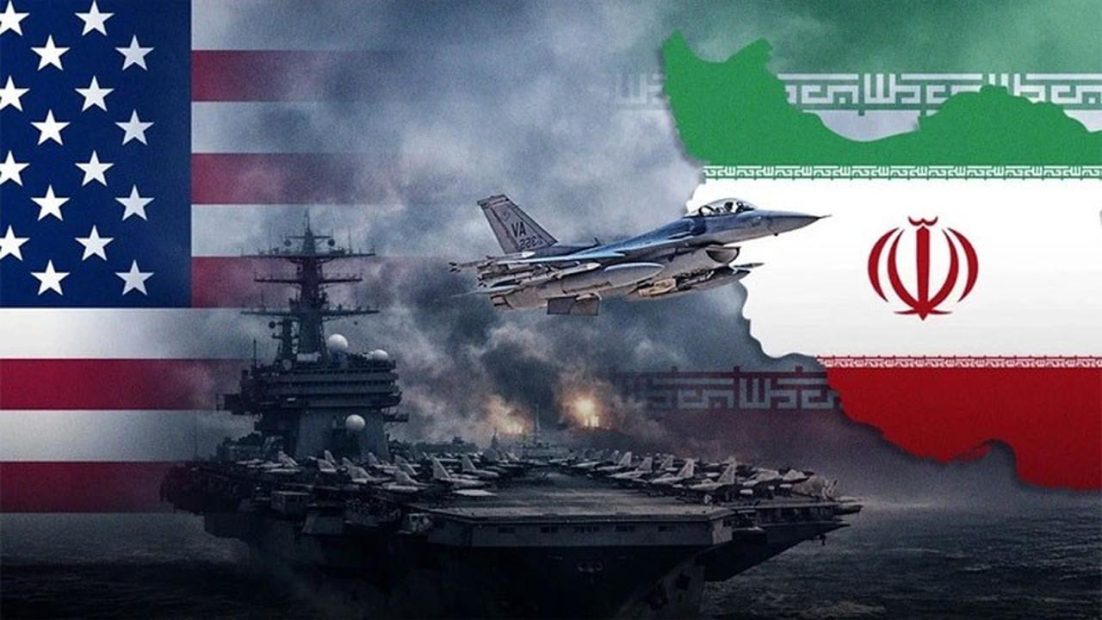
Iran has given the United States just two days to stop the war on all fronts. Iranian Foreign Minister Abbas Araghchi has clearly warned that if Washington fails to accept Tehran’s conditions, US forces will face very serious military consequences.
Following the Republican Party’s poor performance in the recent US midterm special elections, Tehran has increased diplomatic and military pressure on Washington.
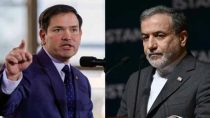
In a post on social media platform X (formerly Twitter) yesterday, Iranian Foreign Minister Abbas Araghchi said American voters had given their verdict through the ballot, and now it was time for the White House to make the right decision.
“Our two-day proposal is still on the table. Meet our conditions, including ending the war on all fronts, and you will see a positive result. But if you choose war, be prepared to witness the power of our alert and battle-ready fighters,” he said.
Meanwhile, Tehran says its proposal to reopen the Strait of Hormuz within two days remains the most reasonable option for restoring security in the Strait and the Persian Gulf.
Iranian Foreign Ministry spokesperson Esmaeil Baghaei made the remarks at a weekly press briefing in Tehran yesterday.
“Iran’s proposal is the most reasonable option currently on the table. By the most reasonable option, we mean a proposal that can create a path to restoring stability in the Strait of Hormuz and the Persian Gulf and help move the overall situation forward,” he said.
Earlier, in early November, Iran presented a brief bilateral proposal following a high-level meeting in Doha.
Under the proposal, the United States would have to lift its blockade on Iranian ports, ease restrictions on oil sales and cancel new sanctions. In return, Tehran said further detailed discussions could take place on various issues, including reopening the Strait of Hormuz.
Allies Pressure US Secretary of State at G7 Meeting to End War
European foreign ministers are putting diplomatic pressure on US Secretary of State Marco Rubio to find a reasonable solution to the Ukraine war and avoid further military tensions with Iran.
A two-day meeting of top diplomats from the Group of Seven (G7) industrialised nations has begun in Paris. At the meeting, European representatives clearly expressed their deep concerns to the US secretary of state over Ukraine and the Middle East.
The meeting includes foreign ministers from the United Kingdom, Canada, France, Germany, Italy, Japan and the United States. It has given European allies an important opportunity to learn directly about Washington’s policies and plans.
Even after President Donald Trump’s Republican Party suffered a defeat in the recent US midterm elections, Washington has not completely ruled out the possibility of military action against Iran.
Meanwhile, during the Paris meeting, US-mediated talks between Russian and Ukrainian representatives are scheduled to take place in Abu Dhabi, the United Arab Emirates, on Tuesday and Wednesday to find a way to end the Ukraine war.
Qatar PM Holds Emergency Meeting with Trump and Vance
Tensions remain high across the Middle East amid fears that war could break out again at any moment.
Qatar is continuing its efforts to mediate between the United States and Iran to promote peace talks and reach a diplomatic agreement.
As part of these efforts, Qatari Prime Minister and Foreign Minister Sheikh Mohammed bin Abdulrahman Al Thani arrived in Washington, DC, on Monday for an emergency meeting with US President Donald Trump and Vice President JD Vance.
According to trusted diplomatic sources, the closed-door meeting in Washington discussed possible ways to reduce the growing crisis in the Middle East and prevent another military conflict.
As a mediator between the United States and Iran, Qatar is continuing to exchange messages between the two sides and trying to prepare a framework for a lasting ceasefire.
Iraq’s Largest Gas Field Hit by Drone Attack
A drone attack has hit the important Khor Mor gas field in Iraq’s Kurdistan region. The attack caused a fire in a liquefied petroleum gas (LPG) storage tank.
Workers were evacuated for safety, and production at the gas field was suspended.
The attack took place on Sunday (November 8) at the gas field in Sulaymaniyah province.
Two sources from the Kurdistan Region’s Ministry of Electricity said the drone struck a storage tank at the gas field, causing a fire. Security sources also reported seeing smoke rising from the site.
Following the attack, workers were moved to a safe place.
Iraqi Prime Minister and Commander-in-Chief of the Armed Forces Ali al-Zaidi said no casualties had been reported so far.
Trump Wants to Meet Xi and Putin Over Iran Crisis
US President Donald Trump wants to discuss efforts to end the ongoing war with Iran with Chinese President Xi Jinping and Russian President Vladimir Putin.
He hopes to meet both leaders on the sidelines of the Asia-Pacific Economic Cooperation (APEC) summit, scheduled to take place in Shenzhen, China, on November 18 and 19.
Mr. Trump expressed this interest while speaking to reporters in West Palm Beach, Florida, on Sunday (November 8).
He said meetings with Putin and Xi Jinping would be very interesting. The discussions would cover several issues, including nuclear disarmament. They would also discuss efforts to end the war with Iran.
11 Tankers Attacked in Hormuz in 10 Days
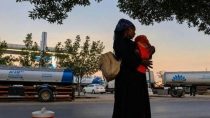
Iran’s navy has attacked at least 11 oil and fuel tankers in the Strait of Hormuz, one of the world’s most important shipping routes, over the past 10 days.
According to Iran’s Tasnim News Agency, the navy disabled the navigation systems of the affected ships, making them inactive or unable to operate.
Iran’s Islamic Revolutionary Guard Corps (IRGC) said several commercial ships caught fire one after another in the strategically important waterway.
It also claimed that three tankers suffered powerful explosions and serious fires on Sunday alone.
Oil Prices Fall Further in Global Markets
Crude oil prices have fallen sharply in the international market.
News of a possible agreement between Iran and the United States to temporarily reopen the strategically important Strait of Hormuz in the Persian Gulf caused global oil prices to fall by nearly 4 percent yesterday, bringing the price to $94 per barrel.
Market data showed that Brent crude, the US benchmark, fell 3.6 percent to $94 per barrel yesterday.
Meanwhile, international benchmark WTI crude fell 3 percent to $88.09 per barrel. However, Murban crude in the Asian market rose 3.4 percent to $99.17 per barrel.
Brent crude prices fell by a total of 16 percent last week. This was the biggest weekly fall in the international oil market since the beginning of the coronavirus pandemic.
Sources: Al Jazeera, Reuters, AFP and Tasnim.