Over 400 Ashrayan Families in Gazaria Face Hardship as Homes Fall into Disrepair
More than 400 residents of Ashrayan housing in Gazaria upazila of Munshiganj live in extreme hardship. There are 100 families at Pradhaner Char in Gazaria Union and 100 families at Sholoani in Imampur Union. Kalipur has 120 families, Tengarchar in Tengarchar Union has 70 families, and the Ashrayan project in Mirpur village has 100 families. Their homes have not been repaired, and they face a shortage of drinking water. They also suffer from poor toilets, no medical care and little help from society or the government.
The Ashrayan project at Pradhaner Char in Gazaria Union was built in 2013. Ms. Boro Shefali, a resident, said only 20 to 30 families live there, and the other families stay elsewhere. A visit to the area showed that many rooms stand empty with locks on the doors. Some residents said the owners of these rooms live far away. They plant fruit trees and come back in the fruit season to collect the fruit. Residents said they could live well with their children if the locked rooms were given to them.
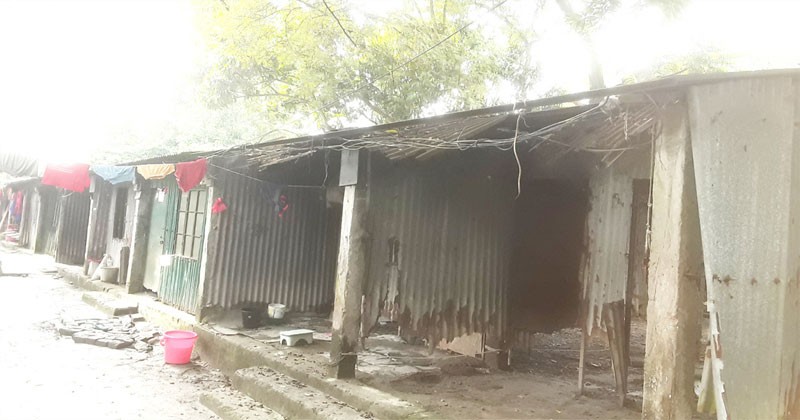
The tin roof of every house is rusted and broken, and it can no longer be used. When it rains, water drips inside, and families cannot sleep. Mr. Anwar Hossain, president of the Ashrayan project, said every house is in a weak state and it is very hard to live in them. He said the government has given no help for repairs. He added that he does not know when Allah will free them from this suffering.
The project also has a shortage of drinking water. Ten tube wells were set up to supply water, but none of them is fit for use. Yellow and dirty water comes out when people press the handle. The residents joined together and set up one deep tube well at their own cost. Mr. Babul said ten hand tube wells were set up for 50 houses, but only one works. He said the water causes sores on the hands and feet, so residents installed one submersible pump with their own money.
The Sholoani Ashrayan project was built in 2006. In 2007, 100 helpless families without land from Imampur Union moved into the housing. Every room has a tin shed roof. More than 17 years have passed, and the tin roofs and walls have fallen into bad condition. When it rains, water pours down and wets the furniture. Residents cover the roofs with polythene and the walls with old cloth and sacks to pass their days.
During storms and heavy rain, the residents take shelter in the homes of people nearby. Mr. Habib Ullah of Sholoani village said the residents are in great pain. He said he gives them a place in his house during storms. Ms. Nargis, Ms. Khaleda Akter and Ms. Jibon Nesa said rain water drips into their broken homes and wets their clothes and everything else. They said it is very hard to sleep at night. The tin roofs of many rooms have fallen off completely, and the rooms stand open to the sky.
The Sholoani project also lacks drinking water. Ten ordinary tube wells were set up when the project was built, but Mr. Ali Hossain, general secretary of the project’s cooperative society, said none of them can be used now. Two years ago, the residents set up four tube wells with Tk 28,000 from the upazila. Many families also install cheap tube wells on their own to meet their need for drinking water. The old toilets are patched up and used somehow.
At the Char Kalipur Beru Mollakandi Ashrayan project, the tin roofs of the houses are broken. Living there is very hard, and the toilets are in a very bad state. The residents get no medical care. Mr. Saidur Rahman, president of the project, said nurses from the hospital only go as far as the next village. He said no family planning worker has ever come to the project. Every family lives in hardship.
The Ashrayan project at Tengarchar village was completed in 2011. In 2013, families from different places of the union moved into the housing. Now 44 families live there, and the rest stay elsewhere. Government inspectors have put notices on many rooms where nobody lives. Mr. Sharif, Mr. Noman, Ms. Asia and Ms. Hawa Begum, who live there, said five families share one room. Mr. Ishaq Ali, a former Union Parishad chairman, said he has always helped them.
The Mirpur housing project was built in 2013. Mr. Salauddin, secretary of the project, said 70 families now live there permanently. The tin roofs and walls have all become worn out, and nobody has repaired the houses. Ms. Nilufa said they hold on somehow. She said that when journalists come, residents think there is good news for their homes, but nothing happens later. She said Allah has not changed their fate.
In 2022, the Bureau of Non Formal Education set up a learning centre here for the education of children. It was a sub component of the Out of School Children Education Programme, under the Ministry of Primary and Mass Education. The centre is now closed. Mr. Amir Hossain, president of the housing cooperative society, said residents have sent written applications to the Upazila Nirbahi Officer and the Assistant Commissioner (Land) many times to report their poor condition. He said officials investigate and leave, but no work is done.
The Upazila Project Implementation Officer said he knows the houses are damaged. He said no process to repair them has started yet. He said repairs may be possible if the government takes a new initiative for these projects.