157-Year-Old Kumarkhali Municipality’s Waste Management Failure: Garbage Piles Up, Increasing River and Environmental Pollution, Health Risks
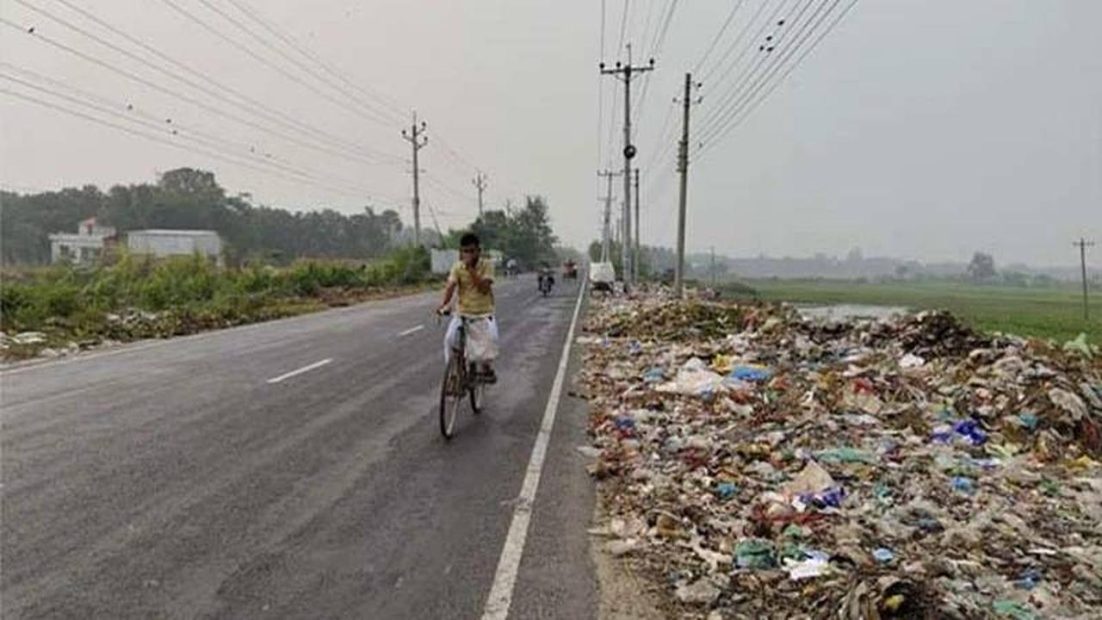
Despite intensified cleanliness drives across the country to prevent dengue and other diseases, a contrasting picture prevails in Kumarkhali Municipality, a Class-I municipality in Kushtia. The 157-year-old municipality still has no designated dumping station. As a result, household, commercial and restaurant waste is being dumped indiscriminately. Even the municipal authorities themselves are dumping collected waste on both sides of the Kushtia-Rajbari regional highway near the Kumarkhali Fire Service Station.
Kumarkhali Municipality was established in April 1869 on the banks of the Gorai River and attained Class-I status in 1996. The municipality, covering 11 square miles, currently has a population of around 60,000. Despite more than a century and a half of existence, no modern waste management system has been developed. Residents are increasingly frustrated as they continue to pay municipal taxes but receive none of the basic civic services they are entitled to.
A visit to different areas of the municipality, including Kazipara, the Kalibari temple area, the electricity office area, Kundupara, Tah Bazar and Thanamor, on Wednesday morning revealed piles of rotting garbage along roadsides. The waste has increased the presence of mosquitoes and flies while spreading a foul smell throughout the surrounding areas. People of all ages are being forced to use these roads despite the health risks.
Rakib Hossain, a resident of Ward No. 1, expressed frustration, saying, “This is a Class-I municipality only on paper. Despite paying taxes regularly, we have not even got a dumping station. People here are facing serious health risks.”
Rupali Khatun, a homemaker living near the rural electricity office, complained that people from nearby areas dump foul-smelling waste in front of her house every morning, but municipal cleaning workers are not seen for seven days at a time. The waste is spreading diseases through mosquitoes and flies, leaving families with young children in particular distress.
Businessman Robiul Islam of Kundupara said the municipal authorities had installed plastic drums at different intersections a few years ago for waste disposal. However, the drums were not emptied in time even after becoming full. Frustrated by the foul smell, local residents eventually broke them. With no alternative arrangements in place, people are now dumping waste directly on the roads.
A visit to the Kushtia-Rajbari regional highway near the Kumarkhali Fire Service Station found municipal vehicles dumping waste on both sides of the road. Passengers and pedestrians are forced to cover their noses and mouths while passing through the area because of the unbearable stench.
Van driver Monwar Hossain said it had become difficult to travel along the road as municipal authorities and local businesses had been dumping waste on both sides of the highway for a long time.
Shampa Khatun, another resident of the area, alleged, “Municipal workers themselves dump waste here. Even after repeatedly asking them not to, they do not listen. We cannot stay at home because of the stench. Mosquitoes and flies sit on our food, and everyone in the family is falling ill.”
Kumarkhali Press Club President KM R Shahin described the absence of a waste management system in a Class-I municipality as highly unfortunate. He said, “Waste is being dumped along the roadside and then set on fire at the same spot. This is increasing air pollution and health risks for people several times over. A dumping station needs to be built urgently in the public interest.”
Upazila Health and Family Planning Officer Suparna Latif Ahmed expressed concern that indiscriminate waste disposal could increase the prevalence of dengue, malaria, worm infections and various waterborne and airborne diseases. She said waste should not be dumped in open spaces but collected at designated locations and properly disposed of or processed to maintain environmental balance and reduce the spread of diseases.
Assistant Engineer of Kumarkhali Municipality MM Samruzaman said the municipality had developed haphazardly during the British period. “As the population has grown, unplanned settlements have expanded. There is not enough khas land or vacant space within the municipality to build a dumping station, which is why it has not been possible so far. However, we are working on a cleanliness campaign calendar to keep the town clean,” he said.
Kumarkhali Upazila Nirbahi Officer (UNO) and municipal administrator Md Raisul Islam acknowledged that the absence of a designated waste management system was increasing public suffering and health risks. He said a seminar on the issue had recently been held at the ministry.
“Preparations for a project to build a modern dumping station for Kumarkhali Municipality under the priority project framework have already begun. We hope the problem will be permanently resolved very soon,” he said.