Trump, Xi and Putin Agree to Boost Oil Supply in ‘Peace Declaration’
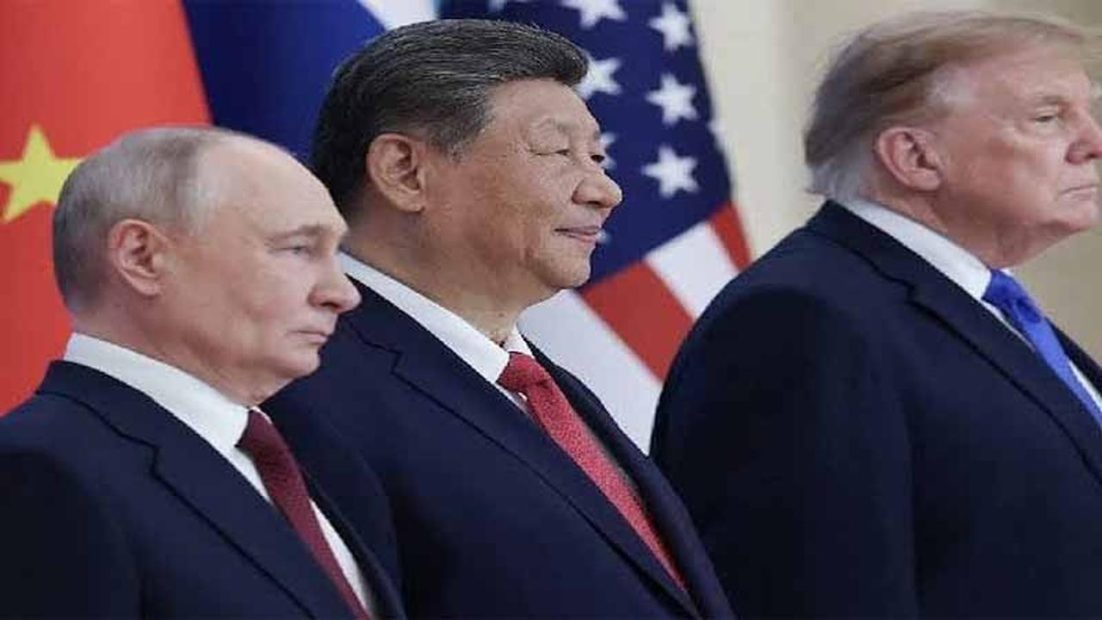
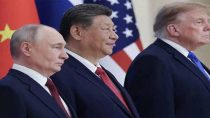
US President Mr. Donald Trump, Chinese President Mr. Xi Jinping and Russian President Mr. Vladimir Putin have agreed to increase the production and supply of refined energy products worldwide, reform the United Nations and continue dialogue to reduce nuclear risks. They made the commitments in a four-point joint declaration following an unprecedented trilateral meeting in Shenzhen, China.
The meeting was held on Thursday (November 19) on the sidelines of the Asia-Pacific Economic Cooperation (APEC) summit. State media in the three countries described the declaration issued after the first-ever trilateral meeting between the leaders of China, Russia and the United States as a “peace declaration”.
The joint declaration said the three countries, as permanent members of the UN Security Council, would work towards UN reform to make the organisation more effective in addressing global challenges. They also announced plans to increase the production and supply of refined petroleum products for the benefit of all countries. They reaffirmed the importance of ensuring uninterrupted energy flows.
Another key issue addressed in the declaration was the International Criminal Court (ICC). It emphasised the importance of state consent and the principle of immunity for state officials. The three leaders also agreed that the ICC and similar institutions should not abuse their jurisdiction. However, no specific plan for reforming the court was announced.
They also reaffirmed that a nuclear war can never be won and must never be fought. The declaration included a commitment to continue dialogue to reduce nuclear risks and prevent the proliferation of nuclear weapons.
However, observers believe the meeting did not produce any major diplomatic breakthrough. The joint declaration made no mention of the Ukraine war or the US-Israeli war involving Iran. Nor did it announce any new nuclear arms control agreement or a specific timetable for negotiations.
The meeting also raised fresh concerns in global politics. In particular, several European leaders expressed concern that Washington, Moscow and Beijing could reach an understanding on Ukraine’s future while sidelining Ukraine and its allies, despite discussions involving the three powers on Ukraine and European security. Neither Ukraine nor European representatives were present at the meeting.
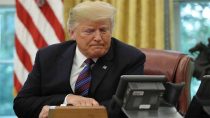
Before the trilateral meeting, Mr. Trump held separate talks with Mr. Putin and Mr. Xi Jinping. During his meeting with the Russian president, Mr. Trump referred to him as “my friend”. Their last in-person meeting was held in Anchorage, Alaska, in August 2025. Since then, several initiatives have been taken to end the Ukraine war, but Moscow and Kyiv have yet to reach an agreement.
Mr. Putin is believed to have gained an opportunity to present himself as an influential player on the global stage at the Shenzhen summit. Despite Western criticism of Russia’s military campaign in Ukraine and efforts to isolate Moscow, he sat at the same table with the leaders of China and the United States.
At a press conference following the meeting, Mr. Putin said he hoped to establish “mutual understanding” between Moscow and Washington. His remarks suggested that Mr. Trump was genuinely interested in resolving conflicts, including the war in Ukraine, and was also willing to improve bilateral relations between Russia and the United States.
Chinese state media described the separate meeting between Mr. Xi Jinping and Mr. Trump as “positive and constructive”. During the meeting, Mr. Xi said the US president should “do the right thing” on Taiwan to avoid a major deterioration in relations. China claims Taiwan as part of its territory, while the island is self-governed and operates under its own democratic government.
Meanwhile, as the three leaders met in Shenzhen, European leaders gathered in Berlin, the German capital, for a meeting of the “Coalition of the Willing”. Around 40 leaders were expected to attend to discuss support for Ukraine and post-war security guarantees.
Reacting to Mr. Trump’s friendly interaction with Mr. Putin in Shenzhen, Polish Prime Minister Mr. Donald Tusk wrote on social media, “God, protect us from friends like these.”
German Foreign Minister Mr. Johann Wadephul said the Berlin meeting would send a strong message to Moscow that Western countries take any peace negotiations seriously. Members of the coalition formed at the initiative of the UK and France are also discussing plans for post-war security guarantees to ensure Ukraine’s security.
Sources: The Telegraph, AFP