Netanyahu Pushes for Immediate Strike on Iran, Trump Resists Rushing
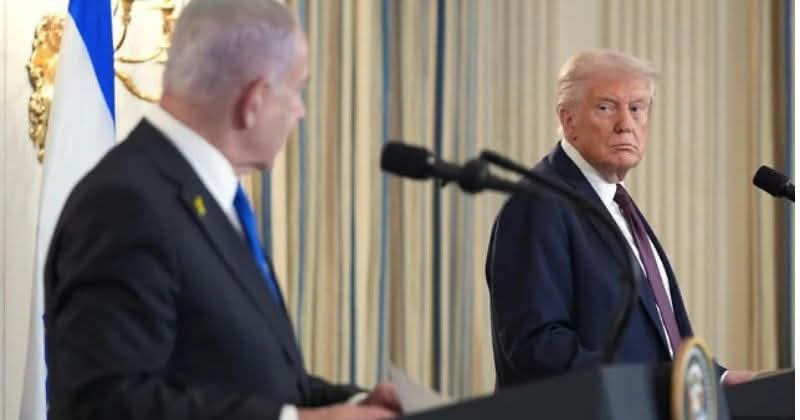
Israeli PM Benjamin Netanyahu has declared in recent meetings with senior ministers and security officials that launching a renewed military campaign against Iran has become inevitable, according to Israeli media reports. Mr. Netanyahu is actively lobbying U.S. President Donald Trump to back a multi-day war. At the same time, Israel’s Channel 13 cited an unnamed senior military official as saying a joint, approved plan between the Israel Defense Forces (IDF) and U.S. Central Command (CENTCOM) is already finalized. Both nations are currently awaiting President Trump’s final authorization. However, Israeli officials note that Tel Aviv has repeatedly completed military preparations over recent weeks only for Trump to pull back from planned strikes.
Despite Tel Aviv’s urgency, President Trump has publicly maintained a cautious posture and, alongside his advisors, expressed skepticism. In interviews with Axios and Channel 12 on Thursday, as well as Fox News on Wednesday, Mr. Trump stated, ‘I’m not rushing to make any decision on Iran. We’ll see what happens after the new year begins.’ While Axios noted that Mr. Trump used similar phrasing just one day before the late-February strikes on Iran despite having already decided to attack, a U.S. official close to the president told Channel 12 that Washington views Netanyahu’s push for war as a political tactic to remain in power after losing his parliamentary majority in the October 27 election.
To weigh the potential fallout of a renewed conflict, Mr. Trump has instructed the Pentagon and intelligence agencies to assess Tehran’s likely retaliation under CENTCOM’s operational plan, Axios said. The White House is specifically examining whether a military campaign can be executed without triggering devastating Iranian attacks on Gulf energy infrastructure. However, two sources familiar with the matter indicated that Mr. Trump grew somewhat more receptive to military action following a Washington visit last week by Mossad chief Roman Goffman, who presented intelligence on Iran’s nuclear progress and alleged chemical and biological weapon development, even as U.S. and Israeli officials disagree on the chemical weapons assessment.
High-level military coordination has intensified alongside these intelligence briefings, though internal divisions within Israel’s leadership have also surfaced. On Wednesday, CENTCOM commander Admiral Brad Cooper met with IDF Chief of Staff Lieutenant General Eyal Zamir and Mossad chief Goffman under strict secrecy protocols before traveling to Saudi Arabia for talks with Gulf officials, Channel 12 reported. Notably, reports indicate that Mr. Zamir is the sole top Israeli security official opposing an immediate resumption of strikes. In contrast, Mr. Goffman, a Netanyahu loyalist appointed in June, has heavily lobbied Washington and was reportedly instructed by Netanyahu to prepare covert operations without informing Zamir or the cabinet.
Meanwhile, Israeli diplomats have continued to publicly frame the confrontation in existential terms to build American support for decisive action. Speaking in an interview with Newsmax on Thursday, Israel’s ambassador to the United States, Yechiel Leiter, asserted that American troops deployed across the Middle East will only be able to return home to their families once Iran is defeated. Comparing the Islamic Republic to the former Soviet Union and branding it an evil empire, Mr. Leiter argued that toppling Tehran’s current leadership would simultaneously dismantle regional proxy and Islamist networks, including the Houthis, Hamas, Hezbollah, and the Muslim Brotherhood.
As opposition parties in Israel work to form a new coalition government following the October election, the region remains suspended between diplomatic hesitation and imminent military escalation. While an Israeli official told Channel 12 that the likelihood of a joint campaign is steadily rising, Washington’s reluctance to risk broader regional instability continues to delay a final decision. Ultimately, the trajectory of the conflict hinges on whether President Trump prioritizes intelligence warnings regarding Tehran’s weapons programs or maintains his stated preference to defer any major military commitment until after the new year.
Source: The Times of Israel.