Law enforcement on the highway in Kaliakair; factory production continues
Normalcy has completely returned to the Dhaka-Tangail highway and the industrial belt of Kaliakair in Gazipur on Saturday, November 21, following days of panic, rumors, and lockdown calls. No incidents of brick-batting, picketing, road blockades, vandalism, or arson were reported anywhere along the busy transit corridor and driven by the collective resistance of peace-loving residents alongside the unity of workers, factory owners, and the local administration, daily life and commercial activities resumed without disruption. Vehicles including buses, trucks, covered vans, auto-rickshaws, and motorcycles plied smoothly through key intersections such as Chandra, Mouchak, Safipur, and the Kaliakair bus stand. At the same time, local shops opened their doors to regular customer footfall.
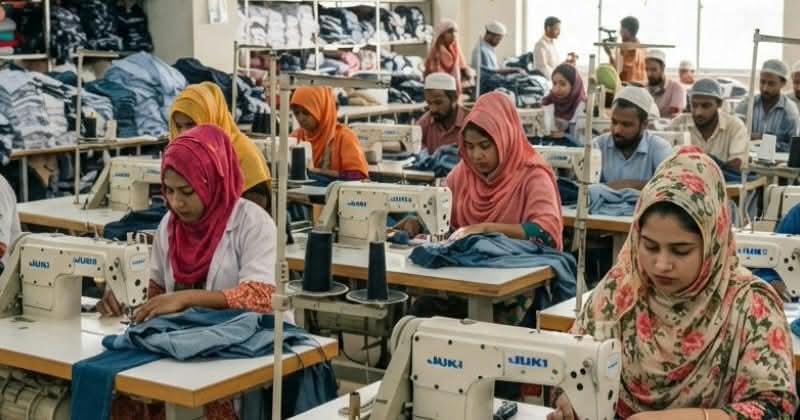
Spontaneous participation of garment workers defined the morning across all industrial zones in the upazila, with factories operating at full capacity and achieving 100 percent attendance. Rejecting calls for street protests, workers entered their workplaces in groups from early morning to protect their livelihoods. Expressing relief, a garment worker stated, ‘We want to survive by working. We were living in fear for the past few days. Today, we came to work peacefully without any trouble.’ A female worker echoed this sentiment, saying, ‘We are poor people. Our families won’t survive if we don’t work. We don’t want unrest; we want work.’ Another worker added that agitators failed to mislead them, noting that their true benefit lies solely in working rather than vandalism.
Factory authorities and local business owners welcomed the peaceful environment and expressed strong commitment to maintaining industrial harmony through constructive dialogue. Confirming smooth operations inside the plants, a factory official remarked, ‘We have 100 percent worker attendance at our factory today. Production is going on in full swing without any issues. We are resolving everything through discussions with the workers.’ Similarly, a factory owner assured that management is eager to address legitimate worker demands through mutual understanding. Across markets and roads, ordinary citizens also expressed satisfaction, with a local businessman saying, ‘We want peace; we want to do business,’ while a bus driver noted he was finally driving without fear on clear roads.
Stringent security measures implemented by law enforcement agencies played a crucial role in preventing any untoward incidents across the region. Members of the local police, Industrial Police, Border Guard Bangladesh (BGB), and Ansar maintained continuous patrols. They set up checkpoints at key locations, including Chandra, Mouchak, Safipur, Kaliakair bus stand, Palli Bidyut, and Sutrapur. Officials from the Kaliakair police station confirmed that forces remain on maximum alert to uphold law and order throughout the upazila. Authorities issued a stern warning that strict legal action will be taken immediately against anyone attempting to incite anarchy, vandalize industrial establishments, set vehicles ablaze, or obstruct traffic on the highway.
Residents attributed the rapid restoration of stability to coordinated political, social, and administrative leadership in the area. Gazipur-1 Member of Parliament and labor leader Humayun Kabir Khan, working alongside local labor leaders, actively counseled workers that arson and destruction yield no benefit and emphasized survival through honest labor. At the same time, BNP leaders and activists, along with its associate bodies, remained vigilant on the streets to deter anarchy and stand in solidarity with the workforce. Combined with intensified law enforcement patrols and assurances from factory owners regarding wages and allowances, this unified stance showed that peace and productivity prevailed over unrest in Kaliakair.