Gopalganj’s Alleyways Turn Grim, Residents Besieged in Their Own City
The alleyways of Gopalganj have turned grim. Residents are besieged in their own city. The people of Gopalganj have become accused in this conflict. Despite the rain, this correspondent visited markets in various unions of Muksudpur upazila to assess the situation.
A visit to at least 10 villages in Tungipara upazila revealed that the areas under the respective police stations are now deserted. What was gained from this conflict? Kabir Mia, who runs a shop at Tungipara intersection, told Inqilab, “Rumours spread, and everyone took to the streets. They set fire to the police station and the MP’s house. Everyone became a fighter, everyone became a leader. Now no one stands beside anyone. Everyone has become an accused.”
A similar situation prevails throughout Muksudpur upazila. Amid sweeping operations by law enforcement agencies, men, women, teenagers and children have left their homes. Even relatives in neighbouring areas have no room to accommodate them. Those involved in arson, vandalism and looting are being identified through video footage and live recordings, and special measures are being taken against them.
However, the Inspector General of Police has directly instructed that no innocent person should be harassed in any way, while criminals, regardless of their political affiliation, must not be spared. He delivered this message at Gopalganj Circuit House on Friday (November 20). Search operations, routine raids and surveillance by law enforcement agencies began shortly after evening.
Abdul Aziz of Muksudpur, a banker who lives in Dhaka, said Greater Faridpur comprises five districts: Faridpur, Madaripur, Shariatpur, Rajbari and Gopalganj. Gopalganj is an integral part of Bangladesh and of this region. However, following widespread violence in the district over the past seven days, Gopalganj has become known across the country as a place of arson, destruction and looting. This is not a stigma that will last just one day, but one that could remain for a lifetime.
Ashraful, a grocery shopkeeper in College Para, Muksudpur, said the people, land, nature, education and commerce of this region are all part of the country’s national life. Yet the streets of Gopalganj now present a grim picture of blockades, vandalism and disruption.
“Those who broke into police stations, set fires, looted and attacked police and BGB personnel, who are they? They are people of this country too. Now they must face the consequences. It is easy to act like a leader, but difficult to be responsible. Everything must be done after careful consideration,” he said.
A patient at Muksudpur Hospital, whose home is in Gopinathpur of the same upazila, said road blockades, vandalism at hospitals, locked university gates, insecurity among teachers and the closure of businesses and shops have disrupted everyday life. Even the small tea stalls that once brought life to the area amid daily bustle are now closed. Life seems to have come to a standstill.
He said essential facilities and institutions were among the first to be destroyed. “What was gained? The people of Gopalganj are bearing the losses. This land, this region and these resources belong to the people of Gopalganj. The police stations in Tungipara and Muksudpur were set ablaze, along with several government vehicles. Police officers used those vehicles to rush to protect our lives, property and belongings whenever they received reports of incidents. Today, those police station areas are dark. There is no light, no police. Both police stations are silent and deserted. Muksudpur police station no longer looks like a police station, but like a place in the wilderness. It is pitch dark all around.”
Arman Dhali, a banana seller at Kashiani intersection, was asked how he was doing and how business was going. He sighed and replied, “Not well.”
He questioned who had encouraged local youths to pour petrol and set fire to the homes of three MPs, and how they would now cope with the consequences. The houses and vehicles of three MPs, along with the homes of 15 to 20 relatives, were set ablaze. A hospital, where people seek medical care, was also set on fire, with patients’ beds engulfed in flames. Several Grameen Bank branches were torched as well. At least 40 establishments and institutions were subjected to arson, vandalism and looting.
He also questioned what the attackers gained by vandalising and ransacking the house of the Kashiani Union Chhatra Dal president in a remote village. Venting anger in the moment may be easy, but the consequences of wrongdoing are difficult to overcome. The path of peace requires patience and restraint, while the path of injustice is difficult.
Schoolteacher Elias Mia said those who had carried out destruction across Gopalganj over the past four to seven days, celebrating in front of law enforcement personnel while holding sharp weapons, now had no one standing beside them. They were bearing the consequences of their actions. “Those who do wrong must bear responsibility for it. Their families will also have to suffer,” he said.
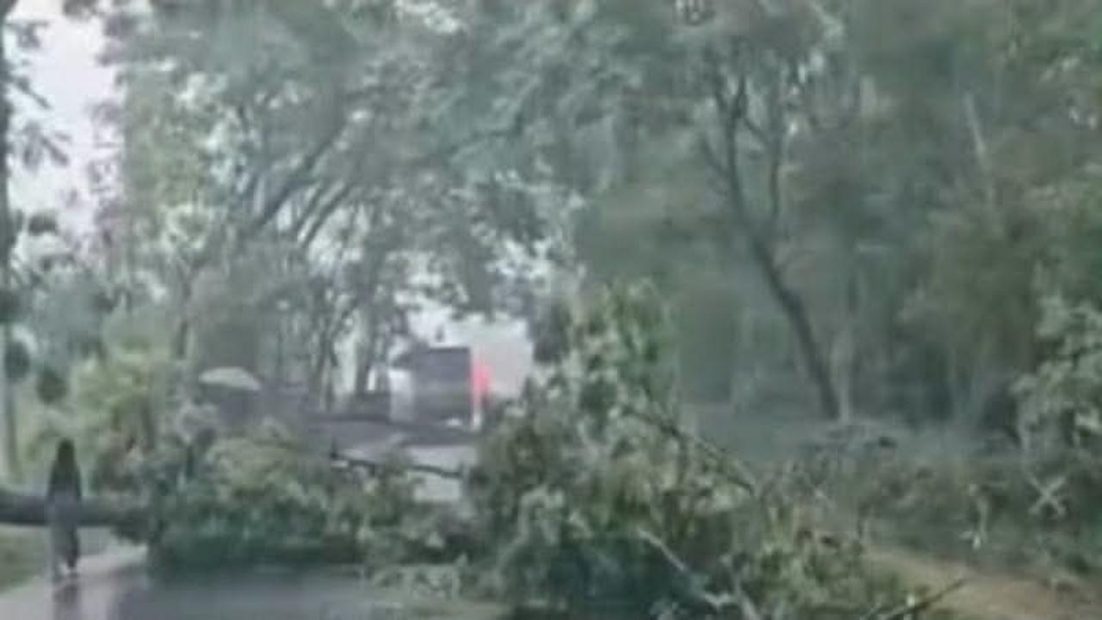
He further said trees had been cut down and placed as barricades at the entry points to Gopalganj via the Tekerhat and Baraitala roads, as well as along the Muksudpur-Batikamari road. Yet those same trees once protected the soil, provided shade to pedestrians, maintained ecological balance and offered shelter to birds. Now they lie lifeless after brutal cuts from saws. Trees that once served people have been turned into tools for blocking people’s movement.
A journalist who wished to remain anonymous told Inqilab, “Are we really thinking about one thing? In a district where most people support a particular political party, ordinary residents are now suffering the most. Poor shopkeepers are shutting their shutters, day labourers have lost their income, and small business owners are struggling to support their families. Ordinary people are being forced to bear the burden of political tensions.”
He raised several questions about the consequences of vandalising police vehicles. If a robbery takes place late at night, whom will people call for security? If someone is injured in a road accident, who will rescue them and take them to hospital? If a family member suddenly falls ill in the middle of the night, how will an ambulance reach the hospital through blocked roads? If people shut down their own shops, where will they buy essential goods? If educational institutions remain closed, who will make up for the damage to students’ futures? If hospitals are attacked, who will take responsibility for patients in distress?
Have we ever considered who suffers the most from these blockades? They are ordinary people, whose greatest struggle is often to secure two meals a day rather than engage in politics.
Mohammad Yusuf Howlader, whose house is beside the permanent Tengrakholar market, said the roads people once walked along, where they would stop under trees to rest in the shade, now lie strewn with the lifeless remains of felled trees.
“It seems they are silently asking: By blockading our own city, who are we actually fighting against? What have we gained? What will you gain?” he said.
A man who completed his studies at Jahangirnagar University in Dhaka and now cultivates bananas on his own land said everyone has the right to protest, and movements can be organised to press for demands. But why should such movements endanger hospitals, educational institutions, businesses, people’s movement and public safety?
“Gopalganj does not belong to any one person. It is our city, our community. There may be political differences, disputes and grievances. But no one has the right to burn down their own city, harm their own people or destroy their own future in the fire of those grievances. Isn’t it time to stop and reflect? By blockading our own city, jeopardising the lives and livelihoods of our own people and destroying the shade of nature, are we ultimately fighting against ourselves?”