Bangladesh Launches First AI Journal, ‘AI for the Global South’
The launch and unveiling ceremony for the inaugural issue of Bangladesh’s first artificial intelligence (AI) periodical, ‘AI for the Global South: A Quarterly Bulletin’, was held on Tuesday at a hotel in Gulshan, Dhaka. Jointly published by the Ilaya Foundation, the Centre for Alternatives, and Argus Diplomatic Intelligence, the quarterly publication aims to foster regional discourse on emerging technologies. The event brought together local and foreign AI analysts, technology experts, diplomats, and senior representatives from various universities and organizations, with Bottola AI serving as the co-sponsor of the program.
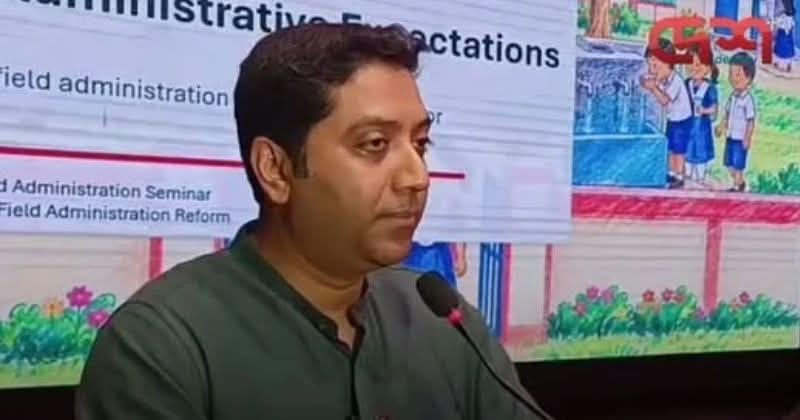
Speaking as the chief guest, State Minister for Primary and Mass Education Bobby Hajjaj emphasized the need for deeper contemplation regarding AI development across developing nations. Wishing the publication success, he remarked, ‘Our goal should not be AI for the Global South, but rather AI built by the Global South.’ Echoing this optimism, Secretary (East and West) of the Ministry of Foreign Affairs, Ambassador Nazrul Islam, described the periodical as a timely initiative that will play a vital role in advancing Bangladesh’s ongoing technological and AI journey.
The periodical’s editor and President of the Ilaya Foundation, Masud Jamil Khan, stated that the bulletin will transcend national borders to become an educational milestone for communities in cities like Nairobi, São Paulo, and Jakarta. He highlighted the importance of AI adaptation, policymaking, and empowering the Global South, while calling for the removal of linguistic barriers to establish Bangla as a viable language in AI. Meanwhile, Argus Diplomatic Intelligence co-founder Firoz M. Zahidur Rahman stressed democratizing knowledge and making AI accessible to everyone, from local business owners to farmers.
Editor-in-chief and Executive Director of the Center for Alternatives, Imtiaz Ahmed, noted that while Bangladesh holds immense potential, structural weaknesses remain a major hurdle. He stated, ‘Although Bangladesh holds a strong position in freelancing and digital labor, the lack of high-speed internet and AI literacy are the primary obstacles here. To bring urban residents, farmers, and the general public under the umbrella of AI, we must overcome these structural weaknesses.’ He also emphasized building a robust national AI policy framework alongside incorporating Bangla writing and speech Large Language Models.
Addressing the concept of digital sovereignty, Imtiaz Ahmed clarified that it does not mean isolating the country from the global community, but rather strengthening and securing cyber networks through international cooperation. Similarly, Firoz M. Zahidur Rahman pointed out that the Global South’s perspective on artificial intelligence differs significantly from that of the Western world, urging stakeholders to utilize Bangladesh’s skilled freelancer base effectively. Collectively, the speakers underscored that inclusive policies, localized language models, and cross-border collaboration are essential to ensuring equitable technological progress across developing economies.
Source: UNB.