YKK Bangladesh Launches Solar Power System at SOS Youth Village
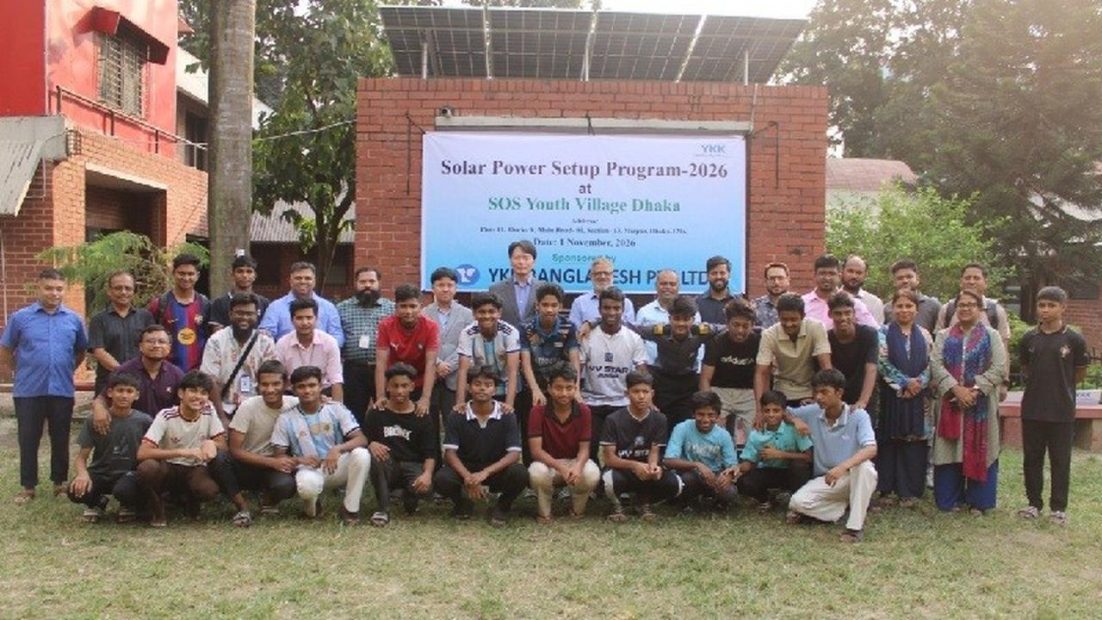
A solar power system has been launched at SOS Youth Village in the capital to ensure uninterrupted studies for adolescents even during power outages. The system, installed with financial support from YKK Bangladesh Pte Ltd, was inaugurated jointly by the two organisations.
The information was disclosed in a press release on Wednesday (November 25).
The initiative was implemented under the ‘Solar Power Setup Programme-2026′ as part of the organisations’ Corporate Social Responsibility (CSR) activities. The initiative is expected to meet a significant portion of the village’s electricity demand through solar power. It will also reduce dependence on the national grid, lower monthly electricity bills and cut carbon emissions.
Orphaned and underprivileged adolescents under the supervision of SOS Children’s Villages Bangladesh grow up at SOS Youth Village in Dhaka. Alongside formal education, they receive technical training and training in various life skills. The new solar power system will help ensure the smooth continuation of their education and daily activities.
YKK Bangladesh Pte Ltd Managing Director Takahiko Asano and Administration Coordinator Shinobu Nakayama attended the inauguration ceremony. Representing SOS Children’s Villages Bangladesh were SOS Children’s Village Dhaka Project Director Mohammad Yusuf Ali and Corporate Fundraising Officer Md Arman Kabir Mahid.
Speaking at the event, Mohammad Yusuf Ali said many adolescents had to suspend their studies while waiting for electricity to return when power outages occurred during evening study hours. With the introduction of solar power, they would no longer lose valuable study time.
He added that using clean energy would also contribute to environmental protection.
He thanked YKK Bangladesh Pte Ltd for its timely support.
Both organisations expressed hope that seeing renewable energy being used in their residential facilities would make the adolescents more aware of environmental and climate protection in their daily lives. They also hoped the adolescents would contribute to climate protection in the future and encourage others to do the same.