China-Russia Could Derail Trump’s Plan to Isolate Iran
Al Jazeera
US President Donald Trump has threatened severe economic sanctions against countries helping Iran sustain its economy and declared an “Economic Doomsday” against Tehran. Six months after the failed conflict with Iran, the threat marks Trump’s latest attempt to use economic power to achieve his foreign-policy goals. However, analysts say his ability to pressure Iran’s two major trading partners, China and Russia, is limited, potentially undermining his plan.
Russia is already operating largely outside the US-led economic system due to extensive sanctions. China, meanwhile, has repeatedly ignored US sanctions to pursue its own economic interests. Paul Musgrave, an associate professor at George Mason University, told Al Jazeera, “It will be extremely difficult for Trump to effectively carry out this pressure campaign.” He said Trump is attempting to impose unilateral sanctions that are traditionally difficult to enforce without multilateral cooperation.
On Tuesday, Mr. Trump described his campaign against Iran as the “most destructive economic campaign” ever imposed against any country. He warned countries helping Tehran evade sanctions through oil smuggling, money-transfer systems, currency exchanges, commercial shipping registrations and shell companies of “terrible economic consequences,” saying, “Everything has to stop now.”
Earlier the same day, the United Arab Emirates announced an indefinite ban on trade with Iran, accusing the Iranian military of launching two ballistic missiles at Emirati territory. However, any effort to disrupt China-Iran trade faces a major obstacle. According to Kpler data, China bought 80 percent of the oil exported by sea from Iran in 2025.
Yu Jie, a senior research fellow at Chatham House’s China and Asia-Pacific Programme, said Trump’s threats to target Iran’s economic partners would not alter China’s involvement with Iran or existing commercial relations. She said that while Trump wants to stabilize relations with China, Beijing seeks a ceasefire between Washington and Tehran.
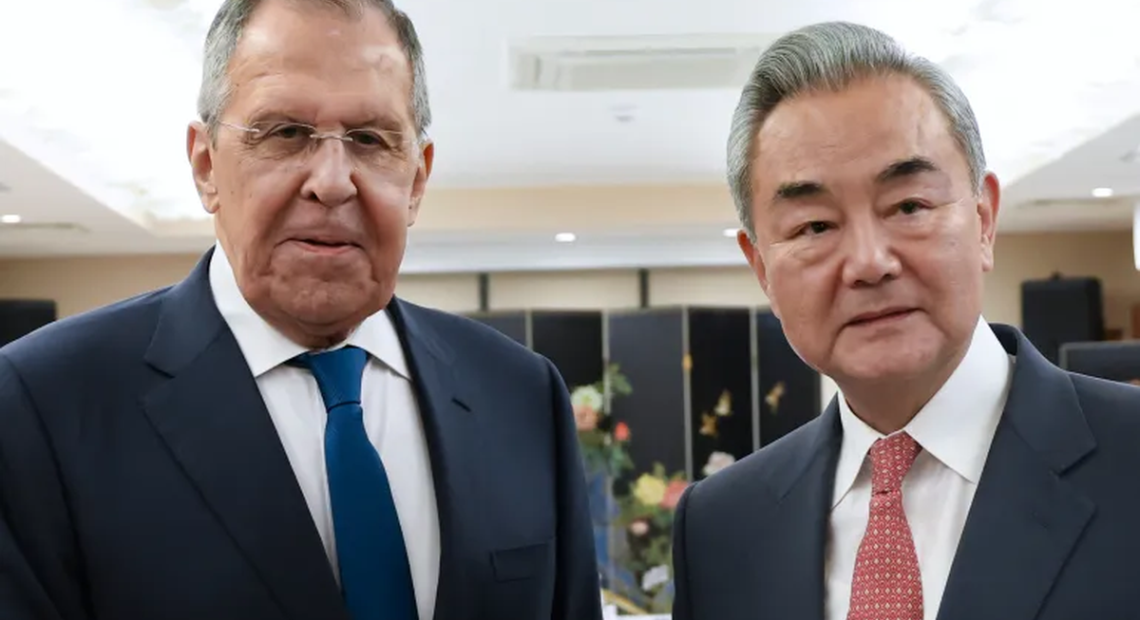
Targeting Chinese commercial institutions and financial institutions is also difficult because many operate independently and have limited dependence on the US financial system. Sanctioning major Chinese banks could trigger retaliation from Beijing. Chinese Foreign Ministry spokesperson Lin Jian said additional US sanctions would not solve the problem. He called on all parties to take responsible steps and resolve the issue through diplomatic and political means.
Meanwhile, Russia and Iran have spent years developing trade and military ties while avoiding Western pressure. In January 2025, the two countries signed a 20-year partnership agreement. According to Russian Energy Minister Sergei Tsivilev, bilateral trade reached $4.8 billion in the first 11 months of 2025.
Iran is also seeking closer ties with the BRICS financial system. Abdolnaser Hemmati, governor of Iran’s Central Bank, said Tehran plans to join the BRICS New Development Bank and expand transactions in its own currency.
Ali Akbar Dareini, an analyst at Tehran’s Center for Strategic Studies, said, “Trump is trapped in a war that he cannot win and from which he cannot escape.”