Hilsa Shortage in Barguna, Revenue Falls by 23 Percent
Jahangir Kabir Mridha, Barguna
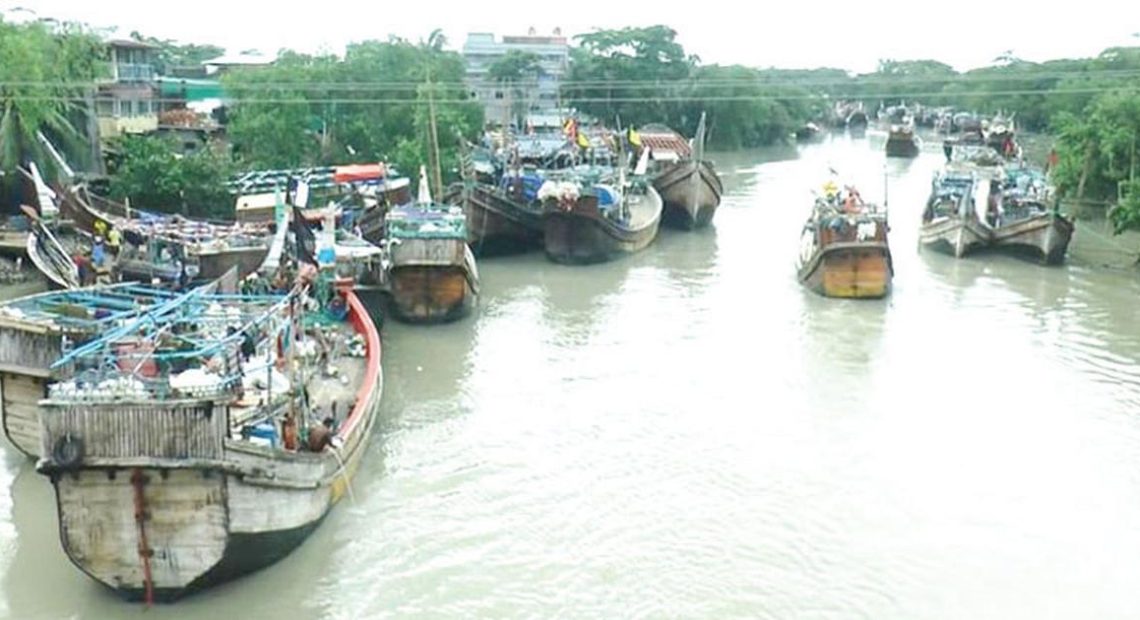
Barguna’s fishermen returned to the sea with renewed hope after the government’s 58-day ban on fishing in the Bay of Bengal ended. They expected the ban to increase fish breeding and stocks, filling the sea with hilsa and other species. However, their expectations have largely turned into disappointment after the ban. The desired amount of fish is not being found in the sea. Hilsa landings, in particular, have witnessed a major decline.
The decline has directly affected the Patharghata Fish Landing Centre, one of the country’s largest. Fish sales have fallen, as has government revenue. At the same time, the dominance of illegal and converted artisanal trawling boats has raised serious concerns about fish resources and marine biodiversity in the Bay of Bengal.
Recent statistics from the Patharghata Fish Landing Centre show that a total of 405.95 metric tonnes of fish were landed there between July 12 and August 21 this year. During the same period last year, 429.22 metric tonnes were landed. This means total fish landings declined by 23.27 metric tonnes, or 5.42 percent, year-on-year.
The situation is even more alarming in the case of hilsa. During the same period last year, 317.40 metric tonnes of hilsa were landed at the Patharghata centre. This season, the figure has fallen to just 189.10 metric tonnes. Hilsa landings declined by 128.30 metric tonnes, or 40.43 percent, in one year. In other words, this year’s hilsa landings have fallen to nearly half of last year’s level.
The fish shortage has also affected the market and government revenue collection. Last season, fish landed at the Patharghata centre was sold for Tk 33 crore 30 lakh 90 thousand 400, while the government earned Tk 41 lakh 63 thousand 630 in revenue. This season, fish sales have fallen to Tk 25 crore 43 lakh 78 thousand 800, while revenue collection has dropped to just Tk 31 lakh 79 thousand 735.
As a result, government revenue declined by Tk 9 lakh 83 thousand 895, or 23.64 percent, in one year.
Those concerned say the crisis is not limited to a single landing centre; rather, Patharghata reflects the broader trend of declining marine fish stocks in the Bay of Bengal. According to recent data from the Department of Fisheries, marine fish production in the country stood at 7.06 lakh metric tonnes in fiscal year 2021-22. It fell to 6.79 lakh metric tonnes in 2022-23 and 6.29 lakh metric tonnes in 2023-24. In the latest 2024-25 fiscal year, production declined further to 5.68 lakh metric tonnes.
During the same period, marine hilsa production also declined. According to the Department of Fisheries, marine hilsa production was 3.22 lakh metric tonnes in 2021-22, falling to 2.81 lakh metric tonnes in 2023-24.
Fishermen allege that, alongside natural factors, human-induced factors are also playing a major role in the shortage of fish in the sea. Fishing through prohibited trawling methods, using nets with excessively small mesh sizes, and indiscriminate harvesting of small fish, fry and larvae are damaging the natural breeding system of marine fish resources.
Golam Mostafa Chowdhury, president of the District Trawler Owners’ Association, alleged that a section of unscrupulous fishermen and trawler owners are building illegal trawling vessels using local methods and fishing in the sea. Such vessels use nets that catch not only fish but also larvae, fry and small fish. If such fishing continues during the breeding season, fish stocks in the sea may decline even more severely in the future, he warned.
The concern is not limited to the complaints of fishermen in Barguna; the overall condition of the country’s marine fish resources is also worrying. According to the Department of Fisheries, marine fish production declined from 7.06 lakh metric tonnes in 2021-22 to 5.68 lakh metric tonnes in 2024-25. This means production fell by around 1.38 lakh metric tonnes over four years.
Discussions involving the Department of Fisheries and relevant experts have identified multiple causes, including overfishing, illegal nets, climate change and rising sea temperatures.
Mohammad Delwar Hossain, management officer of the Patharghata Fish Landing Centre, said the government collects 1.25 percent revenue, as per regulations, from the total sale value of fish arriving at the landing centre.
This year, lower fish availability and catches in the sea have reduced both fish sales and revenue collection significantly. Joint efforts by the Department of Fisheries and the administration to stop illegal trawling are being strengthened, while initiatives are being taken to increase operations at sea.