Reject Poor-Quality Books from Any Printer: Education Minister at Jamiat Gathering
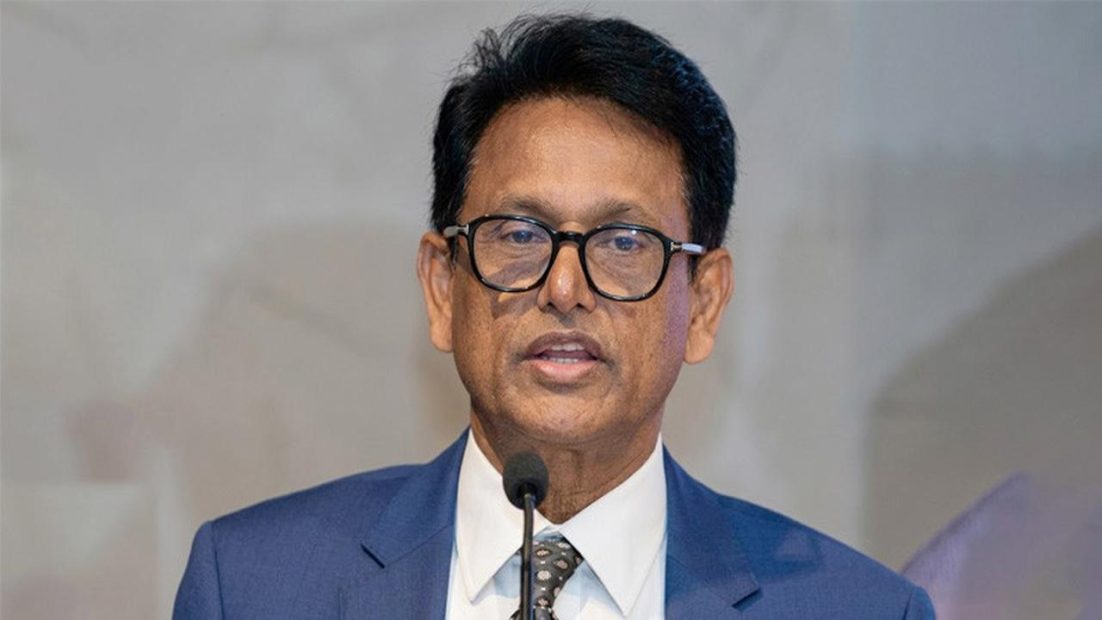
Education Minister Dr ANM Ehsanul Haque Milon has urged teachers not to accept books that fail to meet quality standards or fall short of the required quantity, stressing that the government is committed to providing students with high-quality textbooks.
“We will hand over new books to all students on the day schools, colleges and madrasas close after their examinations this year,” he said. Addressing madrasa heads, the minister said they should reject books if the paper quality or binding fails to meet the specifications set by the government. They should also refuse to accept fewer books than the allocated number.
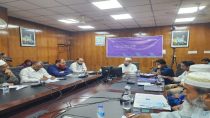
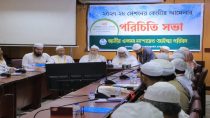
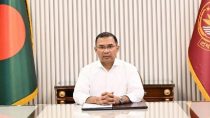
He made the remarks virtually on Saturday (October 10) at a gathering of the executive committee of Bangladesh Jamiatul Mudarrisheen, a non-political organisation of madrasa teachers and employees, held at the Gausul Azam Complex in Mohakhali, Dhaka.
Seeking teachers’ cooperation in ensuring quality textbooks, Mr. Milon said printers had previously failed to use the specified paper and deliver books on time. He urged teachers to monitor book deliveries at every madrasa and educational institution this year.
The government has already paid 90% of the printing bills, he said. The remaining amount will be paid only after the delivered books are reviewed once they reach students. According to the minister, printers received contracts at market rates this time, leaving no scope for corruption. He urged teachers to remain vigilant to prevent printers from cutting corners.
Mr. Milon also highlighted his longstanding association with Jamiatul Mudarrisheen and discussed the contributions of former president Ziaur Rahman, former prime minister Ms. Khaleda Zia and current Prime Minister Tarique Rahman to madrasa education.
He said Maulana Abdul Mannan, a teacher who worked with Ziaur Rahman, founded Jamiatul Mudarrisheen. According to the minister, Mr. Zia took steps to improve madrasa education by incorporating general education into the curriculum and adding 500 marks to raise the educational standards of madrasa teachers and students.
Mr. Milon said he began working with Maulana Mr. Mannan during Ms. Khaleda Zia’s tenure and held discussions with her on modernising madrasa education. During her government, technical education was introduced at the Dakhil Vocational and Alim Vocational levels to make madrasa education more effective.
He added that madrasa students gained access to universities, medical colleges and other higher education institutions during that period. The madrasa board’s higher education functions for Fazil and Kamil programmes were also transferred to Islamic University in Kushtia to improve academic standards. These programmes are now under the Islamic Arabic University.
The minister said the government had also emphasised enabling madrasa students to study business, pursue administrative careers and participate in different professions while maintaining their understanding of the Quran and Hadith.
He said Prime Minister Tarique Rahman was also giving priority to madrasa education by increasing the budget and monitoring the sector. He added that the madrasa board, the relevant directorate and the university were working to improve the quality of madrasa education.
Highlighting other education initiatives, Mr. Milon said the government had taken steps to introduce transfers for teachers working at MPO-listed institutions and planned to recruit 77,000 new teachers. He said Jamiatul Mudarrisheen had consistently worked with the BNP government, sharing its goals of nation-building, improving students’ education and encouraging dedication to learning. He added that he saw no difference between the organisation and the government on these objectives.
Speaking as the meeting’s chair, Bangladesh Jamiatul Mudarrisheen President and Daily Inqilab Editor A M M Bahauddin said religious institutions and Muslims engaged in the practice of Islam for non-political purposes had helped bring the BNP and PM Tarique Rahman to power in the recent election.
He said any government seeking to remain in power in Bangladesh needed the support of the country’s 92% Muslim population. He claimed that Hindu voters might leave if they found an alternative and urged the government to follow Ziaur Rahman’s approach of working closely with Islamic scholars and religious leaders.
Mr. Bahauddin also said the government faced a shortage of barakah, or divine blessings, despite its efforts and meetings with influential people. He named religious institutions and spiritual centres, including Chharsina, Phultali, Sonakanda and Jaunpuri, whose religious leaders had worked for the BNP and PM Tarique Rahman during the election without seeking or receiving anything in return.
He said Islamic scholars would continue to stand united behind PM Tarique Rahman. However, he warned that the government was facing several challenges ahead of the upcoming local elections. “The biggest crisis for him is that there is a major crisis of blessings over the government,” Mr. Bahauddin said, adding that PM Tarique Rahman and BNP ministers needed to spend more time in the company of Islamic scholars and religious leaders. The meeting was conducted by the organisation’s Secretary-General, Principal Sabbir Ahmad Momtazi.