Phulbari Residents Seek PM’s Political Decision on Coal Extraction
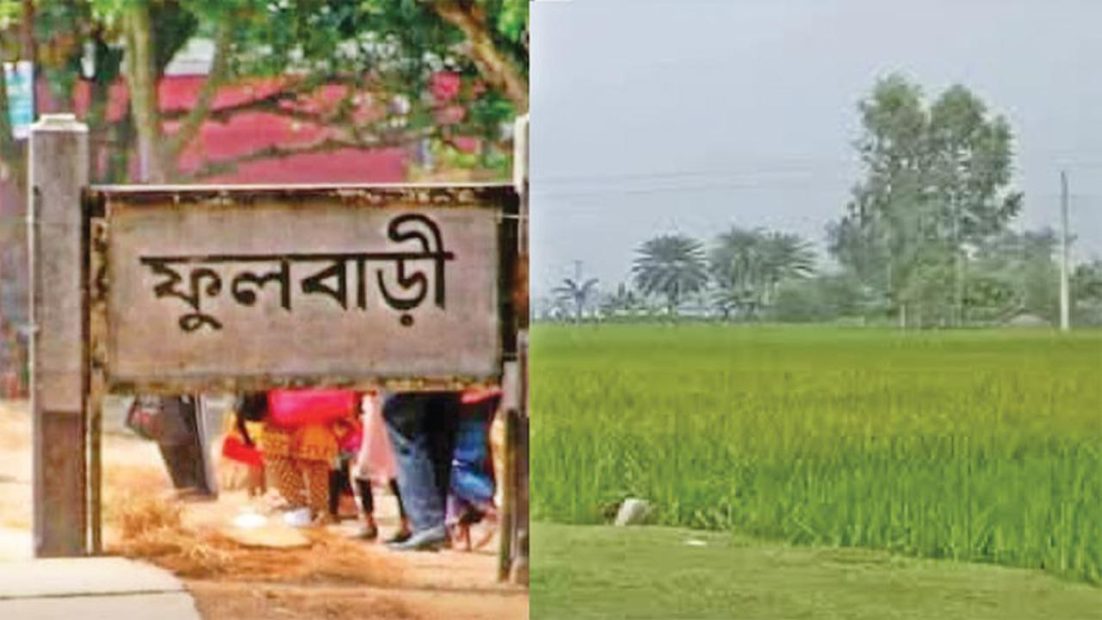
Phulbari is 55 kilometres from Rangpur city. As soon as a CNG-run auto-rickshaw left Bangladesh Bank intersection in Rangpur, the driver asked, “Sir, are you going to see the coal mine? Local people who have land deeds support coal extraction, but landless people, those living on government-owned land, and leftist leaders oppose it on the pretext of environmental destruction. You will understand when you get there.”
After listening to the driver’s account of the coal mine for about an hour and a half, we passed the Barapukuria Coal Mine and reached Phulbari. At the entrance to the upazila parishad, we met 85-year-old Mohammad Alimuddin. He owns 10 decimals of paddy land but lives on government-owned land.
Before speaking, Mr. Alimuddin set a condition: “Brother, everyone wants coal extraction, but nobody speaks out. If others speak, publish my name; otherwise, do not publish it. Do not put me in danger. You understand, poor people like me survive by selling betel leaves and cigarettes.”
Mr. Alimuddin said coal extraction would bring development to the area and transform the region. Development would reach every household, and young people would find jobs. However, he alleged that the “profit-seeking group” (the leftists) opposed coal extraction because, like him, some of its supporters lived on government-owned land and would not receive compensation without land deeds.
He claimed that some people from Chapainawabganj had settled on government-owned land in Phulbari. Without land documents, they would receive no compensation and could lose their homes. He alleged that this was why they opposed open-pit coal mining. He also claimed that leftist groups organised occasional rallies against coal extraction using these settlers, paying rickshaw drivers Tk 500 to participate in demonstrations.
While we were listening to Mr. Alimuddin, Mohammad Abu Shahid, the Inqilab correspondent for the upazila and president of the local press club, arrived. Mr. Abu Shahid, who is also the principal of a local college, advised us not to continue by CNG auto-rickshaw. He said those opposing coal extraction often obstructed outsiders from visiting the project area and that other local residents were reluctant to speak openly.
We therefore continued by motorcycle. After visiting several villages and speaking to people from different professions and backgrounds, it appeared that many residents supported coal extraction in the hope of local development.
The Phulbari coal deposit was discovered between 1994 and 1997. The mine covers approximately 14,660 acres (about 5,193 hectares) across Birampur, Nawabganj and Phulbari upazilas. The deposit is estimated to contain around 572 million tonnes of coal, equivalent to about 7 per cent of national demand. The estimated recoverable reserves range from 472 million to 572 million tonnes. The proposed annual production capacity is around 15–16 million tonnes, potentially creating between 17,000 and 50,000 direct and indirect jobs.
However, on August 26, 2006, three people were killed when BDR personnel, now known as the Border Guard Bangladesh (BGB), opened fire during protests in Phulbari. Following a movement led by leftist groups, the government was compelled to sign a seven-point agreement with local residents on August 30, 2006, and open-pit coal extraction was suspended.
During visits to several villages and lanes in Phulbari municipality, we spoke to around 50 people from different backgrounds. Only two opposed coal extraction. They said, “We do not want to lose our ancestral homes and paddy fields. Coal extraction will damage the environment, and the area will fall into foreign hands, like Ishwardi in Pabna.”
Almost all of the remaining 48 people supported coal extraction. They said that, in addition to fair compensation for their land, landowners should receive alternative places to live, jobs for family members and 5 per cent of the profits from the extracted coal.
Residents Demand Fair Compensation and Jobs
As we entered the South Basudebpur area of Phulbari, two men stopped us on the road. They were local residents known to the journalist. Their names were Abdus Salam and Abu Yahia Hasan. Mr. Yahia even wrote down the spelling of his name to ensure it was not printed incorrectly.
Abdus Salam said the country should be able to acquire land for national needs, provided the owners receive fair compensation. He added that he would have no objection to giving up his land if his relatives were guaranteed jobs.
However, he alleged that people living on government-owned land without land deeds opposed coal extraction. He also claimed that people attending rallies were paid Tk 500 each, although it was unclear who was providing the money.
“Go a little further and you will see newly built houses. These houses did not exist 10 years ago. Several hundred houses have been built, mainly in the hope of receiving additional compensation for them if the project goes ahead,” he said.
Abu Yahia Hasan said coal extraction would improve local people’s living standards and that residents were generally in favour of it. However, those without land documents opposed the project. He said residents were ready to surrender their land if the government ensured their rehabilitation.
Abu Taher Nayan, a resident of Ward No. 5 of Phulbari municipality, said they were prepared to go live on social media and organise rallies if the central leadership made a political decision in favour of coal extraction.
He claimed that 95 per cent of residents wanted coal extraction, while only 5 per cent opposed it. According to him, most opponents had come from Kansat and surrounding areas in Chapainawabganj. He referred to the 2006 movement in Kansat, Shibganj upazila of Chapainawabganj, which demanded uninterrupted electricity supply.
He alleged that the movement had embarrassed the BNP government after people were killed during the protests. Some participants in that movement, organised under the banner of the Rural Electricity Development Action Council, later settled on government-owned land in Phulbari.
Mr. Nayan alleged that some of these people were now working to advance political agendas against the BNP. He also claimed that Golam Rabbani, one of the leaders of the earlier movement, was later made an Awami League member of parliament as a reward for his role. Standing beside the Science Residential Model School near the municipal office, Mohammad Nasir Uddin, son of Dildal Ali of West Gouripara, said local residents wanted coal extraction to improve their fortunes.
He alleged that media outlets were giving extensive coverage to the views of a few leftist opponents instead of reporting local people’s expectations. As a result, he said, the Phulbari coal project had remained stalled for 20 years.
“People want the government to extract coal and change their fortunes and improve their living standards. Coal extraction would bring us many benefits and facilities. I collect tolls here, so I speak to people from all walks of life. Yet their voices are not heard anywhere,” he said.
Mr. Nasir added that if the local BNP took a firm stand against the leftist movement opposing coal extraction and organised counter-rallies, the opposition would lose momentum. He maintained that most residents wanted the project because they hoped it would improve their lives.
At the office of a local anti-drug movement, we spoke to Mohammad Akkas Ali. He said residents wanted coal extraction to benefit the public. “Coal should be extracted in the public interest. It will change people’s fortunes. If we receive fair compensation for our paddy fields and homesteads, we will move elsewhere. With the money, buying land and building a house somewhere else will not be difficult. Family members should also be given priority for jobs. Our lives will change, and unemployment will decline. A person with a job can live happily even in a mud house. But an unemployed person cannot be happy even in a three-storey building,” he said.
Akkas Ali said Wards 5, 6 and 7 of Phulbari municipality contained the main coal deposit areas. Residents of these wards wanted coal extraction and were ready to provide all possible assistance to the government. He also referred to Prime Minister Tarique Rahman’s recent remarks in parliament and at energy-related meetings about the Phulbari coal mine and the country’s coal policy.
The prime minister said Phulbari coal was among the finest-quality coal in the world and that its extraction would be considered to meet the country’s energy needs and save foreign currency. He also expressed the view that local residents should be consulted before extraction begins.
“We believe he should visit Phulbari and speak directly with the people. He should take the necessary steps to extract coal while giving the highest priority to environmental protection and local interests. People would be happy. The prime minister must make a political decision. If he relies on bureaucrats for land acquisition, coal extraction in Phulbari will not be possible even in the next 100 years,” Akkas Ali said.
Farmers Also Support Extraction, Residents Claim
During visits to Ramchandrapur, Tetulia and Swajanpur in Phulbari municipality, conversations with farmers suggested that they were not opposed to coal extraction. Some alleged that people from Chapainawabganj who lived on government-owned land were organising rallies against the project under the leadership of leftist groups. They also accused local BNP leaders of remaining silent out of fear that taking a clear position could negatively affect their electoral prospects. According to these residents, people would rally behind the BNP if the party openly supported coal extraction.
Asked about these allegations, Mohammad Delwar Hossain Liton, a member of the Phulbari upazila BNP convening committee, said he personally supported coal extraction. “Coal extraction is essential to address electricity shortages amid the global energy crisis. However, landowners must receive fair compensation. Some leftists are mainly responsible for opposing the project. Leftists always lean to the left; they do not want good things. Those occupying government-owned land also oppose the mine because they fear they will not receive money if it goes ahead,” he said.
Mr. Liton added that if the mine created jobs for people of all ages according to their qualifications, residents would stand against the leftist movement. Mohammad Asan Ali of Purba Ramchandrapur village said Principal Khurshid Alam Moti, convener of the Phulbari upazila BNP, owned 250 bighas of land. He believed that if Mr. Moti agreed to provide his land for the mine, others would line up to do the same.
“The decision must be made politically by the prime minister. People want development in the area. They do not want to live in hunger while coal remains underground,” Asan Ali said. Mohammad Sumon also argued that landowners would surrender their land if they received compensation based on market prices. He alleged that if bureaucrats manipulated land valuations, residents would not receive fair compensation.
He urged the prime minister to take effective steps personally rather than relying on bureaucrats. Otherwise, he claimed, those opposing the mine on environmental grounds would benefit from the delay. Sumon also alleged that local participation in the ‘Phulbari Day’ observance organised by Anu Muhammad and others in August was limited and that participants had been brought in from outside the area. He further claimed that people from Chapainawabganj who were living on occupied forest land had joined the leftist protests.
CNG Driver Says Residents Want the Mine
After spending several hours visiting the Phulbari coal mine area, we got into a CNG-run auto-rickshaw to return to Rangpur. The driver asked with satisfaction, “Sir, I was right, wasn’t I? What did you understand? Do the local people want coal extraction?”
He said that in August, he had brought leftist leaders from Rangpur to Phulbari in his auto-rickshaw to participate in a long-march protest against the coal mine. “Back then, I heard them saying among themselves that most landowners in Phulbari wanted coal extraction to proceed after their rehabilitation. They also admitted that the mine project could not be blocked for long by citing environmental concerns. I realised then that the leftists were opposing coal extraction without good reason,” he said. After listening to the journalist’s account, the CNG driver smiled triumphantly and said, “Sir, when coal extraction begins, call me. I will take you to see the project work.”