Geopolitics, Economy and Middle East War Dominate IMF-World Bank Meetings
The global economy faces the risk of a slowdown amid the Middle East conflict, a severe energy crisis and high interest rates. Countries are searching for ways to overcome these challenges. Against this backdrop, the annual meetings of the World Bank and the International Monetary Fund (IMF) began in Bangkok, Thailand, on Monday. Global inflation, public debt and economic pressures on developing countries are among the key issues on the agenda. However, the IMF has offered some relief, saying massive investment in artificial intelligence (AI) is helping keep global economic growth at around 3%.
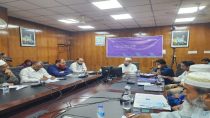
Bangladesh will seek World Bank support to manage rising energy costs and the additional financial burden caused by global instability. Finance and Planning Minister Amir Khosru Mahmud Chowdhury said discussions with the World Bank were underway, along with work on a structural agreement between the two sides. He made the remarks while speaking to journalists on Monday at the start of the 2026 annual meetings of the IMF and World Bank Group.
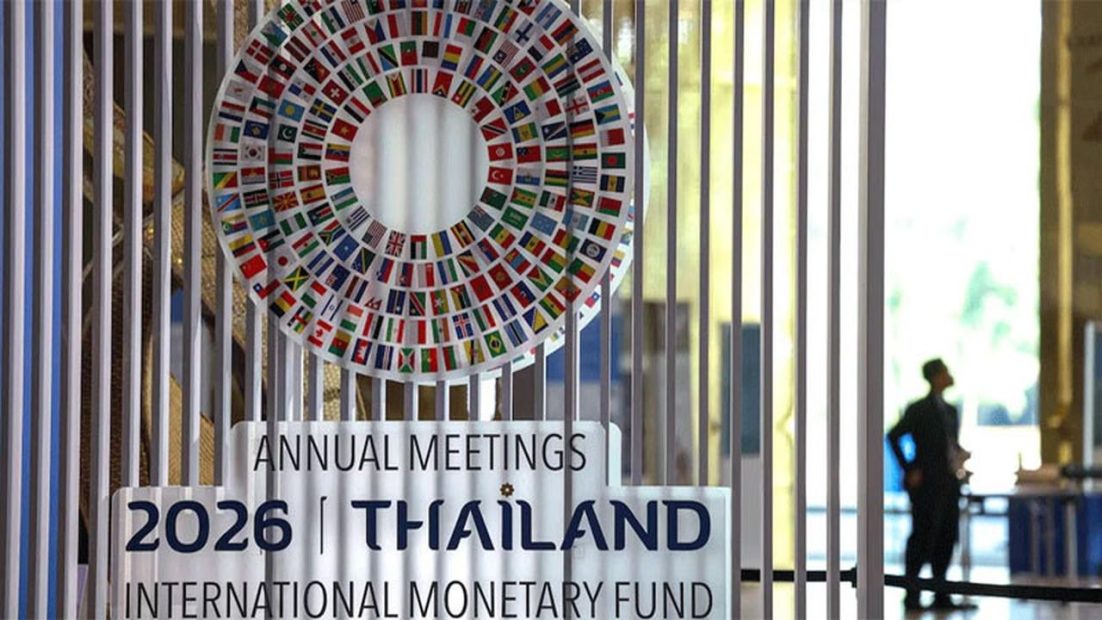
The meetings are being held outside Washington, the institutions’ headquarters, for the first time in three years. The week-long event runs from October 12 to 18 and has brought together finance ministers, central bank governors and financial policymakers from around the world. Thailand is hosting the prestigious global gathering for the first time in 35 years. More than 15,000 delegates from 191 countries are attending to discuss the global economy, financial stability and poverty reduction.
Among the prominent attendees are Swiss President Guy Parmelin and Singaporean President Tharman Shanmugaratnam. Mr. Parmelin’s visit is the first by a Swiss president to Thailand in 22 years. Bangladesh’s delegation is led by Finance and Planning Minister Amir Khosru Mahmud Chowdhury, Finance and Planning Adviser Professor Dr Rashed Al Mahmud Titumir, and Bangladesh Bank Governor Md Mostakur Rahman.
Amir Khosru said Bangladesh was facing additional energy costs and needed financial protection to manage the pressure. He said the World Bank had shown a positive attitude towards providing support and expressed hope that the institution would continue to stand beside Bangladesh.
He added that cooperation with the World Bank should extend beyond existing funding arrangements. Bangladesh needs support to address the effects of global instability and the ongoing energy crisis. Discussions are also underway on a structural agreement to make bilateral cooperation more effective. The minister said the government wanted to align ongoing initiatives with the objectives of its election manifesto.
Meanwhile, Rashed Al Mahmud Titumir said the government had reached broad policy agreement with the World Bank and the IMF on reforms to revive the economy, restore discipline in the financial sector, increase the tax-to-GDP ratio and create jobs.
He said the government had developed a five-year economic strategy focused on recovery, reconstruction and sustainable growth. Its main objectives included restoring financial discipline, increasing tax collection, expanding social protection, restarting closed factories and creating employment through industrialisation. He said these priorities were broadly consistent with the reform proposals of the multilateral development institutions.
Mr. Titumir stressed that the government would retain ownership of the reform programme, while cooperation with international development partners would help make implementation easier. He also said the Middle East conflict, which began on February 28, had increased Bangladesh’s energy costs. To reduce pressure on ordinary people, the government had not fully adjusted domestic energy prices to market levels.
He referred to a recent World Bank report indicating that poverty had increased under the previous government. The government plans to support low-income households through programmes such as the Family Card. According to assessments by independent research institutions, such programmes could reduce the poverty rate by around five percentage points over five years.
Restoring discipline in the financial sector remains a major challenge. Mr. Titumir said ordinary citizens were bearing the consequences of irregularities and lending problems from the previous administration. He said restoring confidence in banks and rebuilding the damaged financial system would require refinancing, adding that discussions were underway with institutions including the International Finance Corporation (IFC).
He also blamed tax exemptions and irregularities for weak revenue collection, which had widened the fiscal deficit and made it harder to fund social protection and development programmes. The government is considering financing at a negative interest rate of 7% to help restart closed factories and encourage investment, although details of the scheme have not been disclosed.
Mr. Titumir said Bangladesh was also seeking investment from China, Japan, the United States and international investors to expand production and employment. He cited contacts with companies including Toyota and Marubeni of Japan, a recent visit by a US delegation, and engagement with Silicon Valley-based Plug and Play and major technology companies. He also said the Asian Development Bank had announced $5 billion in assistance to Bangladesh.
Bangladesh and Thailand are exploring opportunities to expand trade and investment. Following discussions with the Thai Chamber of Commerce, Titumir said potential areas included agricultural products, fruit, dairy products and halal food processing. Seasonal supplies of mangoes, jackfruit and lychees often exceed Bangladesh’s storage and processing capacity, leading to waste and lower returns for farmers. Processing these products could create export opportunities in halal and other international markets.
He proposed building joint production networks in which raw materials could be produced in Bangladesh, intermediate goods manufactured in Thailand, and finished products exported to international markets. The process could also work in the opposite direction, depending on the product. Such arrangements could increase investment, production and trade while integrating Bangladesh more closely into regional supply chains.
The two sides also discussed stronger maritime links between Chittagong Port in Bangladesh and Ranong Port in Thailand. Better connections could reduce transport difficulties and support regional trade. Mr. Titumir said Bangladesh also wanted to explore free trade agreements with ASEAN countries and opportunities under the Regional Comprehensive Economic Partnership (RCEP) framework to expand access to regional markets.
Global Growth Faces Risks
According to the IMF’s forecast, global economic growth could reach 3% in 2026, although the outlook may change. Countries affected by conflict, including Ukraine and several Gulf states hit by Iranian attacks, could experience slower growth.
The IMF warned that sustained increases in food and energy prices could prolong high inflation, increase poverty and threaten economic stability. Public debt has also become a major concern for policymakers. According to the IMF, global public debt is at its highest level since World War II and could exceed 100% of global gross domestic product (GDP) before 2030.
The United States has a high debt-to-GDP ratio among advanced economies, while emerging and low-income countries also face risks. Higher US interest rates could encourage capital to flow out of these economies, adding to their financial pressures.
AI Investment Supports Global Growth
The IMF said large investments in AI infrastructure were helping keep global growth near 3%. Managing Director Kristalina Georgieva said the investment boom was benefiting Asian economies, particularly countries supplying AI hardware.
She said the surge in AI investment had created a new boost to global demand and investment. It could raise growth in advanced Asian economies by 0.5 to 1 percentage point, while emerging Asian economies could see an increase of 0.2 to 0.8 percentage points. Ms. Georgieva said energy supply shocks were weighing on global growth, but investment in AI infrastructure was providing additional momentum. These opposing forces are helping keep global economic growth at around 3%.