Saudi Crown Prince Cornered by Iran-Backed Militias
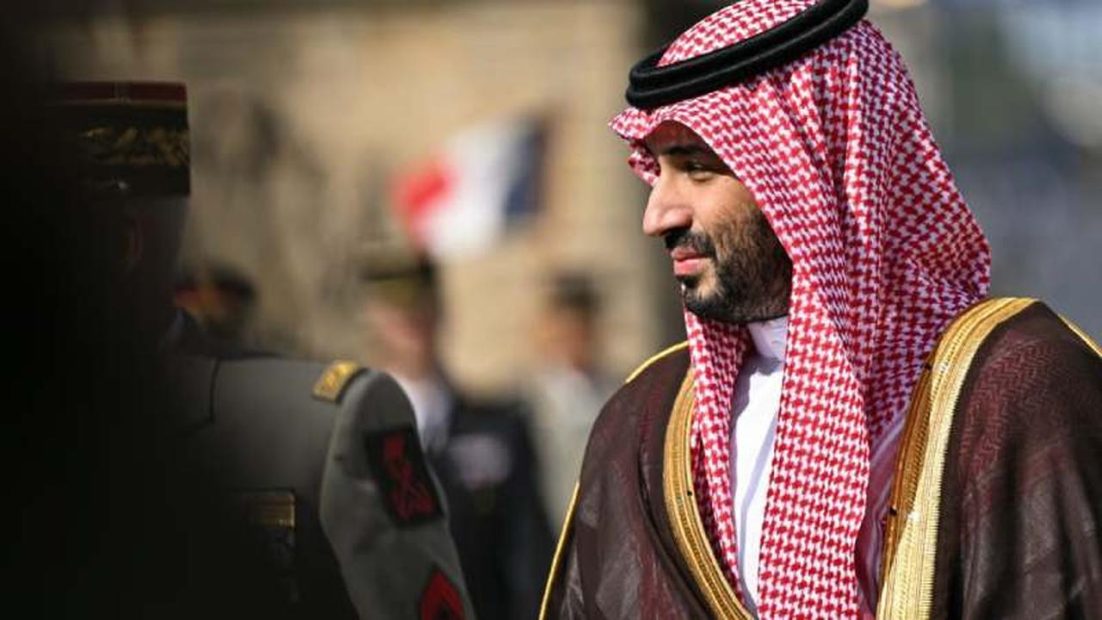
Saudi Crown Prince Mohammed bin Salman began this year from a position of strength. He had recently returned from a visit to the White House, where US President Donald Trump gave him a warm welcome. Even after the war with Iran began, Saudi Arabia appeared to be in a relatively favourable position. Although the Strait of Hormuz was blocked, the kingdom managed to continue oil exports through alternative pipelines.
However, escalating clashes with Iran-backed Houthi militants near Saudi Arabia’s border with Yemen have created a new security challenge. The conflict is also threatening the crown prince’s ambitious but struggling plans to transform the kingdom’s oil-dependent economy.
On Saturday, at least one missile launched by the Houthis struck Riyadh’s international airport. At least 13 people were killed and more than 100 others were injured, many of them critically. It was the deadliest attack on the United States or its Gulf allies linked to the war with Iran. Officials familiar with the incident said a 28-year-old Egyptian flight attendant died from severe blood loss after losing an arm in the explosion. Several other victims also lost limbs.
People familiar with the incident said two airport terminals were hit, causing parts of their roofs to collapse. Verified video footage by Storyful showed passengers pulling their suitcases across blood-stained floors as the airport was evacuated. Authorities said further attacks took place on Sunday while the airport remained closed. A projectile struck Terminal 4, starting a fire that killed one person and injured several others.
As recently as this summer, Saudi officials had told journalists that the Houthi threat was under control. However, the militants’ increasingly frequent attacks, which they describe as retaliation for Saudi actions, have targeted airports, energy facilities, refineries and the kingdom’s main east-west oil pipeline. The attacks have exposed the growing threat along Saudi Arabia’s southern border.
The conflict is jeopardising Saudi Arabia’s efforts to make travel and tourism major pillars of its economy. It has also cast serious doubt over a prestigious international investment conference scheduled for later this month. The cost of the war has already widened the budget deficit and threatens to push the economy into recession.
How Prince Mohammed handles the crisis could have consequences far beyond Saudi Arabia’s borders. The kingdom is a major source of funding for the global technology industry and artificial intelligence projects. It also plays a crucial role by allowing the US military to use its bases and airspace.
Late last week, President Mr. Trump told reporters that the United States was in contact with the Houthis and that Washington might join Saudi Arabia in military action against the group. On Saturday night, Trump said, “What they did was very bad.”
In a statement on Sunday, a Houthi military spokesperson repeated the warning that Saudi airports were targets. Meanwhile, Saudi officials have said the kingdom is facing shortages of interceptors and other equipment needed to stop further attacks.
The latest strikes have turned parts of Riyadh, located more than 500 miles from Houthi-controlled territory in Yemen, into a battlefield. Explosions across the city have sent residents searching for shelter. On Thursday, debris from an intercepted ballistic missile fell on a kindergarten and a medical clinic complex. Workers in the city’s financial district, students at some international schools and diplomats have been instructed to seek shelter or evacuate.
Officials familiar with the situation said the 41-year-old crown prince had been moving between heavily fortified royal palaces, protected by a select security team. His most recent public appearance was on Tuesday, when he donated blood as part of a national blood donation campaign.
Kristian Coates Ulrichsen, a Gulf expert and fellow at Rice University’s Baker Institute, said the Saudi leader had few good options. “Any military response would mean becoming more deeply involved in an asymmetrical conflict in which the Houthis have demonstrated that they can inflict significant and symbolic damage.” Saudi press officials did not respond to requests for comment.
Over the past decade, Prince Mohammed has invested heavily in ambitious, technically complex projects intended to modernise the kingdom and attract investment and tourism. These include the futuristic city of Neom, a massive cube-shaped building in Riyadh and a desert ski resort.
For a government with an annual budget of around $350 billion, these plans are exceptionally ambitious, with total costs running into trillions of dollars. The expense of the war with Iran and its economic consequences have made the financial challenge even more difficult.
Foreign investment declined during the first two quarters of the year, falling well short of the crown prince’s 2030 targets. Rising defence and infrastructure costs threaten to divert funds needed for economic diversification. Even Saudi Arabia’s ambition to become an artificial intelligence hub is facing new risks as data centres become potential targets for attacks.
Many of Prince Mohammed’s flagship projects are now stalled or under review. In January, Saudi Arabia was forced to abandon its plans to host the 2029 Asian Winter Games. The kingdom must also secure funding for Expo 2030 and the FIFA World Cup four years later.
According to Capital Economics, Saudi Arabia’s non-oil economy contracted in the second quarter compared with the first. The Saudi Finance Ministry now expects gross domestic product to shrink by 3.6% in 2026. When Iran blocked the Strait of Hormuz earlier this year, Saudi Arabia managed to pump oil across the desert to the Red Sea. The kingdom benefited from continued oil sales and higher prices.
However, in July, the Houthis announced a maritime blockade against Saudi Arabia, threatening shipping in the Red Sea. In September, they attacked the east-west pipeline, striking a major Saudi export route that bypasses the Strait of Hormuz. The militants then turned their attention to Saudi aviation, putting another key economic sector under pressure. The Houthis have attacked Riyadh’s King Khalid International Airport at least four times.
Prince Mohammed himself drew Saudi Arabia into Yemen’s civil war. In 2015, Riyadh intervened in support of Yemen’s internationally recognised government against the Houthis. The Saudi-led intervention included devastating airstrikes that intensified the conflict and encouraged Houthi attacks on Riyadh, other cities and oil facilities.
After years of fighting, the two sides reached a ceasefire in 2022. The latest violence has intensified just as Prince Mohammed was working to resolve the crisis involving Iran. Early in the war, Iranian attacks exposed the vulnerability of economic assets and energy facilities, including airports across the Gulf region.
People familiar with Saudi Arabia’s internal security situation said the kingdom was struggling to provide air defence coverage across its vast territory. Authorities had been moving air defence systems and batteries from one location to another to protect royal palaces and energy infrastructure.
Although Prince Mohammed supported maintaining economic pressure on Iran, he instructed his advisers to keep diplomatic channels open with Tehran and make clear that Saudi Arabia did not intend to act aggressively towards it.
Throughout the spring and summer, Houthi statements became increasingly hostile. Saudi intelligence suggested that Iran was actively pressuring the group to join the war. However, some Saudi officials believed the Houthis would make decisions based on their own interests rather than Iran’s, particularly after suffering significant military losses in US and Israeli attacks the previous year.
The Houthis’ intentions became clearer in August, when they launched an offensive to seize coastal areas around Bab al-Mandeb, a strategic chokepoint at the entrance to the Red Sea. When Saudi-backed Yemeni allies tried to repel Houthi attacks on the strategic port city of Mocha, Riyadh did not provide air support. Saudi Arabia wanted to avoid further escalation. As a result, Mocha and other important coastal positions fell, increasing the threat to Saudi oil shipments.
Despite Prince Mohammed’s efforts to strengthen ties with Washington, including a pledge to invest nearly $1 trillion in the United States, the US has so far not responded to requests for military assistance to stop the Houthi advance, although it has sent some military advisers.
People familiar with the matter said Saudi Arabia had sought assistance from Pakistan, a military ally, and was searching worldwide for air defence systems. The kingdom was also considering recruiting foreign fighters to support its Yemeni allies. At the same time, Riyadh is exploring whether a diplomatic solution can be found to contain a conflict that is increasingly slipping beyond its control.
Source: The Wall Street Journal