Climate Change and the Signs of Doomsday
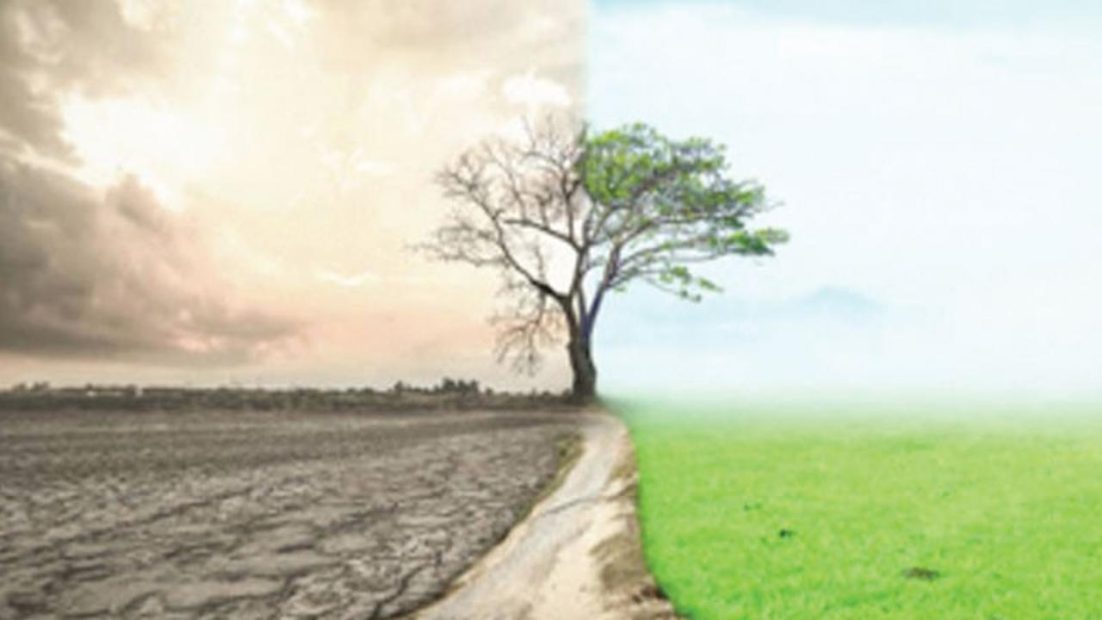
Allah, the Lord of the Worlds, created everything in the universe, including the heavens and the earth, the sun and the moon, seas and oceans, forests and mountains, plants, animals and human beings. He created everything for a specific purpose and a fixed period. When that period ends, everything will be destroyed by His command, and Doomsday will occur. The Holy Quran and Hadith contain numerous accounts of this event.
According to Islamic belief, when humanity abandons the worship of Allah, engages in sinful acts and exceeds all limits in disobeying Him, the Earth will become uninhabitable for human beings. Ultimately, the great cataclysm of Doomsday will take place. This is a fundamental belief of Muslims.
Everything happens by Allah’s will. Yet He has also embedded material and scientific explanations within His acts of creation and destruction. As scientific knowledge advances, people are increasingly exploring the natural processes that may threaten the Earth and its inhabitants.
For a long time, some scientists were reluctant to accept the eventual destruction of the Earth and the universe. Today, however, scientists are discussing the long-term fate of the planet and the threats posed by climate change and environmental pollution. From an Islamic perspective, the author views these developments as possible signs and warnings of Doomsday described in the Quran and Hadith. Understanding their spiritual significance, he argues, also requires knowledge of religious teachings and faith.
The environment is essential for human survival. Food, clothing, shelter and healthcare all depend, directly or indirectly, on environmental resources. Pollution and environmental degradation can therefore create serious crises. As these problems intensify, the Earth may become increasingly unsuitable for human habitation, threatening human civilisation.
Modern industrialisation and technological development have contributed to climate change and environmental pollution. Environmental scientists have repeatedly warned about the consequences. The recent devastating glacial collapse and floods in Nepal have drawn renewed attention to these risks.
The disaster reportedly killed more than 1,400 people and left over 600 missing. Scientists in several countries have begun investigating its causes, with particular attention to climate change and its effects on the Himalayan region.
The altitude at which atmospheric temperatures reach zero degrees Celsius in the Himalayas is reportedly rising by more than 320 feet per decade. This means that areas previously below freezing are experiencing warmer conditions. Rising temperatures may weaken permafrost—ground containing frozen soil, sand, rock and ice—in Nepal’s high mountains. When permafrost thaws, rocks can become less stable and water can penetrate mountain slopes, increasing the risk of landslides.
Glacier retreat is another concern. Research indicates that the Langtang Lirung Glacier has thinned and contracted significantly over recent decades, particularly since 2010. As glaciers shrink, meltwater can enter cracks in surrounding rocks and potentially destabilise mountain slopes. Scientists consider these changes important factors in assessing the risk of landslides and related disasters.
Global warming is also accelerating the melting of glaciers in the Arctic, Antarctic and Himalayan regions. Significant changes have already been observed in Antarctica, while recent events in the Himalayas have highlighted the dangers of a changing climate.
The environment is one of the remarkable blessings of Allah’s creation. It consists of interacting living and non-living elements, including plants, animals, light, air, water, soil and heat. The natural environment is not static; it is a dynamic system that sustains life.
The environment is also a subject of scientific study. Known as environmental science, this field examines the relationships between living organisms and their surroundings. From a religious perspective, the natural world reflects Allah’s power and wisdom. The author argues that its delicate balance demonstrates the importance of protecting the environment.
The Holy Quran states: “Indeed, We have created everything in due measure.” (Surah Al-Qamar, 54:49)
Environmental pollution can be broadly divided into natural and human-induced pollution. Natural processes help maintain ecological balance. For example, humans release carbon dioxide through respiration, while trees absorb carbon dioxide and release oxygen, contributing to the balance of gases in the atmosphere.
Human activities, however, cause serious pollution. Examples include nuclear, chemical and industrial waste; vehicle emissions; deforestation; indiscriminate dumping of rubbish; improper disposal of human waste; obstructing or filling rivers and canals; excessive use of polythene; and the indiscriminate hunting and killing of animals and birds.
Despite growing awareness, environmental protection efforts have yet to produce the desired results. Pollution and climate-related risks continue to pose serious challenges. Protecting the environment is therefore essential not only for human survival but also for preserving the natural balance of the Earth.
(To be continued)