IGP’s Controversial Remarks on ‘Crossfire’ and Journalists Become Talk of the Country
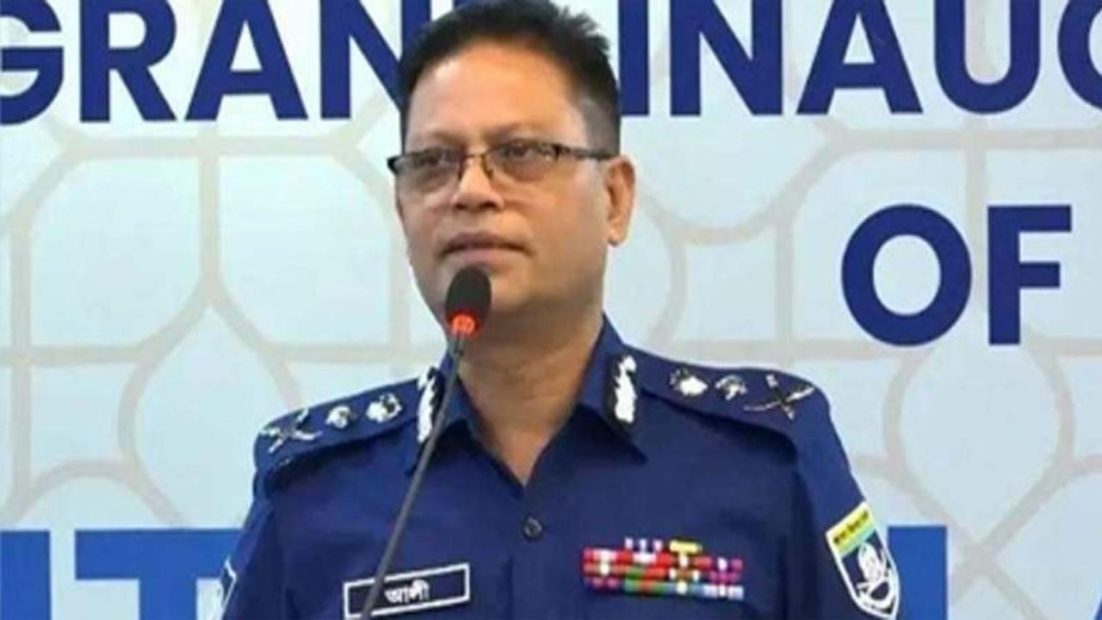
Inspector General of Police (IGP) Ali Hossain Fakir’s controversial remarks on “crossfire” and journalists have sparked widespread criticism and debate across the country.
BNP Acting Secretary General and Prime Minister’s Political Adviser Ruhul Kabir Rizvi said the IGP’s remarks, made to gain cheap publicity and take credit, would harm the country and leave the government embarrassed and fearful rather than reassured.
He said many honest and competent officers serve in the police force and that crime could be eliminated if they were allowed to work impartially. He made the remarks at a free medical camp in front of the BNP’s central office in Nayapaltan on Tuesday, marking the 48th founding anniversary of Jatiyatabadi Jubo Dal.
The government’s Information Adviser said a final decision on the IGP’s remarks would be made after the Prime Minister returns to the country.
Transparency International Bangladesh (TIB) and the Human Rights Support Society (HRSS) strongly condemned the remarks, describing them as contrary to the law and the Constitution. They demanded that the IGP withdraw his comments immediately and be held accountable.
Meanwhile, Hasnat Abdullah, a leader of the Anti-Discrimination Student Movement, gave the IGP 24 hours to withdraw his remarks and apologise.
Amid the controversy, Police Headquarters issued a clarification. The Bangladesh Police Service Association (BPSA), however, described the IGP’s remarks on crime control as timely.
On Monday, the IGP said, “Crossfire will be carried out if the government or the state permits it.” He also made comments about journalists’ role in reporting on drugs and criminal activities.
A Dhaka University teacher told BBC News Bangla that the IGP should not have made such remarks while holding one of the country’s most important state positions.
Crossfire has been used as a tool to suppress opposing political views through the abuse of state power, the teacher said. The remarks have raised public concerns and alarmed human rights organisations.
Public confidence in law enforcement agencies is already low, the teacher added. If the government resorts to crossfire, the move could ultimately backfire.
Journalists Demand Apology
Speaking about the anti-drug campaign on the same day, the IGP said journalists reported that the police were ineffective when they did not receive money from drug-related activities.
Protesting the remarks, the Dhaka Reporters Unity (DRU) and the Bangladesh Crime Reporters Association (CRAB) gave the IGP 24 hours to publicly apologise and withdraw his comments. Both organisations threatened tougher programmes if he failed to comply.
The BPSA, however, defended the IGP’s remarks on crossfire, describing them as a “timely call”.
In a statement signed on Tuesday by its general secretary, Dhaka Superintendent of Police Shamima Parveen, the association said the IGP’s remarks should be assessed in light of existing laws and regulations.
It said the comments could be considered a timely call for the proper enforcement of the law, the protection of public safety, and the strengthening of police officers’ professional confidence and ability to perform their duties.
Human rights activist Nur Khan Liton also strongly criticised the IGP’s remarks.
He said the head of a law enforcement agency should strengthen the judicial system and uphold the rule of law. If someone in that position defends extrajudicial killings or makes provocative statements supporting them, he loses the moral grounds to remain in office, Liton said.
Such remarks not only fuel controversy but also raise questions about the country’s image and judicial system, he added.
The IGP’s comments have triggered widespread debate on social media and in news outlets. Many believe senior state officials must exercise greater responsibility in their public statements. His remarks on the sensitive issue of crossfire have fuelled public fear and anger.