
Massive Looting in the Name of Fighting Air Pollution, Air Quality Remains Unchanged
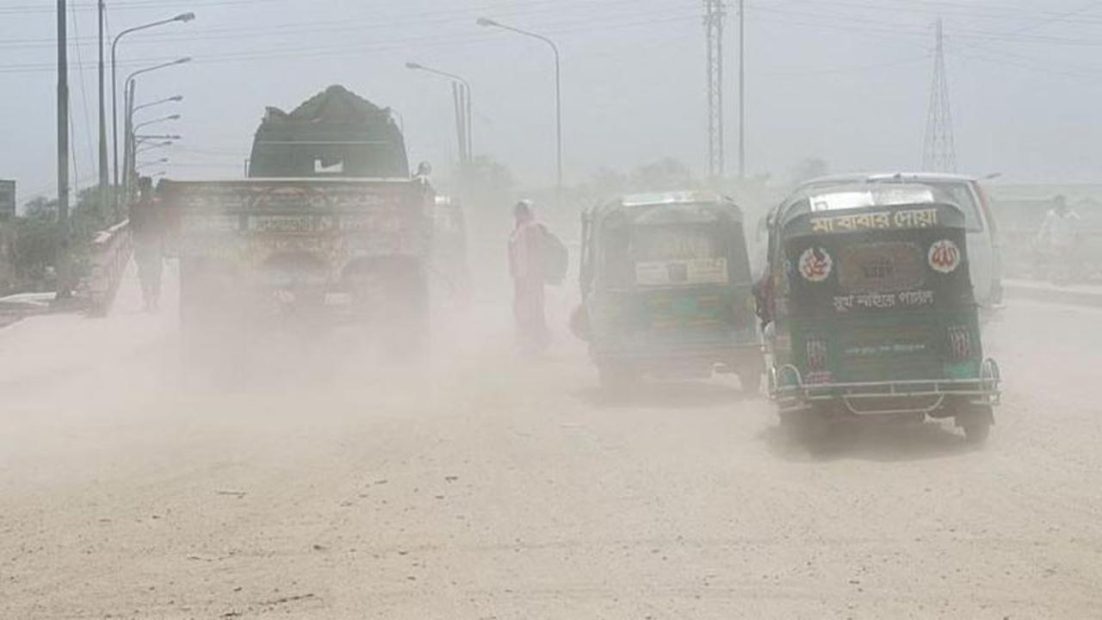
Several projects have been undertaken in Bangladesh in recent years to combat air pollution, with funding from both international sources and domestic budgets. Despite spending thousands of crores of taka on these projects, they have failed to deliver the expected improvements in air quality. Various studies and government reports indicate that much of the funding has been spent on training, foreign trips, building construction and consultancy services rather than directly controlling pollution.
As a result, air quality remains poor, and health risks in the capital continue to rise. Toxic pollutants remain in the air, forcing Dhaka residents to breathe polluted air from morning until night. One of the major sources of air pollution is vehicles with old and defective engines. Black smoke from old and unfit buses is making urban life increasingly difficult.
The current government has launched a new project to combat air pollution titled Bangladesh Clean Air Project (BCAP) Phase I: Vehicle Emission Control. The project has an estimated cost of Tk 506.63 crore. Of this amount, more than Tk 60 crore has been allocated for consultancy services, while Tk 268 crore has been earmarked for office building construction.
According to the report The State of Global Air Quality Funding, Bangladesh received US$2.3 billion, equivalent to more than Tk 27,000 crore, in international funding for air pollution control between 2017 and 2021. Bangladesh ranked third in the world in terms of funding received for this purpose. Despite receiving such a huge amount, the country has made no visible progress in improving air quality. For nearly half of the year, air pollution levels remain extremely high, making the air unhealthy.
The Department of Environment spent Tk 221 crore on the Clean Air and Sustainable Environment (CASE) project over 10 years, from 2009 to 2019, with funding from a World Bank loan. According to a report by the parliamentary standing committee at the time, more than half of the expenditure—Tk 123 crore—went towards officials’ foreign trips, consultancy fees, vehicle purchases and building construction. A total of 296 officials travelled abroad in the name of training. As a result, the project failed to make any effective contribution to reducing air pollution, and Dhaka’s air quality continued to deteriorate.
Despite the failure of previous projects, several more major initiatives have been taken. A project titled Bangladesh Clean Air Project (BCAP) Phase I, aimed at controlling black smoke and vehicle emissions, began in July this year and will continue until 2030. The project has a budget of Tk 506.63 crore, of which Tk 469.46 crore will come from a World Bank loan.
However, controversy has already emerged over the allocation of Tk 60.48 crore for consultancy services alone and Tk 268 crore for office building construction. Another World Bank-funded clean air project, worth US$290 million, is also underway to monitor air quality in Dhaka and surrounding cities. It aims to reduce harmful PM2.5 emissions by 2,734 metric tonnes annually.
Experts say these projects fail to deliver results because much of the funding is spent on administrative and institutional activities rather than directly reducing pollution. They also point to poor coordination among the agencies responsible for implementing the projects. Law enforcement and regular monitoring remain weak, particularly against polluting vehicles and illegal brick kilns.
Overall, more than half of the money spent on these projects is allegedly lost to corruption and misuse, preventing the public from receiving the intended benefits. Dr M Shamsul Haque, a transport expert, professor in the Department of Civil Engineering at Bangladesh University of Engineering and Technology (BUET), and former director of BUET’s Accident Research Institute, said, “Projects of this kind have been undertaken in the past to prevent air pollution. But nothing has worked. The relevant agencies have not been seen playing an effective role in preventing unfit vehicles from operating on the roads. Many people obtain fitness certificates without even bringing their vehicles for inspection. This must be stopped. The government must be genuinely committed to this work. Simply launching projects will not be enough. The police must perform their duties properly. The system must be changed.”
Abdus Salam, administrator of Dhaka South City Corporation, said the government had taken various initiatives to make Dhaka a clean and beautiful city with fresh air. These include tree-planting programmes and cleanliness drives. The government has also decided to remove more than 1,000 buses to improve air quality.
However, environmentalists remain unconvinced by these assurances from government officials. They believe that air pollution is caused not only by unfit vehicles but also by long-standing structural problems in the public transport system.
In June, the Bangladesh Road Transport Authority (BRTA) announced that unfit, unsafe, damaged and polluting motor vehicles would not be allowed on the roads. However, the number of buses emitting black smoke on the capital’s streets has not decreased. This has raised questions about the effectiveness of law enforcement and the government’s commitment to tackling the problem.
Professor Dr Ahmad Kamruzzaman Majumder, founding chairman of the Centre for Atmospheric Pollution Studies (CAPS), an environmental policy research organisation, and a leading environmental scientist, said, “The government’s commitment to preventing air pollution in Dhaka certainly comes into question. We know that vehicles with old and defective engines are a major source of air pollution in the capital. Yet the government has failed to remove them from the roads. Expired and unfit vehicles continue to operate in the capital with considerable impunity. Therefore, if the government is not sincere, efforts to prevent air pollution will remain nothing more than empty promises.”










