To Deepen and Diversify Bangladesh-China Ties, CPC Minister Liu Haixing to Visit Dhaka Tomorrow

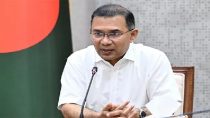
Mr. Liu Haixing, Minister of the International Department of the Central Committee of the Chinese Communist Party (CPC), comes to Dhaka tomorrow, Tuesday, for a three day visit. He hopes to deepen and widen the long friendly ties between Bangladesh and China. People expect talks on political contact, economic partnership, investment and development cooperation. He is set to meet Prime Minister Mr. Tarique Rahman and President Mr. Mirza Fakhrul Islam Alamgir during the visit.
Mr. Liu Haixing also has a family link with Bangladesh. His father, Mr. Liu Shuqing, served as China’s ambassador to Bangladesh in the 1980s. In August 1980, he presented his credentials to the then President, Mr. Shaheed Ziaur Rahman. Outgoing Chinese Ambassador Mr. Yao Wen said this family link also shows the historical side of the long ties between the two countries.
One key programme of the visit is a roundtable on Wednesday at the InterContinental Hotel in the capital. Its title is “Where History Illuminates the Future: China Bangladesh Political Parties Plus”. At the same event, the two sides will open the Bangladesh China Center for Party and State Governance Studies. This step aims to create new areas of contact between the parties of the two countries, sharing of governance experience and institutional cooperation. The centre may also let the two sides share experience on development planning, administrative skill, poverty reduction and industrialisation.
Mr. Liu Haixing is a member of the Central Committee of China’s ruling Communist Party. In his long diplomatic career, he served at the Chinese embassy in France, China’s Permanent Mission to the United Nations and the European affairs department of the foreign ministry. He also worked as an Assistant Foreign Minister. Before his present post, he was Executive Deputy Director of the Office of the Central National Security Commission.
In 2025, he became head of the International Department of the CPC Central Committee. This department plays a key role in managing the Chinese Communist Party’s ties with foreign political parties and groups. So people view his visit as more than diplomatic contact. They also see it as a step to widen political level ties between the two countries.
The history of Bangladesh China ties adds weight to this visit. The two countries set up formal diplomatic ties in 1975. Over the next five decades, cooperation grew in trade, infrastructure, energy, communication, defence, education and technology. In 2016, during Mr. Xi Jinping’s visit to Bangladesh, ties rose to a strategic cooperation partnership. The golden jubilee of diplomatic ties in 2025 also highlighted the long continuity of this relationship.
Last June, Prime Minister Mr. Tarique Rahman visited China, and the two sides held important talks on deepening ties. On that visit, he met Chinese President Mr. Xi Jinping, Premier Mr. Li Qiang and Chairman of the Standing Committee of the National People’s Congress Mr. Zhao Leji. In the joint statement, the two sides promised more cooperation in trade, investment, industry, agriculture, technology, communication, renewable energy and human resource development. The Prime Minister also invited the Chinese leaders to visit Bangladesh.
Ties with China also matter to Bangladesh economically. Besides Chinese investment in infrastructure, energy and industry, there is room to widen markets for Bangladeshi exports. More cooperation could expand markets for garments, leather, medicine, farm goods and processed food, and help set up technology based factories. That could help the country’s production and jobs. But to use these chances, the two sides must make investment real, transfer technology, build skills and secure local jobs.
Geopolitical analysts say Mr. Liu Haixing’s Dhaka visit is a chance to make the existing ties richer. If real progress follows in political contact, trade, investment and institutional cooperation, the Bangladesh China strategic partnership can reach a new level. They say this visit can play a key role in keeping up high level contact after the Prime Minister’s China visit.