Inqilab Director and Executive Editor Nazifa Bahauddin Plans Digital Initiative to Showcase Bangladesh’s History, Culture, Heritage Globally
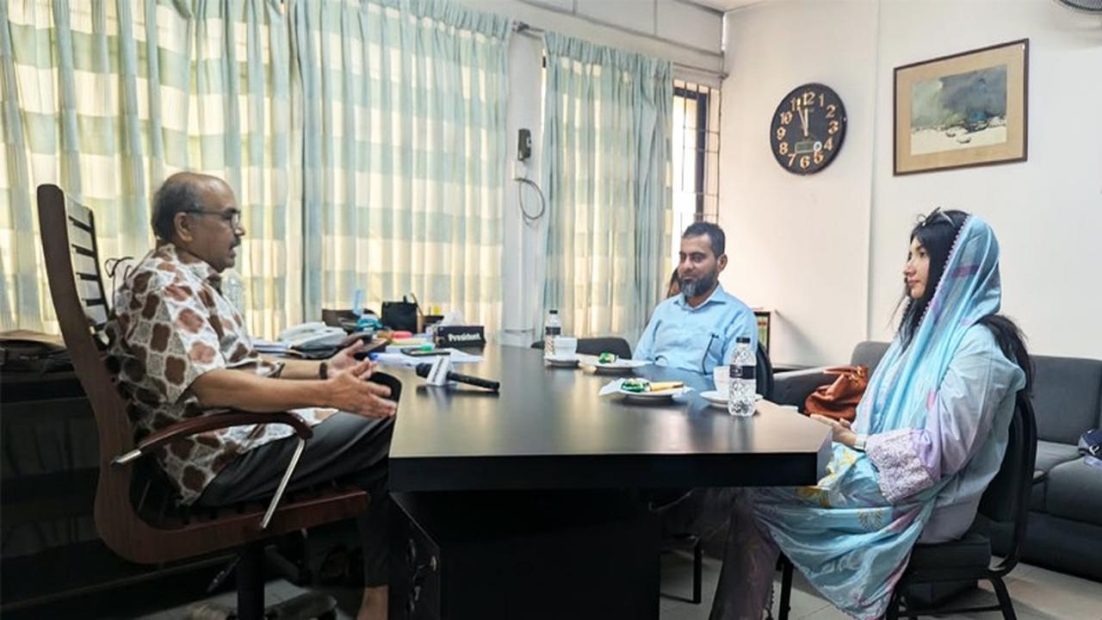
Research-based publications and modern technology could serve as key means of showcasing Bangladesh’s rich history, heritage and culture to the world. However, preserving valuable information and research alone is not enough; timely publications are needed to make them accessible. With this in mind, Nazifa Bahauddin, Director and Executive Editor of Daily Inqilab, visited the Bangladesh Asiatic Society and paid a courtesy visit to its President, Dr. Muhammad Shahjahan Mia.
During the meeting, they discussed the Asiatic Society’s longstanding research and publication activities on Bangladesh’s history, archaeology, literature, culture and heritage. The discussion also touched on the potential use of modern technology and English translations to bring these research works and publications to international readers.
Established in 1952, the Bangladesh Asiatic Society is one of the country’s leading institutions dedicated to history, heritage, culture and intellectual pursuits. Over the years, it has played an important role in research, publication and knowledge preservation. One of its notable initiatives is the 15-volume Banglapedia. Such research-based publications are immensely important in introducing Bangladesh’s history and heritage to readers at home and abroad.
However, readers’ preferences and the ways they access information have changed over time. Alongside printed books, demand for digital publications is also growing.
Nazifa Bahauddin believes that publications must be made more accessible and relevant to the times to showcase Bangladesh’s history, culture and creative works internationally. At the same time, ensuring authors’ intellectual property rights and copyright protection is essential. Protecting authors’ rights deserves particular attention in digital publishing.
The discussion also highlighted the growing influence of artificial intelligence (AI) on research and intellectual pursuits. While AI is creating new opportunities for information retrieval, analysis and research, concerns remain about excessive dependence on the technology. Particular emphasis was placed on the need to ensure that students’ independent thinking, analytical skills and interest in research do not become overly dependent on technology.
With technological advancement, the use of new innovations, including robotics, is also expected to increase in the future. Alongside discussions on the application of these technologies in education, research and industry, the importance of preserving the country’s history, culture and distinct identity was also highlighted.
Such cooperation between the Bangladesh Asiatic Society and relevant institutions could create further opportunities to expand Bangladesh’s intellectual pursuits and cultural identity on the global stage.