Brick Kiln Encroachment Decimates Date Palm Trees in Barguna
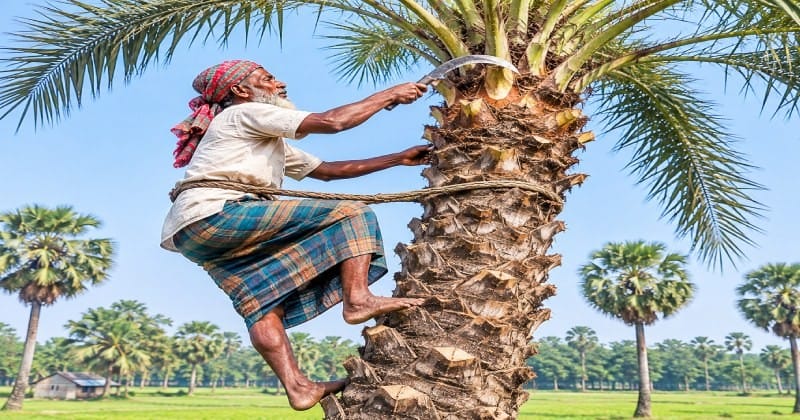
Once a vibrant hallmark of winter mornings in Barguna and other southern districts of Bangladesh, the collection of date palm sap and production of traditional jaggery have nearly vanished. During the 1980s, rural landscapes bustled as local tappers, or gachhis, climbed trees before dusk to shave trunks and hang earthen pots for sweet overnight sap. Long before dawn, they returned home with pots filled to the brim to sell fresh sap or boil it down in massive hearths. This seasonal tradition supported local livelihoods, shaped rural economies, and provided vital ingredients for winter pithas and payesh.
However, the population of date palm trees has plummeted to near zero due to indiscriminate felling driven largely by brick kilns using them as firewood. Shifts in residential settlement patterns, agricultural land conversion, new construction, and a total lack of planned cultivation have further intensified the crisis. Alongside the disappearance of the trees, the traditional profession of the tapper is dying out, as the younger generation remains untrained in tapping techniques and many former tappers have shifted to other jobs.
Local elders deeply mourn the loss of this heritage, recalling the festive winter atmosphere it once created. Moslem Ali Hawlader, an elderly farmer from Boro Lobongola village in Barguna Sadar Upazila, recalled, ‘In the past, there were hundreds of date palm trees in our area. Whenever winter arrived, tappers could be seen returning home at dawn with pots full of sap. Now, neither those trees nor the tappers remain. Even if you look for native date palm jaggery in the market nowadays, it is hard to find. The taste and scenes of my childhood are now nothing more than memories.’
Echoing this sentiment, Hazrat Ali Khan of Gulishakhali Union in Amtali Upazila noted, ‘As the number of brick kilns increased, the felling of date palm trees began. Many trees were used as firewood. No one took the initiative to plant new ones. Previously, winter used to bring a festive atmosphere to the village centered around date palm sap and jaggery. That heritage has now been lost.’ Furthermore, Md. Alam Hawlader, a resident of Gohorpur village in Patharghata Upazila, stated, ‘Date palm jaggery is not just food; it is a part of rural Bengal’s heritage. Earlier, I used to buy jaggery produced directly from the sap of trees in my own area. Now, people question the origin and purity of the jaggery found in the markets. Finding authentic, native date palm jaggery has become difficult.’
Experts and concerned observers emphasize that reviving this vital component of rural biodiversity, economy, and culture requires immediate, systematic action. Effective measures include planting new date palm trees along roadsides, canal banks, embankment slopes, and fallow lands, while strictly halting their use as firewood in brick kilns. Additionally, providing professional training for tappers and offering financial incentives for local producers can help safeguard this fading symbol of rural heritage for future generations.