No Legal Complications in Bringing Sheikh Hasina Back: Information Adviser
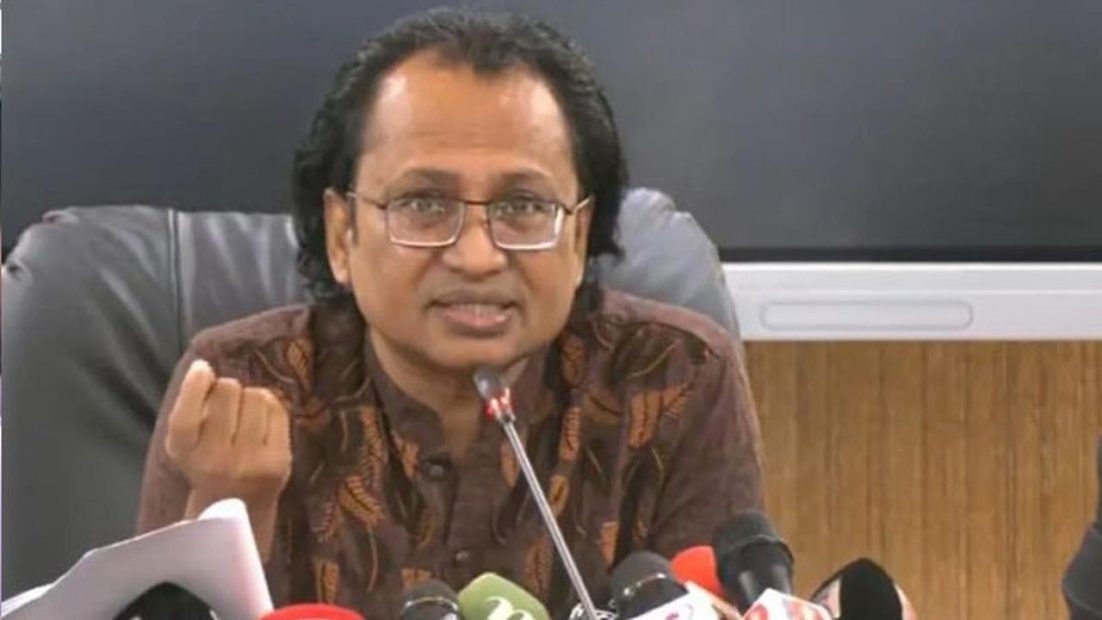
The government sees no legal complications in bringing former Prime Minister Sheikh Hasina back from India to face trial in Bangladesh. The process to bring her back is continuing under the existing extradition treaty with India and through diplomatic channels, said Dr Jahed Ur Rahman, the Prime Minister’s Adviser on Information and Broadcasting.
He said Sheikh Hasina had been convicted of crimes against humanity, not an ordinary criminal offence. Therefore, the government’s goal is to bring her back to Bangladesh and ensure that she faces trial.
He made the remarks while speaking to journalists at the Secretariat on Tuesday (November 10).
The information adviser said crimes against humanity were extremely serious offences and could not be compared with ordinary crimes. He added that Bangladesh’s Constitution also contains special provisions for the trial of crimes against humanity.
He said the government wanted to bring Sheikh Hasina back by following existing laws and international extradition procedures, rather than pursuing any unclear or inconsistent course of action.
Referring to the extradition treaty with India, he said the two countries had an effective agreement on the matter. Bangladesh had formally requested Sheikh Hasina’s return through diplomatic channels under the treaty. Although the Indian government had referred to its legal process, Bangladesh believed the treaty provided a basis for her extradition.
Responding to journalists’ questions about Sheikh Hasina’s passport application, Jahed Ur Rahman said a law firm had sent a letter to the Bangladesh High Commission in New Delhi, India. However, the government had no information confirming that Sheikh Hasina herself had formally applied for a passport. He said there was no reason to create confusion over the matter.
Meanwhile, The Daily Star reported that Matrix Chambers, a UK-based law firm identifying itself as Sheikh Hasina’s legal representative, sent an email to the Bangladesh High Commission in New Delhi on November 9, seeking her passport and national identity card.
The High Commission, however, said the email did not include any evidence confirming that Sheikh Hasina had authorised the application. The matter has been forwarded to the Ministry of Foreign Affairs.
Bangladesh first formally requested Sheikh Hasina’s extradition from India through a diplomatic note in December 2024. In November 2025, the International Crimes Tribunal sentenced her to death in absentia in a case involving crimes against humanity. The full verdict in the case was published on January 13, 2026.
Under the Bangladesh-India extradition treaty signed in 2013, the two countries can hand over accused and convicted individuals to each other. Although the treaty provides certain exceptions for political offences, serious crimes such as murder, incitement to murder and crimes against humanity cannot automatically be treated as political offences.
In July, Indian Ministry of External Affairs spokesperson Randhir Jaiswal said Bangladesh’s extradition request was being examined in accordance with India’s legal and judicial processes.