54 Muslims Killed in 322 Attacks in India Over 9 Months, Security Forces Implicated in One-Third
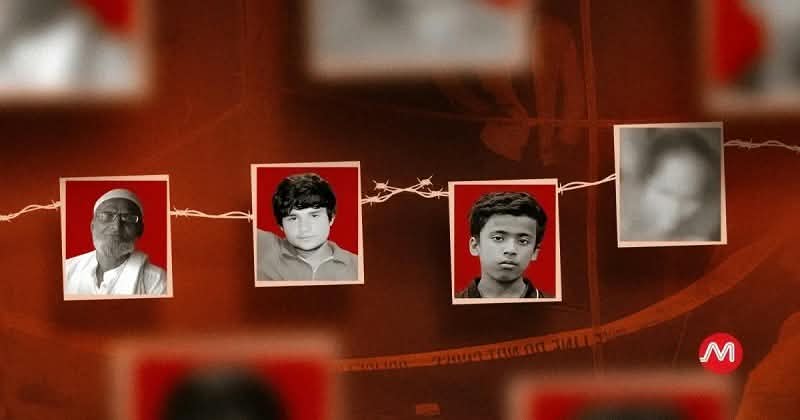
Fifty-four individuals lost their lives to religious hatred and hate crimes in India between January 1 and September 30, 2026, according to a comprehensive report published by the Association for Protection of Civil Rights (APCR). The documentation recorded 322 incidents of violence targeted against religious minorities across 24 states and union territories. The report highlighted that law enforcement agencies and state authorities were directly involved in one out of every three documented incidents. Overall, the findings reveal an alarming pattern of systemic discrimination and physical violence directed against minority communities.
The real-world human toll of this violence is illustrated by the brutal killing of forty-year-old Saikun Khan in Rajasthan’s Alwar district. Khan had stepped out to purchase a tire tube near the Baroda Meo police station when an assailant knocked him off his motorcycle and crushed his head with a stone. An eyewitness recounted that the attacker shouted, “I’ve killed a mullah today, I’ll kill more ahead.” Despite police assertions that the killer was mentally unstable, Khan’s family alleged officers offered them money to misrepresent the incident as a routine traffic accident.
The APCR report, compiled using its specialized ‘Hate Crime Tracker’, was officially released in New Delhi alongside a separate study detailing instances of hate speech across the nation. Together, the two trackers documented 405 total incidents during the nine-month monitoring period. Summarizing the situation, the report stated, “In the first nine months of 2026, Muslims or Christians were attacked, harassed, arrested, displaced, or killed in India on average more than once every day merely because of their religious identity.”
Data from the report shows that 95 percent of all recorded violent acts specifically targeted the Muslim community, accounting for 307 of the 322 cases. Christians were targeted in 14 cases, while one incident involved members of both communities. Available victim counts confirmed that at least 488 Muslims and 90 Christians suffered direct attacks, harassment, unlawful arrests, or displacement. This total figure included vulnerable demographics, specifically 48 children, 26 women, and 9 elderly citizens, though total actual counts remain significantly higher.
State actors, including police, military forces, municipal corporations, and local administrations, were implicated in 119 cases, representing 37 percent of all documented incidents. Furthermore, 21 out of the 54 total fatalities occurred directly at the hands of state forces. Highlighting the gravity of extrajudicial actions, twenty-two-year-old Zeeshan and his thirty-five-year-old brother Gulfam were killed in separate alleged police encounters in Uttar Pradesh. Their father, Buniyad Ali, expressed outrage, stating, “If my sons committed any crime, they could have been arrested and brought to court.”
In addition to encounter killings, nine individuals died while held in police custody or inside penal facilities across various Indian states. On April 20, thirty-four-year-old vegetable vendor Anish died in custody at Delhi’s Jahangirpuri police station after being detained while returning from work. Demanding accountability, Anish’s grieving mother alleged, “My son left home in good health. The police beat him to death.” Similar allegations of severe custodial torture were reported in Gujarat, Karnataka, Assam, and Bihar, where families reported systemic neglect and abuse.
Rather than offering protection, state authorities frequently weaponized legal procedures against the victims themselves, lodging official charges against victims in 37 percent of all documented cases. Police filed First Information Reports against individuals hosting traditional Iftar gatherings, offering prayers in private homes, or organizing peaceful community protests. In one instance in Telangana, a political leader physically assaulted a school headmaster for teaching Urdu; however, local law enforcement responded by registering criminal charges against the headmaster instead of the perpetrator.
Administrative bodies also engaged in punitive measures through unauthorized bulldozer demolitions, directly violating procedural guidelines set by the Supreme Court of India. Over the nine-month period, municipal demolitions targeted family homes, historic mosques, and residential areas following local disputes or communal tensions. These administrative actions, combined with mob violence, forced at least 83 minority families to flee their ancestral homes. In Goalpara, Assam, local authorities evicted 73 Muslim families across five villages after providing a mere 24 hours of advance notice.
Disputes over livestock and meat consumption served as the single largest primary catalyst for communal violence, accounting for 79 incidents and 11 deaths. Vigilante groups routinely intercepted transport vehicles, assaulted drivers, and executed public lynchings under the pretext of preventing cattle transport. In Jharkhand, 45-year-old Pappu Ansari was stripped and killed with axes and sticks after his identity was verified. Authorities in multiple states reinforced these vigilante actions by enforcing mandatory closures of meat establishments and arresting individuals inside their private residences.
Religious festivals were frequently leveraged as focal points for intimidation and physical confrontations, accounting for one-fifth of all documented cases of violence. Constraints were placed on minority religious observances, leading to 46 violent incidents recorded within a 19-day window surrounding Eid al-Adha. Conversely, public processions were repeatedly utilized to project dominance, leading to arson, property destruction, and fatalities. Data indicated that 58 percent of the annual violence occurred within just 100 specific calendar days tied directly to major religious holidays.
Political events also triggered significant waves of targeted mob aggression, particularly following the announcement of state election results in West Bengal. A procession chanting religious slogans attacked the Gosanimari Mosque in Cooch Behar, killing a young man who attempted to protest the vandalism. Over the subsequent four days, 34 distinct violent incidents occurred across eight districts, damaging ten mosques and numerous private properties. The week following May 4 registered as the single most violent week recorded nationwide throughout the entire observation period.
Individuals bearing visible markers of minority religious identity, such as traditional caps, beards, or hijabs, faced widespread public harassment and physical assaults. Approximately 120 incidents were triggered solely by visible identity, including cases where students were slapped on public streets or denied access to public institutions. In Rajasthan, three laborers requesting their earned wages were threatened with violence based on their faith. In Andhra Pradesh, an artisan from West Bengal was beaten to death purely on unverified suspicions regarding his background.
Houses of worship, particularly historic and local mosques, represented the primary target of structural property destruction throughout the nine-month period. On September 5, administrative authorities bulldozed a colonial-era mosque located inside the District Collectorate Complex in Saharanpur, Uttar Pradesh, under heavy police presence. In total, 25 mosques, 18 private residences, 14 commercial shops, and 7 religious shrines were destroyed or severely damaged. The report emphasized that such structural attacks serve to systematically erase minority visibility from public spaces.
The geographical distribution of fatalities revealed distinct regional patterns in the nature of hate-driven violence across the country. Eastern states experienced a high concentration of mob lynchings, while states like Uttar Pradesh and Jammu and Kashmir saw deaths predominantly caused by state-sponsored encounter actions and custodial abuse. The APCR report concluded that discrimination and violence against religious minorities in India have escalated beyond isolated acts of intolerance, evolving into an institutionalized form of persecution that threatens fundamental civil rights.