UP Elections: Fears Mount Over Rising Activities of Banned Awami League at the Grassroots Level
Fresh political tensions are expected at the grassroots level ahead of the upcoming Union Parishad (UP) elections. The activities-banned Awami League, which has been politically sidelined at the national level, may use the local government elections as an opportunity to rebuild its organisational strength and rehabilitate its leaders and activists.
The party could attempt to regain its influence in the electoral field by relying on its old organisational networks, locally influential figures and supporters, particularly in rural areas. Recent reports of the involvement of Awami League and its affiliated organisations in various movements and social unrest have brought the issue back into political discussions.
Meanwhile, the BNP and the National Citizen Party (NCP) have taken a firm position against any attempt to politically rehabilitate the Awami League or allow its alleged acts of violence. Although Jamaat-e-Islami also opposes the party’s political rehabilitation, it has not yet demonstrated any significant independent resistance programmes at the grassroots level.
Political analysts believe that collective resistance by political parties is essential to prevent the Awami League from regaining its influence. Analysts say UP elections could change the balance of power at the grassroots beyond the impact of national politics. Personal popularity, family influence, local connections and financial strength often play important roles alongside party affiliations in these elections. As a result, a party that is politically weak at the national level may still have opportunities to demonstrate its influence locally.
For the Awami League, UP elections could become one of the main avenues for regaining a foothold at the grassroots. Since the party’s activities are banned, its opportunities for open organisational activities are limited. However, its former leaders, activists, supporters and influential local figures may continue trying to maintain its presence. Party activists could also consider contesting through independent candidates or locally popular individuals. Political observers fear that such strategies could create opportunities for the party’s rehabilitation at the grassroots through the elections.
Police say fully prepared to prevent disorder
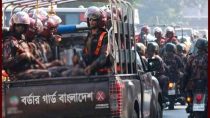
Police, however, say there is no scope for such activities. They claim that all units of Bangladesh Police remain alert and that no form of disorder will be tolerated. Officer-in-Charge of Monirampur Police Station in Jashore, Mohammad Abu Saeed, told The Daily Inqilab that they had not yet faced any major challenges. He said, “We have not faced any such challenging situation so far. Under the instructions of the Jashore Superintendent of Police, we are remaining alert round the clock to ensure that we do not face such a situation in the future. We hope Bangladesh Police and Monirampur Police Station will be able to prevent any disorder before it develops.”
Muhammad Ashraf Hossain, who is responsible for media affairs at Dhaka Metropolitan Police (DMP), told The Daily Inqilab that Bangladesh Police had made full preparations at the DMP and divisional levels. He said mobile courts, checkpoints, police patrols and other security measures had been strengthened. He added that police were fully prepared to deal with any situation and would continue operations in coordination with intelligence agencies.
At a press conference at the SRB Media Centre on Sunday, Wing Commander M Z M Intikhab Chowdhury also spoke about the security situation. He said, “We do not foresee any major threat so far in connection with December. We are in the field. We are working shoulder to shoulder with all other law enforcement agencies. Inshallah, I want to assure the people of the country that the law and order situation will remain normal.”
Awami League activities spark fresh political debate
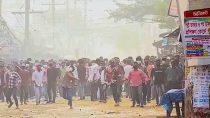
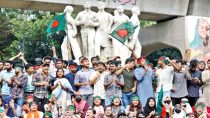
Recent activities of the Awami League have triggered further debate and criticism in political circles. The party’s leaders and activists have been accused of involvement in various labour movements, social unrest and demonstrations, as well as attempts to divert these movements towards political objectives.
Reports have also emerged of sudden protest marches in different areas and campaigns on social media. Various claims and propaganda have circulated surrounding an announcement that Sheikh Hasina would return to Bangladesh in December. Several of these claims have been identified as fake or misleading information.
In particular, AI-generated videos showing members of the armed forces demanding Sheikh Hasina’s return to Bangladesh have circulated on social media. Against this backdrop, the BNP has adopted a cautious position to prevent any attempt to rehabilitate the Awami League politically or carry out sabotage. BNP leaders have repeatedly spoken against the party’s alleged acts of violence and any attempt to restore its political presence.
In a recent statement, Dhaka-6 MP and former state minister Ishraq Hossain said they would build resistance on the streets with public support under the Prime Minister’s instructions. He pointed out that Bangladesh has a population of 180 million, while the police force has around 200,000 members, excluding Ansar and Village Defence Party (VDP) personnel. Therefore, law enforcement agencies alone cannot control every situation.
He said the government had decided to address the situation politically as well. “Each of us, as members of parliament, will build political resistance in our respective areas alongside party leaders, activists and ordinary people. We will remain on the streets,” he said.
He added that law enforcement agencies had effectively handled recent attempts to create unrest and set a political trap through labour movements. Mr. Ishraq said the people of Bangladesh had rejected what he described as the murderous, authoritarian and fascist Awami League. He noted that the party’s activities were banned and that a court decision following the trial over the 2024 mass uprising and killings would determine whether it could continue political activities under the Awami League name.
He alleged that isolated acts of sabotage were being carried out under the instructions of party leaders living abroad. He said the government was making every effort to restore normalcy and was also addressing such activities through political means. Efforts were underway to bring those involved in ambush attacks, sabotage and past mass killings to justice.
NCP vows resistance against Awami League’s return
The NCP has also announced that it will resist attempts by the Awami League to return to politics or create instability. Its leaders have said that any attempt to incite violence or disorder in the name of the Awami League would be resisted with public support.
NCP Joint Convener Sarwar Tushar said the activities-banned Awami League would be resisted at any cost. He urged everyone to remain alert so that no terrorist or collaborator of the party could regain a foothold at the grassroots through the UP elections.
He also said ensuring law and order and creating a fair electoral environment were the government’s responsibilities. Jamaat-e-Islami also opposes the political rehabilitation of the Awami League. However, unlike the BNP and the NCP, the party has not yet launched any major independent grassroots programmes to counter the Awami League’s possible activities. Its current political agenda focuses more on electoral reforms, the July Charter and state reforms.
Political analysts call for collective action
Noted political analyst and Dhaka University Pro-Vice-Chancellor (Administration) Professor Dr Mohammad Almozaddedi Alfechani told The Daily Inqilab that local government elections were one of the most important foundations of a democratic system.
He said no opportunity should be given to terrorists from a banned political party to regain their positions through UP elections or undermine the democratic process through violent activities. Attempts to disrupt elections or establish the dominance of one political party over another were also undesirable.
He stressed that equal opportunities for all participants, the rule of law and people’s voting rights must be ensured. He said those involved in political violence, repression and authoritarian practices that damaged democratic institutions in the past should face swift legal action if evidence is found against them.
He also expressed concern over misinformation and rumours circulating on social media about the return of convicted former Prime Minister Sheikh Hasina and the country’s political situation. He urged the BNP, NCP, Jamaat and all patriotic political parties, along with the public, to remain alert so that such rumours could not be used to incite violence in the future.
He stressed that political parties must play responsible roles and ensure that elections become a platform for democratic competition and the reflection of people’s choices rather than conflict. According to analysts, resistance by a single political party will not be enough to prevent the Awami League from expanding its activities ahead of the UP elections. Coordination among the BNP, NCP, Jamaat and other democratic political forces is necessary. At the same time, the administration and Election Commission must act neutrally and take effective measures in advance to prevent individuals or groups from destabilising the electoral environment.
The upcoming UP elections may therefore become more than a contest to elect local representatives. They could turn into a test of political strength at the grassroots. The Awami League’s reported attempts to become active again, the BNP’s efforts to maintain its organisational influence, the NCP’s attempt to establish a new political base and Jamaat’s strategic position could together create fresh political tensions ahead of the elections. In this situation, a united position among political parties may prove crucial to protecting the democratic environment and ensuring transparent elections.