Gopalganj on Edge: Political Tensions, Administrative Reshuffle and Questions of Accountability Behind the Unrest
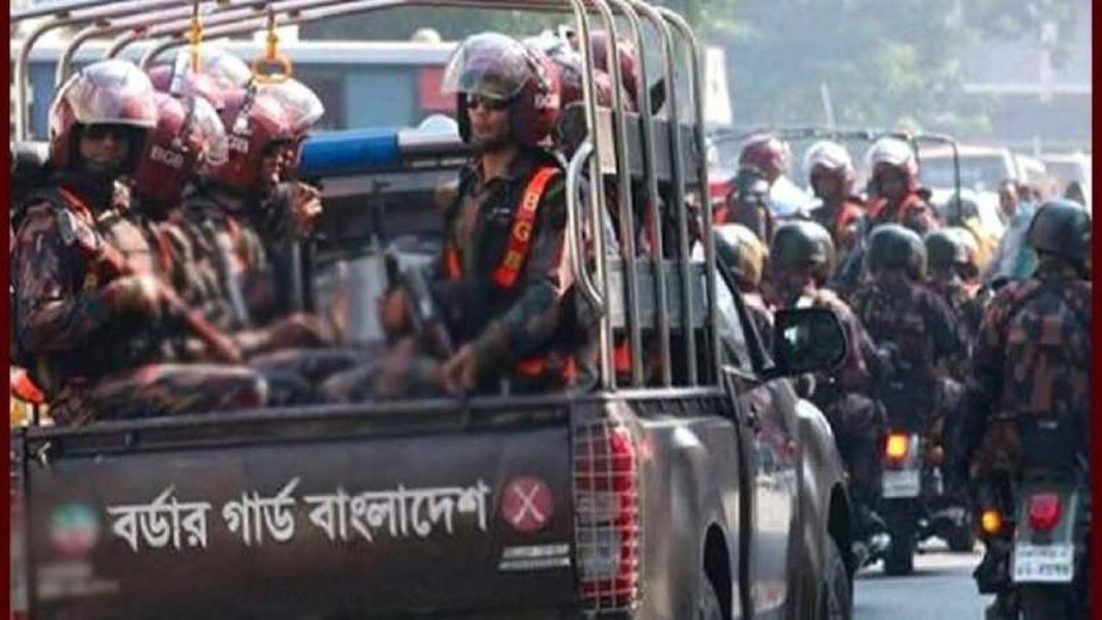
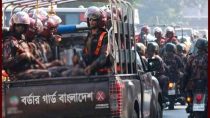
Gopalganj remains tense and under a heavy security presence following several days of violence, arson and attacks on law enforcement personnel. To bring the situation under control, 10 platoons of Border Guard Bangladesh (BGB), along with armoured personnel carriers (APCs), have been deployed at key points across the district.
Meanwhile, the Deputy Commissioner (DC), Superintendent of Police (SP) and officers-in-charge (OCs) of three police stations have been transferred simultaneously. What lies behind the unrest in Gopalganj? Why have incidents of arson and attacks on law enforcement agencies taken place? Three major factors appear to have contributed to the current situation.
Banned organisations flexing their muscles and inciting violence
Although the activities of the Awami League and its student wing, Chhatra League, have been banned since the party was ousted from power in August 2024, Gopalganj has reportedly become their main remaining stronghold. According to various intelligence reports, leaders and activists of the party have gathered in Gopalganj from different districts.
Allegedly encouraged by instructions from abroad, they have carried out attacks and arson targeting government establishments, Grameen Bank and the homes of BNP leaders. They have also staged armed demonstrations carrying traditional weapons, including oars and poles. This is the assessment of socially conscious and educated residents in Gopalganj Sadar, Tungipara, Kotalipara, Kashiani and Muksudpur upazilas.
Political psychology following the change of power
In the 13th parliamentary election held in February 2026, BNP candidates won all three parliamentary seats in Gopalganj for the first time in the district’s history. The winners were Selimuzzaman Mollah, KM Babar and SM Jilani. The loss of its long-standing political dominance has reportedly created resentment among local Awami League activists. The clash between the old political order and the new political reality has also contributed to the violence.
However, conversations with residents, businesspeople, teachers, students, fishermen, blacksmiths, labourers and small roadside vendors in the upazilas mentioned above have revealed widespread dissatisfaction with the elected BNP lawmakers.
A person who requested anonymity told The Daily Inqilab, “People have an idea about Gopalganj just because of its name, but they do not know the people here.” The person went on to explain that since August 5, extortion, illegal occupation of property, tender manipulation, case-related corruption and the use of police and administrative officials for political purposes in the district’s three constituencies had created the conditions for a political explosion.
A water trader near Muksudpur Hospital intersection told The Daily Inqilab that political influence had been used to turn a family dispute into a business-related legal case. According to him, a businessman was implicated in a political case over a dispute between a husband and wife, allegedly leading to a financial transaction worth lakhs of taka.
A bookseller at Kashiani Bazar, who also requested anonymity, alleged that even people planning to build fishing structures in the river had to pay money to people associated with the local MP. He further claimed that people had to pay large sums to BNP leaders to buy or sell land, construct houses, establish new businesses or open large commercial establishments.
When asked whom the money was paid to, he declined to provide further details. This correspondent spoke to 10–12 people from different professions. Their accounts repeatedly pointed to alleged extortion affecting everyone, from roadside vendors to people involved in fishing activities.
There are also allegations that ordinary BNP leaders and activists have faced harassment despite supporting the government and belonging to the ruling party. According to local accounts, many have been targeted because they did not support particular MPs during the election.
Some residents alleged that MPs’ relatives, including brothers, nephews, nieces, uncles and other close associates, had exerted pressure on people. They claimed that even people with no political involvement had not been spared from false cases and harassment.
Conversations with sources at the Gopalganj District Judge Court, judicial courts, police stations, the court inspector’s office and other court officials, including the Nazir and Public Prosecutor (PP), indicated that thousands of people had allegedly been implicated in false cases. Some cases reportedly involved around 1,000 accused from different political backgrounds in a single village.
According to allegations, police personnel at different levels, including police station officials, court police, OCs and SPs, have benefited financially from case-related dealings while maintaining relations with influential MPs and senior district- and upazila-level political leaders.
Residents believe that the alleged harassment of families, seizure of land and businesses, extortion and false cases have contributed to the sudden eruption of public anger in Gopalganj. Many local people argue that the arson, vandalism of police vehicles and open displays of weapons in front of law enforcement personnel were not ordinary incidents.
They also believe the violence was not simply part of a political movement demanding Sheikh Hasina’s return. Rather, they see it as an expression of anger over alleged false cases, attacks, extortion, illegal occupation and abuses committed by different political groups. Two university students, Moyna and Arti Rani, from the Kashiani and Bhatiapara intersection areas, told The Daily Inqilab that they had taken to the streets despite being women because the situation had become unbearable.
They alleged that BNP leaders and police personnel from both sides had been involved in filing false cases against hundreds of people, taking the harassment to an extreme level. They said, “We have finally taken to the streets to protect ourselves and bring Hasina Apa back to the country.”
They also alleged that the homes of three or four BNP leaders and a BNP office had been set on fire out of anger and frustration. According to them, people from all walks of life, including women, men, elderly people and children, had joined the protests because of the situation.
Police operations and public reaction to the cases
Following recent incidents involving the burning of police vehicles, crude bomb explosions and vandalism, cases were reportedly filed against thousands of leaders and activists, followed by arrests and police operations. Activists of the banned organisations allegedly responded with retaliatory attacks. One such incident was the hacking of Sub-Inspector Moslem Ali, the complainant in a case over the burning of a police vehicle.
This incident has also become part of the wider political calculations surrounding the unrest. Although the positions of BNP MPs and Awami League leaders have not been publicly clear, sources claim that secret communications between them existed in the past and continue to exist. According to accounts from ordinary residents, conflicts have largely occurred between grassroots supporters of the two political groups, while there have been no major disputes between their senior leaders.
Position of Awami League leaders
Most senior and central Awami League leaders are reportedly in hiding or staying abroad. However, local and outside mid-level leaders and activists have allegedly adopted tactics such as sudden processions, road blockades and surprise attacks in neighbourhoods, towns, suburbs and narrow streets.
Position of BNP lawmakers
The three BNP lawmakers elected from Gopalganj in the 13th Parliament are currently trying to consolidate their party’s position in their respective constituencies.
They are:
• Md Selimuzzaman Mollah, Gopalganj-1
• Dr KM Babar, Gopalganj-2
• SM Jilani, Gopalganj-3
However, as Awami League has traditionally enjoyed strong support in the district, the BNP lawmakers have reportedly chosen to rely on the administration rather than engage in direct confrontation. Meanwhile, arson attacks on BNP and Jubo Dal offices and the homes of party leaders in Tungipara have created serious insecurity and anger among local BNP activists.
Why were the DC, SP and OCs of three police stations transferred?
On November 15, separate orders from the Ministry of Public Administration, the Ministry of Home Affairs and the Deputy Inspector General of Police (DIG) of Dhaka Range led to the transfer of Gopalganj Deputy Commissioner Md Arif-Uz-Zaman, Superintendent of Police Md Habibullah and the OCs of Tungipara, Kotalipara and Kashiani police stations.
Local people believe that sensitive information held by district and Dhaka-based intelligence agencies may have played a role in the transfers. Several factors have emerged in discussions surrounding the decision.
Intelligence and preventive failures
Despite public demonstrations by activists of banned organisations carrying weapons such as oars, poles, machetes and other locally made arms, the local administration and police reportedly failed to prevent the incidents in advance.
Loss of police morale and control
The vandalism of police armoured vehicles, arson attacks on police vehicles and the hacking of a police officer who was himself the complainant in a case exposed serious weaknesses in local police control.
Change in strategy
The government reportedly wants to bring the situation under control through firm measures while avoiding major casualties that could allow the Awami League to portray itself as a victim. As part of this strategy, the previous officials have been replaced by new officials considered comparatively tougher. The new Deputy Commissioner is GM Sarfaraz, while the new Superintendent of Police is Pratyush Kumar Majumder. Such discussions are reportedly circulating among grassroots residents in Gopalganj’s three constituencies.
MP Selimuzzaman’s accountability and the allegations of extortion
Mohammad Selimuzzaman Mollah, MP for Gopalganj-1 (Muksudpur-Kashiani) and BNP’s central joint organising secretary, is one of the district’s most influential political figures. His political responsibility and the local allegations against him are being discussed from two different perspectives amid the ongoing unrest.
Political and leadership accountability
As an elected representative and an influential leader of the ruling party, he has a moral and political responsibility to maintain law and order and ensure the safety of people’s lives and property in his constituency, particularly in Kashiani and Muksudpur.
Critics argue that he should have played a stronger and more visible role in preventing the violence by ensuring effective coordination between the local administration and party activists. However, they allege that no such visible initiative was taken.
How far are extortion allegations responsible?
Allegations of extortion and attempts to establish political dominance by some local leaders and activists have generated anger among residents and businesspeople in different parts of the district. However, accounts from eyewitnesses and people interviewed during the field visit suggest that extortion alone does not explain the ongoing wave of arson and protests.
According to intelligence reports and the situation on the ground, the violence is primarily an attempt to create planned political instability. Nevertheless, local sources do not entirely rule out the role of retaliatory violence, clashes between rival groups and anger over alleged false cases.
The controversial activities of some local leaders and allegations of extortion have angered sections of the population. This has reportedly created opportunities for opportunistic groups to exploit public resentment and incite unrest.
Current situation and what lies ahead
Tight security surveillance
Alongside 10 platoons of BGB, additional RAB personnel and police have been deployed across the district. The situation is reportedly being monitored directly from Dhaka through drones and body-worn cameras.
Government’s policy of patience and firmness
According to Home Minister Salahuddin Ahmed, the government is currently exercising patience to avoid major bloodshed. However, if law and order deteriorate further or government establishments come under attack, the administration may launch extensive search operations and use stronger force. Many residents of Gopalganj are also discussing this possibility, although much of the information circulating among them is based on rumours and unverified reports.
Possible developments
Following the changes in the district’s top administration, there is a strong possibility of extensive security operations in Gopalganj over the next few days. Until the situation comes fully under control, the district may remain tense, with an unofficial atmosphere of curfew and further political polarisation.
Timeline of the November 15 violence
The following is an account of the incidents reported during the day-long violence in Gopalganj on November 15.
• 11:00am: Activists of the banned Awami League reportedly began gathering at the Ghosherchar Gabtala intersection.
• 11:30am: More activists gathered in the area.
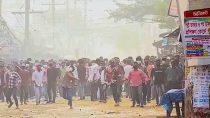
• 12:00pm: Traffic on the Gopalganj-Patgati road was blocked. Processions carrying oars and poles reportedly emerged from the Children’s Park and BSCIC areas. Demonstrators also broke through police barricades and entered the town.
• Around noon: The July Square area near the launch terminal was vandalised. Demonstrators openly displayed locally made weapons, including oars, poles, machetes, Chinese axes, spears and sticks.
• During the clashes: A police box, an armoured personnel carrier, a college signboard and several business establishments were vandalised.
• 3:00pm: Protests and displays of weapons were reported in Tungipara and Dumuria.
• 5:00pm: The house of the president of the Jubo Dal unit came under an arson attack.
• 6:00pm: The house of the municipal BNP president was set on fire.
• Around 6:30pm: Sub-Inspector Moslem Ali, the complainant in the case over the burning of a police vehicle, was hacked and injured.
At the time this report was being prepared, the entire district was under the control of law enforcement agencies. No further major untoward incidents had been reported during the day.
Roads across Gopalganj were largely deserted, with very few people venturing outside except for essential purposes. Only one or two small and large vehicles were seen passing at intervals of around half an hour. The main roads appeared to be under an unofficial curfew, although no formal curfew had been imposed. Security forces had established a tight security presence across the district’s upazilas and suburban areas. Despite this, an atmosphere of tension and uncertainty remained in the town.
BNP leader alleges failure of elected MPs to fulfil public expectations
On the situation in Gopalganj, Advocate Syed Zainul Abedin Mezbah, Assistant Secretary for Legal Affairs of the BNP’s central committee, told The Daily Inqilab that people had voted BNP candidates to victory in all three constituencies in the last election with high expectations.
However, he alleged that none of the MPs, including Selimuzzaman Mollah, had fulfilled those expectations.
He further alleged that Selimuzzaman Mollah and his relatives had subjected people to various forms of harassment, oppression and abuse.
Describing the ongoing unrest as part of the consequences of these grievances, he also claimed that the other MPs had followed a similar approach and highlighted the suffering of local residents.