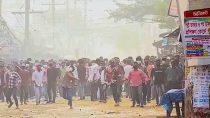
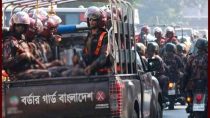
Delhi-Awami League Plot to Wreck Bangladesh’s Garment Industry, Replicating the Destruction of the Jute Sector
In a country with an import dependent economy, the readymade garment sector is a beacon of light. About 85 percent of the country’s total export earnings come from this sector. Not only imports and exports depend on it. Hundreds of backward linkage factories have also grown along with the rise of this industry. Foreign currency comes in as the factory wheels turn, and the country’s reserve grows. Tax and duty apply at every step of the business, so government revenue also grows.
According to government figures, more than 5 million people earn their living from this sector, including 3 million women. Counting direct and indirect jobs, the number is close to 20 million. Government policy support, big investments by garment owners and the hard work of the workers slowly turned Bangladeshi products into a global brand. The banned Awami League now plans to push its agenda through a labor movement. It wants to show that the country’s market is unstable. This would give an edge to competitors such as India and Vietnam. It also wants to put the elected BNP government in a tough spot.
In the 1990s, local and foreign plots destroyed Bangladesh’s jute industry. When Bangladesh announced the closure of Adamjee Mill, several jute mills were built in West Bengal. Now ousted Ms. Sheikh Hasina uses the Chanakya policy of Delhi to take revenge for the July uprising. She is trying to destroy Bangladesh’s readymade garment industry. Some people inside the country have tied their waists and entered the field to carry out Ms. Hasina’s plot from India. They want to create unrest in the garment sector.
Intelligence agencies have identified the people who fund this effort to destroy the garment sector. Yet law enforcement agencies are not arresting them, and no one knows why.
Bangladesh has kept a good position in global garment exports despite many challenges. The World Trade Organization (WTO) World Trade Statistical Review 2025 says China is first on the list, as always. Its exports are $157.11 billion. Vietnam’s are $37.51 billion. Bangladesh comes right behind Vietnam. Turkey has $16.81 billion and India has $17.26 billion. Countries such as Cambodia, Pakistan and Indonesia come after them.
The main strengths of the economy are local food production, a large amount of remittance, crores of hardworking young people and the export oriented industrial sector. The banned Awami League plotted against the first three strengths but gained nothing. Now it has joined forces to break the backbone of the export sector. The movement has become weaker than before because of several government steps. Still, the factory wheels are not turning. In the long run, foreign buyers may turn their faces away.
Mr. Fazle Shamim Ehsan, managing director of Fatullah Apparels Limited, spoke to the reporter. He said the labor movement is damaging the country’s image. He said the effect is not clear right away, but orders may fall in the long run. He said the country’s image is being spoiled. In future, buyers will see Bangladesh as a riskier country. The higher a country’s risk, the lower the price buyers pay for its goods. Buyers do not want to give good value or high profit goods. They want to give short term orders. He said Bangladesh is slowly moving away from that position.
Mr. Anwar Ul Alam Chowdhury is chairman of Evince Group, one of the top garment companies, and president of the Bangladesh Chamber of Industries (BCI). He said the country brand value of Made in Bangladesh is now much lower than that of Vietnam or India. Over the last four years, the message has gone abroad that Bangladesh is not stable. He said trouble will happen in this sector every year. This also has a negative effect on buyers.
The war that the US and Israel forced on Iran in the Middle East has raised fuel oil prices in the international market. This has caused an economic slowdown across the world. Because of high inflation, garment buyers have cut their spending. Production costs have gone up, orders have fallen and the price of each garment has fallen too. Factory owners now struggle to run their factories. The global slowdown has also hit the food plates of the workers. This has created a double crisis. The fascist Awami League has used this crisis and chosen the movement as a political trick.
The banned Awami League has pushed garment workers into the movement since late October this year. The minimum monthly wage for garment workers is now Tk 12,500. The last wage structure set this rate in December 2023. It is hard to live on this wage in a market with high inflation. At the same time, top industrialists linked to the banned party have dressed up party cadres as workers in their factories and sent them into the movement.
They dream that a successful movement will clear the way for fascist Ms. Sheikh Hasina to return in December. Intelligence sources say Awami League activists have been active in this movement in the disguise of workers. Arson, road blockades, vandalism of industrial units and looting of factory goods have happened in many places. Some factory owners active in the banned party have directly provoked workers. They have also spent a lot of money to speed up the movement.
The banned party had planned to spend more money to speed up the movement. It planned to spread thousands of crores of taka in different places. After learning this, the Central Intelligence Cell (CIC) and the Income Tax Intelligence and Investigation Unit of the National Board of Revenue (NBR) froze many suspected bank accounts.
Intelligence officials say they found a plan to split Tk 118 crore from one bank account into small amounts and spread it around. They blocked the account at once. If they had not blocked this money in time, it would have reached the hands of saboteurs.
Garment owners have suffered huge losses from work stoppages, labor unrest, disorder at workplaces, protests and factory vandalism. Factory owners say the movement has caused an average loss of more than Tk 500 crore every day. It has also hurt the country’s image among foreign buyers in the long run.
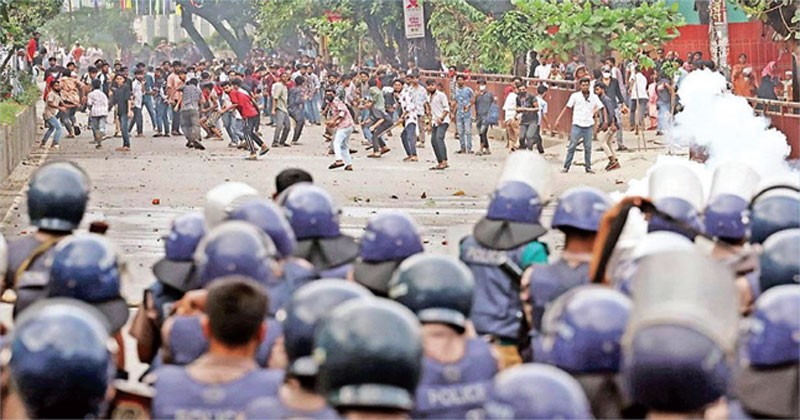
Factory owners have announced the closure of more than 200 factories so far because of the labor movement. Earlier, workers demanded a minimum wage of Tk 30,000. During protests and work stoppages in various industrial areas, people vandalized factories, blocked roads and disrupted production. The government acted with flexibility and formed a new Minimum Wage Board on 1 November. District and Sessions Judge Mr. Syed Azad Subhani serves as chairman of the board. Besides worker and owner representatives, the board has one neutral member.
The board has already held two meetings since its formation. In these meetings, worker and owner representatives discussed the new wage structure. The first meeting took place on 4 November. It asked worker and owner representatives to prepare their own proposed wage structures and submit them at the next meeting. At the second meeting on 9 November, the workers’ side proposed a minimum wage of Tk 32,000. The owners’ side received four days. The wage board has announced its third meeting for today, Monday, after it receives the owners’ proposal.
However, even during these talks, politics in the name of a movement and a mission to destroy the country’s economy continue. Authorities have announced the closure of 29 more factories because of the new unrest. Mr. Amjam Hossain, Superintendent of Police of Gazipur Industrial Police, said that on last Saturday night 13 factories decided to stay closed from Sunday. This Sunday morning, 16 more factories announced closure.
After several days of unrest and protest, workers in garment factories in the Savar and Ashulia industrial areas joined work peacefully from yesterday morning. Reports say workers entered their factories willingly from the morning. In factories in Baipail, Jamgora, Zirabo, Narsinghapur and Hemayetpur of Savar, workers gathered in front of the factories before the set time. They showed their ID cards and went inside. Full production started in the factories from the morning.
BGMEA president Mr. Mahmud Hasan Khan warned that protest and talks cannot go on together. He said that if factory vandalism and road blockades continue, there will be no reason to continue the wage board talks. He said that if the situation does not improve, owners will reconsider leaving the talks.
Meanwhile, worker leaders have called on all garment workers to go back to work. They also advised workers not to join any provocation or harmful activity, in order to protect this export oriented industry. The leaders said workers will suffer the most if production stops.
Mr. Abul Kalam Azad, president of the Swadhin Bangla Garments Sramik Federation, said he shows solidarity with the workers’ movement. He called for the wage board to continue its work. He said workers, owners and the government must all help so that board members can understand the real picture on the ground and work with ease. He also said the public should not form a negative view of the workers’ fair demands. He said November and December are very important months for the industry. If production stops now, the industry will suffer greatly, and this will hurt the lives and livelihoods of the workers.
Those concerned say the government has acted very carefully in the workers’ movement so far. It has not used any force. To meet the workers’ demands, the government formed a wage board, and talks are going on there. At this time, no ordinary worker would think of a movement. They say officials need to check whether the people now protesting have ties to the banned Awami League. They also demand that officials identify these people and ensure an exemplary punishment for them.