Tarique Rahman’s Speech Still Inspires People Living Along the Teesta
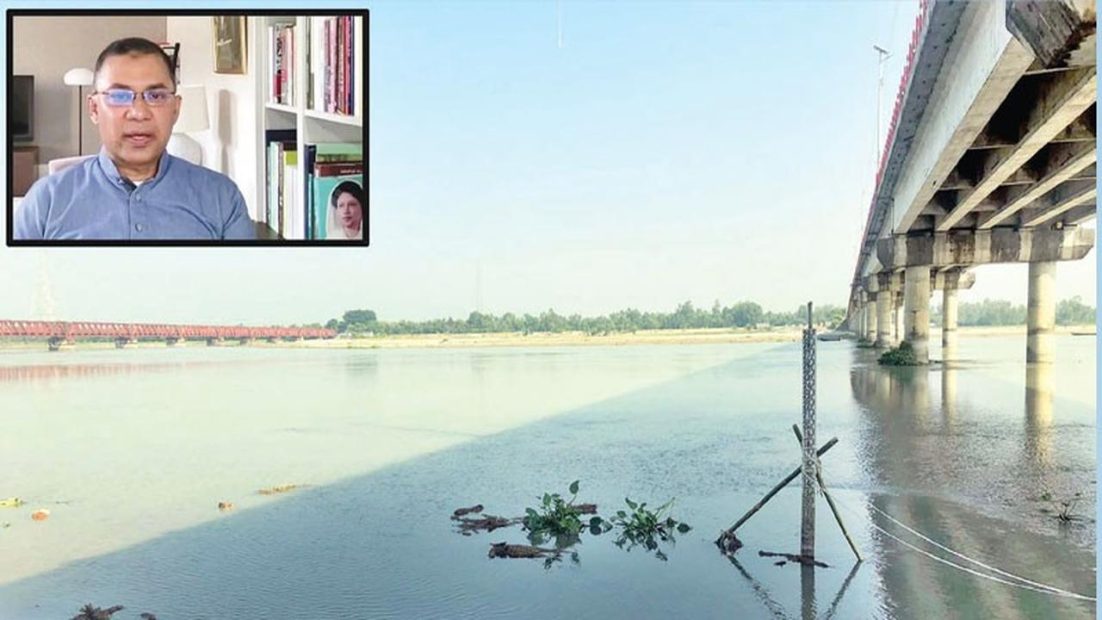
The people living along the Teesta River still remember the speech of BNP Chairman and Prime Minister Tarique Rahman. His speech during the “Jago Bahe, Teesta Bachai” programme in February 2025 has given hope to many people living by the river.
Mohammad Nuruzzaman lives near the Mahipur Bridge on the Teesta River, which is on the Rangpur-Burimari land port route. The scenes of a huge gathering on February 17 and 18, 2025, are still fresh in his memory.
On those two days, people from five districts Nilphamari, Rangpur, Lalmonirhat, Kurigram and Gaibandha, joined a 48-hour programme at 11 points along the Teesta River. The programme was held near Mahipur Bridge, Kaunia Bridge, Teesta Barrage and other places.
People set up tents beside the river and took part in the programme. The joys and sufferings of people living near the Teesta, especially those living in river islands, were shown through plays and songs. Mr. Nuruzzaman was a local organiser of the programme.
When this correspondent met him at a small market near the northern end of Mahipur Bridge, he became emotional. He came forward with a cup of tea and hugged the journalist.
“Sir, nobody remembers us. We held the ‘Jago Bahe, Teesta Bachai’ programme here. Senior BNP leaders joined the 48-hour programme. Through songs and plays, we showed the lives of people living beside the river,” he said.
The programme was held along a 125-kilometre area of the Teesta River to demand the implementation of the “Teesta Mega Project” with Chinese funding.
Then-BNP Secretary General Mirza Fakhrul Islam Alamgir, who is now the president, joined the programme. He visited Mahipur Bridge on February 17 and opened the programme near the Teesta Railway Bridge in Kaunia on February 18.
Then-BNP Acting Chairman Tarique Rahman, who is now the prime minister, joined the closing programme virtually from London on the evening of February 18. He said that if BNP came to power, its first task would be to implement the Teesta Mega Project.
BNP has now been in power for nine months. But the Teesta Mega Project has not yet been inaugurated.
Local people also said that the BNP government is now giving more attention to the Padma Barrage project.
People still waiting for the project
The front part of the protection embankment near Mahipur Bridge broke three months ago. Several people were fishing under the strong sun near the broken part of the embankment.
One of them, Rashidul Islam, said the river has changed greatly.
“Five years ago, the Teesta flowed from north to south here. Now it flows from west to east because of river erosion. The river broke this area three months ago. Farmland has gone into the river,” he said. He believes dredging the river could help stop erosion.
“We are hoping that the Teesta Mega Project will be implemented. Chinese experts have already visited the area and carried out tests. Surveys have been conducted several times from 2016 to 2025. We are waiting for river dredging to begin with Chinese funding,” he said.
During the election campaign on February 12, BNP leaders had said that river management would be carried out before dredging the Teesta.
They also said that after the major project, satellite towns, housing areas and economic zones would be built.
Teesta Barrage, Mahipur, Kaunia and the Bhasani Bridge area in Sundarganj would also be developed as tourist areas.
“We are still hopeful that the BNP government will start the project by ignoring what we believe is India’s opposition to it,” Rashidul said.
People remember Tarique Rahman’s speech
This correspondent visited about 10 places along a 30-kilometre stretch of the Teesta in one day under the strong sun.
At almost every place, people were suffering from a lack of water.
Many local residents and people involved in the Teesta River protection movement have kept videos of the 48-hour “Jago Bahe, Teesta Bachai” programme held in February 2025.
Mr. Hasanul, a BNP activist, showed this correspondent a video of Tarique Rahman’s speech that he had recorded on his mobile phone.
Tarique Rahman joined the programme virtually from London and gave a long speech. He said Bangladesh must put its people and national interests first. He said the people of Bangladesh no longer wanted to see the hanging body of Felani on the barbed-wire fence or the bloodied bodies of innocent Bangladeshis at the border.
He said that if India did not give Bangladesh its fair share of Teesta water and did not agree to a Teesta water-sharing treaty, Bangladesh would have to find its own way to solve the problem. He also said that Bangladesh should use all possible national and international options to protect its people, farmers and rivers. He called for Bangladesh to raise its demand strongly at the United Nations and other international forums to get a fair share of Teesta water. He said there was no alternative to implementing the Teesta Mega Project to protect northern Bangladesh from becoming a desert.
He also said that if BNP came to power with the support of the people, it would take all necessary steps to implement the Teesta Mega Project as a priority. He proposed dredging seven rivers on the right side and five tributaries on the left side of the Teesta inside Bangladesh. He also proposed building water reservoirs in different parts of the country to store water and creating other sources of water.
Dulu also promised the Teesta project
Mr. Hasanul also had a recording of BNP Organising Secretary Asadul Habib Dulu, who was the chief coordinator of the “Jago Bahe, Teesta Bachai” programme.
Mr. Dulu said people living by the Teesta once had rice-filled granaries and cows in their cowsheds. They also had Bhawaiya folk songs.
“The Teesta was like our mother. But now the river has turned into a desert and become a cause of suffering,” he said. He accused India of holding back Teesta water during the dry season by building dams upstream and releasing water during the rainy season. He said this causes floods and leaves thousands of families under water. River erosion also makes many people homeless.
“The Teesta was once the main support of people’s lives and livelihoods. Now it has become a cause of their suffering,” Mr. Dulu said. He also criticised the previous Awami League government for not implementing the Teesta Mega Project. He said several governments had promised to implement the project but had not done so. He said China had shown interest in funding the project and a memorandum had also been signed, but the project did not move forward.
“No government has been able to implement the Teesta Mega Project. If BNP comes to power, the Teesta Mega Project will be implemented with Chinese funding and permanent embankments will be built,” Mr. Dulu said.
A river that has caused suffering for years
Tarique Rahman’s virtual speech is still remembered by people living beside the Teesta. One local resident said he listens to Tarique’s 2025 speech to find comfort when he becomes sad after seeing the present condition of the river.
The Teesta originates in North Sikkim, India, and flows through Nilphamari in Bangladesh before joining the Brahmaputra at Chilmari. The river is about 315 kilometres long, of which around 115 kilometres flow through Bangladesh.
In 1998, India started withdrawing water unilaterally after building the Gazaldoba Barrage in its part of the river.
Since then, Bangladesh has been deprived of its fair share of Teesta water despite having a right to an equal share.
During the rainy season, even a small rise in water can cause floods. Water enters villages and causes suffering to at least two million people living on both sides of the river. When the flood water goes down, severe river erosion begins.
Farmland, homes, mosques, temples, madrasas, schools, colleges and other places linked to local memories are lost to erosion.
Thousands of families lose their land every year.
During the dry season, the lack of Teesta water also affects boat movement and farming. In 2011, Indian Prime Minister Dr Manmohan Singh visited Dhaka for a Teesta water-sharing agreement. But the agreement was not signed.
Since then, the Teesta water-sharing agreement has remained unresolved.
The Teesta Mega Project was proposed to reduce the suffering of people living beside the river. Local people, however, believe that efforts are being made in Delhi to stop the project.
Despite this, people living beside the Teesta are eagerly waiting to see the Teesta Mega Project implemented with Chinese funding.