Livelihoods, Trade and Commerce at Noapara River Port Under Threat as Navigability Crisis Deepens in Bhairab River
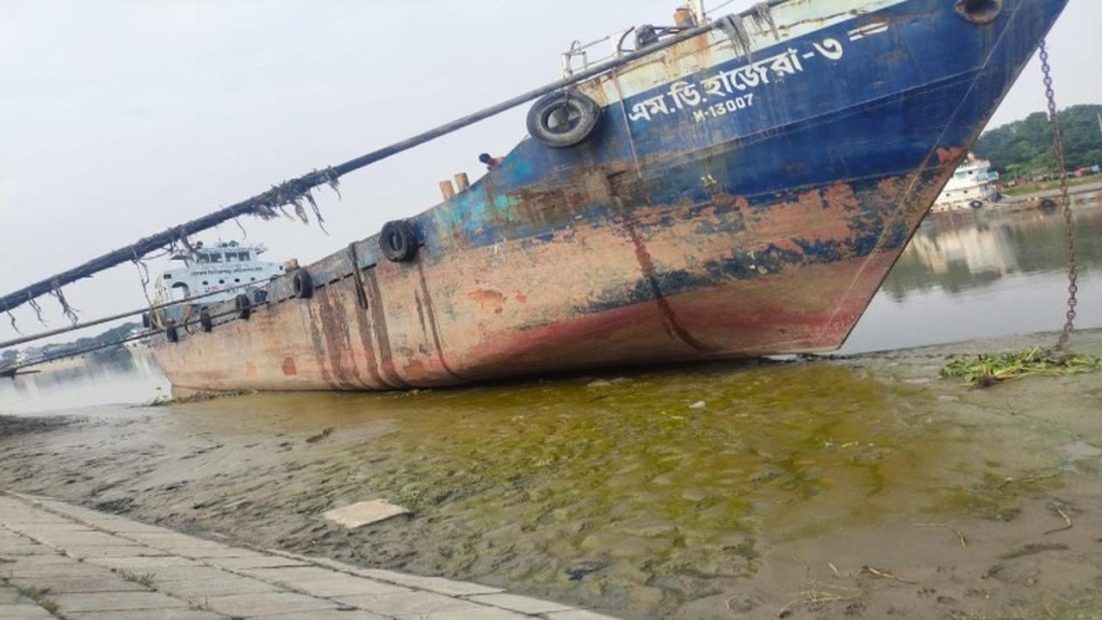
The Bhairab River, which is vital to the industrial and business activities of Nawapara port town in Abhaynagar, Jashore, is gradually losing its navigability. Silt is building up in the river, and sandbars are appearing in different places. As a result, cargo vessels are facing problems while moving through the river. In some places, ships are at risk of getting stuck on the riverbed. This is causing trouble for traders, vessel owners and workers. Local people are becoming angry because no effective and lasting steps have been taken to solve this long-standing problem.
A visit to the area shows that water levels have fallen in different parts of the Bhairab River near Nawapara River Port. Silt has built up on the riverbed, creating sandbars in some places. Cargo vessels and large boats face serious problems, especially during low tide. They have to wait for a long time for high tide before moving. This increases both the time and cost of transporting goods.
Local people say that encroachment, pollution, poor river management and a lack of proper dredging are causing the Bhairab River to lose its natural flow. Various structures, jetties and landing stations have been built along both banks. These are narrowing the river’s natural path. At the same time, the build-up of silt is reducing its depth and putting the normal activities of Nawapara River Port at risk.
Nawapara is one of the country’s major centres for river trade. Fertiliser, coal, cement, stone, food grains and other goods are transported and supplied to different parts of the country through this port. If the navigation crisis in the Bhairab River continues, it will affect the port’s overall business. Thousands of workers who depend on this sector will also suffer.
Local trader Nure Alam Babu said the lack of depth in the river was making it difficult to load and unload goods from cargo ships. In many cases, ships are unable to reach their intended landing points. This is disrupting the normal transport of goods and increasing the risk of financial losses for traders.
They also said that although there have been plans to dredge the Bhairab River, the work has not been enough to meet the actual needs. Regular dredging, proper planning and close supervision are necessary. Otherwise, even spending crores of taka on dredging may not bring the expected results.
People involved with the river port say a long-term plan is needed to maintain the depth of the Bhairab River, considering the commercial importance of Nawapara Port. The river’s natural flow must be restored. Illegal structures and encroachments must be removed, and regular maintenance dredging must be ensured. Otherwise, port activities may face further restrictions in the future.
Faruk Hossain, a port user, said the navigation crisis in the Bhairab River had been discussed many times, but no clear and lasting solution had been found. As a result, silt continues to build up in the river and form sandbars. Nawapara Port’s trade and business are increasingly at risk.
Trader A. Salam said the authorities should quickly assess the actual condition of the river and carry out planned dredging. They must also take effective steps to stop encroachment and pollution. Saving the Bhairab River will not only keep the river port active but also protect Nawapara’s industries, businesses and the livelihoods of thousands of people.
He also said the navigation crisis in the Bhairab River was not new. Earlier reports had also highlighted how river encroachment, silt build-up and poor management were disrupting the activities of Nawapara River Port.
Masud Rana, a sub-assistant engineer of the Bangladesh Inland Water Transport Authority (BIWTA), said dredging work was underway. He said it was not possible to carry out the work everywhere at the same time, but all areas would be dredged.