Gopalganj’s Future at Stake: Political Action, Not Administrative Reshuffles, Holds the Key to Resolving the Crisis
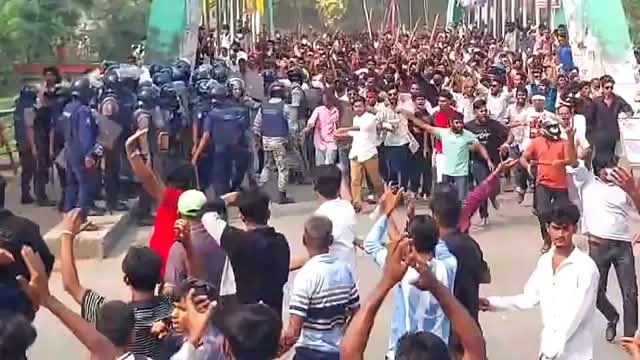
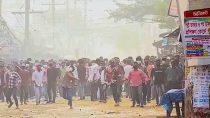
A decade-old remark by former Prime Minister Begum Khaleda Zia has resurfaced on social media amid heightened political unrest in Gopalganj, sparking intense debate over the district’s administrative future. According to a report by the daily Inqilab, Khaleda Zia’s December 29, 2013, statement in Gulshan, in which she questioned a police officer’s origins and warned that the very name of Gopalganj would be changed, is now widely shared as a politically prescient comment. Against the backdrop of recent blockades and arson attacks attributed to Awami League factions, discussions have emerged in political circles advocating for the dissolution of Gopalganj as a separate administrative unit by merging its three parliamentary constituencies, five upazilas, and 68 unions and municipalities into six neighboring districts.
Proponents of these administrative and political measures argue that integrating Gopalganj into Madaripur, Faridpur, Narail, Barishal, Pirojpur, and Bagerhat would permanently dismantle local strongholds of unrest. Alongside proposals to redraw administrative boundaries, some political observers and residents from bordering districts suggest mobilizing local populations to enforce a blockade and social boycott against Gopalganj to isolate violent actors. According to Inqilab, residents interviewed from the six surrounding districts indicated a readiness to enforce such a blockade if called upon by the ruling party, contending that economic and social isolation would compel local militants to abandon violent street agitation out of necessity.
However, local political figures and residents emphasize that the general population of Gopalganj is detached from the ongoing unrest. Former BNP Member of Parliament from Gopalganj-1, F.E. Sharfuzzaman Jahangir, stated that ordinary citizens neither support nor participate in the Awami League’s blockades and arson attacks, attributing the violence to a small faction executing former PM Sheikh Hasina’s directives. Interviews conducted with Gopalganj natives residing in Dhaka further suggest that ordinary farmers, laborers, and working-class residents remained neglected during the 15-year Awami League tenure. At the same time, state privileges, promotions, and contracts were monopolized by a narrow circle of bureaucrats, businesspeople, and political brokers.
Despite widespread skepticism among ordinary residents regarding Sheikh Hasina’s return to Bangladesh, Inqilab reports that grassroots activists are being mobilized through targeted narratives and financial incentives. Residents from neighboring districts noted that local operatives are being told that Sheikh Hasina will return to power in December with Indian backing, citing diplomatic meetings in Dhaka and alleged international media campaigns as proof. Investigations into the ground reality indicate that a handful of hardline leaders, notably Ghosher Char Union Parishad Chairman Salahuddin, are allegedly utilizing domestic and external funds to pay local youths to carry out arson and crude bomb attacks under the banners of the Awami League, Jubo League, and the banned Chhatra League.
The ongoing unrest has also drawn sharp scrutiny toward the roles of currently elected representatives and local political leadership in the district. According to the report, allegations have surfaced against Gopalganj’s three ruling BNP Members of Parliament, Mohammad Selimuzzaman Molla (Gopalganj-1), Dr. K.M. Babar (Gopalganj-2), and S.M. Jilani (Gopalganj-3), accusing them of prioritizing extortion, tender manipulation, and land grabbing over party discipline. Critics and local BNP activists allege that these lawmakers, alongside certain district-level Jamaat-e-Islami leaders, have covertly sheltered Awami League operatives and lobbied the administration on behalf of fugitive leaders abroad in exchange for financial kickbacks.
Specific incidents highlighted by local sources underscore the tension between grassroots BNP workers and their elected representatives. A former BNP lawmaker alleged that Ghosher Char Chairman Salahuddin has been orchestrating street violence with the tacit backing of local leadership, noting an instance where police were allegedly used to demolish the wall of a BNP leader’s shop following financial intervention from an Awami League leader residing in the United States. While Inqilab notes that BNP lawmakers and Jamaat leaders have recently distanced themselves from sheltering militants as the situation escalated, their earlier passivity reportedly emboldened banned groups to burn down local BNP offices.
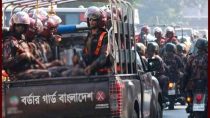
In response to the deteriorating law and order situation, the government has initiated administrative transfers and security deployments in the region. The Deputy Commissioner (DC) and Superintendent of Police (SP) of Gopalganj have been replaced, and six platoons of Border Guard Bangladesh (BGB) have been deployed alongside police forces to restore order. Nevertheless, political analysts quoted in the report question whether administrative reshuffles and security crackdowns alone can yield a lasting solution, pointing out that many officials aligned with the previous regime remain embedded within the civil and police administrations, complicating enforcement efforts.
The political discourse surrounding the crisis frequently links the current turmoil to Sheikh Hasina’s broader political trajectory since 1975. The Inqilab narrative recounts her return from India in May 1981 to assume leadership of the Awami League, referencing a historical BBC interview in London where she stated, ‘My father liberated the country, and he was assassinated. I have entered politics to avenge my father’s murder. The goal of my future politics will be to avenge my father’s killing.’ Critics argue that following her ouster during the 2024 student-mass uprising and subsequent death sentence by the International Crimes Tribunal, she is attempting to destabilize the country from abroad using laundered funds to instigate violence in her ancestral district.
As debates over renaming or dissolving Gopalganj gain traction online, the region’s historical evolution has become a focal point of public discussion. Historically, the area was part of various administrative jurisdictions before H.M. Ershad upgraded the Gopalganj subdivision into a full-fledged district on February 1, 1984. During the Permanent Settlement of 1793, Muksudpur fell under Jessore, while the remainder belonged to Dhaka-Jalalpur, later merging with Faridpur in 1807 and 1873. Originally known as ‘Rajganj’ bazaar within the Khatra Estate purchased by Kolkata zamindar Pritiram Das in 1800, the area was renamed Gopalganj after his grandson Nabagopal, eventually becoming a subdivision in 1909 and a municipality in 1972.
Amid viral social media campaigns calling for the erasure of Gopalganj from the administrative map, national political figures have weighed in on the futility of the ongoing street violence. Commenting on the situation, Barrister Asaduzzaman Fuad, General Secretary of the Amar Bangladesh Party (AB Party), dismissed the impact of the localized unrest and questioned the strategic judgment of those involved. Mr. Fuad stated, ‘These insignificant Awami League lackeys think that by detonating a few crude bombs, they have captured Gopalganj and Faridpur. Let me remind these petty lackeys that Hasina will not return to the country. They lack even the basic common sense to understand this. Will paralyzing Gopalganj bring down the government? What will happen if the government decides to change the name of Gopalganj?’
Ultimately, the crisis in Gopalganj presents a complex governance challenge for the elected BNP administration, balancing security enforcement with political accountability. While law enforcement deployments aim to contain immediate acts of arson and bombing, observers emphasize that addressing allegations of collusion by local representatives is equally critical. Whether the government opts for structural administrative reorganization, relies on political mobilization from neighboring districts, or enforces stricter discipline within its own ranks will determine the long-term stability of the region.