Teen gangs, extortion and use of arms unstoppable in the Khulna region, part 7
Crime Casts a Dark Shadow Over Khulna’s Once-Tranquil Industrial and Commercial Landscape

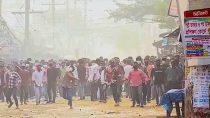
Khulna, once known as a centre of industry, trade, literature and culture, is increasingly losing its peaceful character. Located on the banks of the Rupsha and Bhairab rivers, the city was once alive with the chimneys of jute mills, ship horns and the activities of its port-based economy. But the situation has changed in recent years. The industrial and commercial city is increasingly being affected by criminal gang culture, illegal firearms and extortion. Fear and anxiety are growing among ordinary residents.
According to sources, Khulna was once regarded as a peaceful, clean and promising city. It is one of the most important urban centres in southwestern Bangladesh because of its educational institutions, cultural activities, industries, businesses and port-based economy. However, the city’s crime situation has changed over time. The growing presence of teenage and youth gangs, illegal firearms, extortion, drug trafficking, public attacks and clashes over territorial control have become major concerns for residents.
A large part of Khulna’s economy depends on a stable business environment and law and order. Businesspeople say gang activities and the use of illegal weapons have reduced public movement after evening. Many businesses and shopping malls are reportedly receiving threats over demands for extortion money. Local business leaders fear that continued insecurity could seriously damage the city’s long-standing economic activity and discourage investment.
Several teenage and youth gangs have emerged in different neighbourhoods, particularly Boyra, Khalishpur, Sonadanga, Daulatpur, Nirala and Railgate. Young people who were once involved in sports or studies are increasingly becoming involved in criminal activities. These gangs often form around attempts to establish territorial control, harassment of women, control of drug trafficking and a desire among members to present themselves as local “heroes”.
Operating under different names, these gangs are involved in everything from minor disputes to violent clashes resulting in serious injuries and bloodshed. Investigations suggest that some gangs have become more powerful under the protection of political groups or influential local figures. The appeal of the criminal world is being deeply embedded in the minds of teenagers and young people. As a result, even minor arguments can escalate into brutal attacks.
The spread of gang culture has also been accompanied by an increase in the circulation of illegal firearms. Khulna’s once-hidden criminal underworld is now reportedly witnessing a thriving trade in illegal weapons. Because of its proximity to the border, illegal firearms can enter the local market through neighbouring countries and other routes.
The situation has disrupted the daily lives of ordinary residents. Travelling through narrow streets and even some main roads has become risky after evening. Many business owners are forced to close their shops early. Residents say that although law enforcement agencies occasionally conduct operations, there is no visible long-term strategy to dismantle the roots of these criminal networks. As a result, criminals are becoming increasingly reckless.
Experts say the authorities must take strong action against gang culture and the spread of illegal firearms to protect Khulna’s heritage and economic potential. Police operations alone will not be enough. Social campaigns, stronger family supervision and effective initiatives to engage young people in sports, cultural activities and moral education are also necessary.
Professor Dr Mohammad Ziaul Haider of the Economics Discipline at Khulna University told The Daily Inqilab that Khulna has long had significant economic potential as an industrial and commercial centre. New investment opportunities exist in the region around Mongla Port, industrial facilities, businesses, transport, agricultural and fisheries processing, and tourism. However, allegations of extortion, intimidation, illegal occupation and criminal activities targeting businesses are creating a negative impression among investors.
He said that if business owners have to worry about their personal security while running their establishments, operating costs naturally increase and new entrepreneurs become discouraged from investing. Uncertainty in transportation and supply chains can also affect production and the marketing of goods. Therefore, a deterioration in law and order is not merely a matter of crime statistics; it is directly linked to Khulna’s economic future.
Sheikh Ashraf Uz Zaman, president of the Greater Khulna Development Action Coordination Committee, told The Daily Inqilab that Khulna, a major centre of industry and commerce, is going through a critical period. He said insecurity among businesspeople could discourage new investment. Attacks on businesses, extortion demands and obstacles to transporting goods increase production and supply costs. These problems could also affect employment generation and the establishment of new industries.
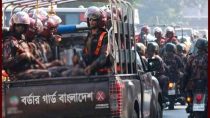
He said the administration, political leaders and concerned citizens must work together to protect the historic city from the growing grip of crime. Khulna Metropolitan Police (KMP) Commissioner Mohammad Sazzadur Rahman said, “We are taking a tough stance on the issue. Checkpoints have been strengthened at every major intersection in the city, and intelligence surveillance of criminal gangs has been increased. Very soon, a sweeping operation will be launched to bring those carrying illegal firearms and those involved in gang culture to justice.”