UN Third Committee Passes Resolution on the Rohingya Crisis
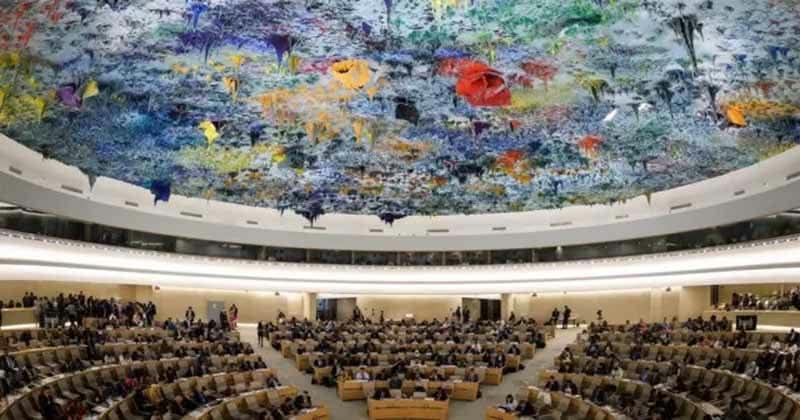
The Third Committee of the UN General Assembly adopted a resolution titled ‘Situation of human rights of Rohingya Muslims and other minorities in Myanmar’ by an overwhelming majority on Wednesday, November 18. During the 81st session of the General Assembly, 128 member states voted in favor of document A/C.3/81/L.42/Rev.1, six voted against, and 33 abstained, with the plenary session’s final approval still pending. Initiated by the European Union and the Organization of Islamic Cooperation, the text condemns human rights abuses against Rohingya Muslims and other minority groups in Myanmar. It demands an immediate end to attacks on civilians. It calls on actors controlling parts of Rakhine State to protect civilian safety while emphasizing violence reduction, human rights protection, accountability, and a durable resolution.
Voting tallies reflected clear divisions among member states: Belarus, China, North Korea, Nicaragua, Russia, and Vietnam opposed the resolution, while 33 nations, including the United States and Israel, abstained. Addressing the committee, Russia’s representative criticized the measure as one-sided and alleged that the United Nations was being used to place sole blame on Myanmar’s officials for the country’s crisis. Conversely, The Gambia’s representative underscored the vital role of international justice in securing a permanent settlement, pointing to the expected November 19 ruling by the International Court of Justice in The Gambia v. Myanmar. Stressing that prosecuting atrocities and holding perpetrators accountable are indispensable, he stated, ‘It is the responsibility of all states to uphold the Genocide Convention.’
Bangladesh’s representative, Ambassador Sanchita Haque, told the meeting that nine years after the mass displacement of Rohingyas, no meaningful progress has been achieved toward ending the crisis. She emphasized that not a single Rohingya has been repatriated to Myanmar to date. Ambassador Haque further warned that hosting a large Rohingya population over such a prolonged period is intensifying strain across Bangladesh’s social, economic, environmental, and security systems. Her remarks underscored the ongoing burden borne by host communities amid stalled repatriation efforts.
Together, the committee’s vote and the statements delivered during the session highlighted both international backing for civilian protection and sharp disagreements over accountability and diplomatic framing. While sponsors and participating delegations stressed urgent action to halt violence, uphold international legal obligations, and create conditions for a lasting resolution, critics maintained that the text took an unbalanced approach. Pending final action in the General Assembly plenary and upcoming judicial developments at the International Court of Justice, the plight of displaced Rohingyas and other minorities in Myanmar remains a central focus of multilateral debate.