Historic ICJ Ruling Against Myanmar Over Rohingya Genocide Sparks Jubilation at Kutupalong Camp
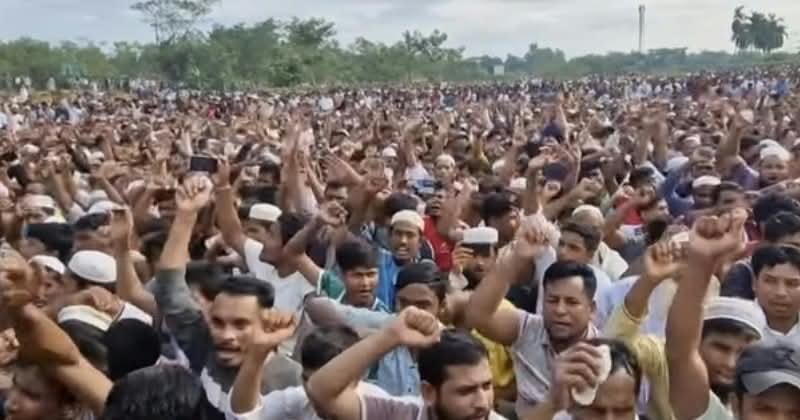
The International Court of Justice in The Hague delivered a historic ruling on Thursday, November 19, finding Myanmar guilty of genocide against the Rohingya during its 2017 military crackdown in Rakhine State. Following the verdict, thousands of displaced Rohingya at the Kutupalong camp in Ukhia, Cox’s Bazar, erupted into celebration on Friday, November 20. For a community that has long awaited accountability, the judgment brings renewed hope after years of displacement and suffering. Men, women, and children across the camp joined the festivities, voicing their joy over securing legal recognition of the atrocities committed against them while holding onto their enduring dream of returning to their homeland.
In its ruling, the court ordered Myanmar to investigate genocide-related crimes, prosecute perpetrators, prevent future atrocities, and provide reparations and rehabilitation to affected Rohingya. The directives also call for the safe, voluntary, and dignified repatriation of displaced residents. The legal proceedings trace back to 2019, when The Gambia filed a case at the court alleging violations of the Genocide Convention after more than 700,000 Rohingya fled to Bangladesh amid killings, rape, torture, and village burnings in 2017. While the decision marks a major milestone in the pursuit of justice, residents and observers note that the ruling alone does not immediately resolve the humanitarian crisis.
Amidst the celebrations at Kutupalong, camp residents repeatedly voiced a shared determination: no more life as refugees- this time, they want to return to their native Rakhine. Alongside their joy, the Rohingya urged the international community to take concrete steps to enforce the court’s orders rather than leaving them as words on paper. Their immediate priorities extend beyond legal vindication to practical guarantees of survival and belonging in Myanmar. Specifically, they are calling for restored citizenship, lasting security, fundamental rights, and safe living conditions that make a return home viable.
For the Rohingya, living with dignity and safety inside their own country remains the central expectation following the verdict. The historic decision has shifted the conversation toward accountability and return, yet uncertainty persists over how swiftly Myanmar and global actors will carry out the court’s mandates. Whether the directives translate into timely prosecutions, reparations, and safe repatriation will determine if this milestone brings lasting change. For now, the Kutupalong celebrations reflect both relief that their suffering has been formally recognised and a firm resolve to reclaim their future in Rakhine.