Agricultural Credit Policy Revised to Prioritise Modern Machinery and Technology

Bangladesh Bank has issued a comprehensive circular introducing the Agricultural and Rural Credit Policy for fiscal year 2026-27, fundamentally expanding the scope of rural financing nationwide. Issued on Wednesday, November 19, to the managing directors and chief executive officers of all scheduled banks, the new policy moves beyond traditional crop production to encompass the entire agricultural supply chain. Financial institutions are now instructed to extend credit facilities for collecting, storing, processing, transporting, and marketing agricultural produce. This structural shift allows entrepreneurs, wholesalers, and retailers involved in post-harvest activities to access formal credit, effectively strengthening value addition and market connectivity for local produce.
Under the revised framework, Bangladesh Bank has mandated specific sectoral allocations to ensure balanced development across key rural economic drivers. Scheduled banks must allocate 55 percent of their total agricultural credit disbursement target to the crops and harvests sector, the backbone of national food security. The livestock sector has been assigned a 20 percent share, while the fisheries sector is slated to receive 13 percent of the total credit portfolio. Furthermore, 2 percent is dedicated exclusively to irrigation and agricultural machinery, with the remaining 10 percent reserved for general agricultural production, rural productivity, and service-oriented enterprise activities.
To accelerate mechanisation, the central bank introduced structured financing models for high-value equipment including combine harvesters, tractors, rice transplanters, reapers, and power tillers. Banks can finance up to 70 to 80 percent of the machine’s total cost, requiring borrowers to contribute only 20 to 30 percent as equity. Depending on equipment scale, the purchased machinery itself can serve as primary collateral for smaller loans, whereas larger items may require personal guarantees or immovable property. Loan tenures will reflect the equipment’s three-to-five-year working life, with seasonal repayment schedules tailored to harvest cycles and an optional grace period of up to 12 months.
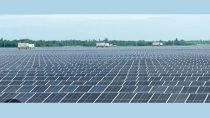
The 2026-27 policy prioritises technological innovation and environmental resilience to protect farming communities against climate volatility. Funding is directed toward precision agriculture, leveraging satellites, drones, sensors, GIS, artificial intelligence, and big data analytics for targeted resource application. Additionally, climate-resilient farming initiatives, such as flood-, drought-, and salinity-tolerant crop varieties, floating agriculture, rainwater harvesting, and solar-powered irrigation, are now fully eligible for credit. To address rural energy needs, loans for biogas production, solar panel installations, solar home systems in off-grid areas, and organic fertiliser production such as vermicompost are officially categorised under agricultural credit.
To maintain fairness and reduce rural financial exclusion, the central bank mandated transparent loan distribution procedures targeting marginal, small, landless, and sharecropper farmers. Credit must be disbursed publicly at the union level, in the presence of local public representatives, agricultural officers, educators, and local dignitaries, and bank officials are encouraged to hold open camps on local market days. Officials from Bangladesh Bank’s Agricultural Credit Department must actively oversee these outreach programs. Conversely, strict credit discipline remains in place, explicitly barring defaulting borrowers and non-compliant farmers from receiving new agricultural or rural loans under the current policy cycle.
To ensure accountability, commercial banks must submit accurate monthly reports on agricultural credit disbursements to the central bank. Furthermore, complete supporting documentation for large-scale agricultural loans amounting to Tk 1 crore or more must be formally submitted to Bangladesh Bank by July of the subsequent fiscal year. Through these combined measures, the central bank seeks to modernise farming practices, integrate modern technology, build sustainable supply chains, and bolster overall national food security while driving economic growth across Bangladesh’s agrarian ecosystem.