Factories Remain Operational on Holiday as Workers Strive to Offset Production Shortfall
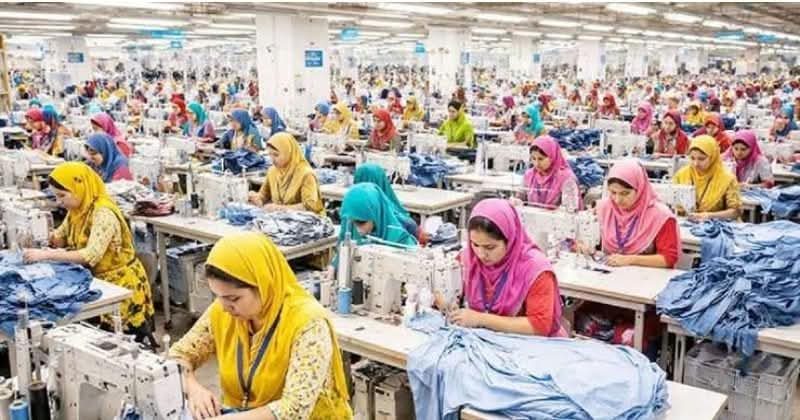
Garment workers across key industrial belts in Savar-Ashulia, Gazipur, Kaliakair, and Narayanganj continued production on their weekly holiday on Friday, November 20, to make up for shortfalls caused by recent labour unrest and operational disruptions. Factory authorities kept facilities open to complete pending orders on schedule and ensure timely shipments to foreign buyers, restoring momentum across the manufacturing zones. Throughout the day, production ran smoothly with active worker participation, and no major untoward incidents or protests were reported in any industrial area.
In the Savar and Ashulia industrial zones, operations began peacefully on Friday morning as workers reported to their workplaces without disorder. Superintendent of Industrial Police-1 Mohammad Mominul Islam confirmed that workers reported for duty smoothly across 126 garment factories in the area. Similarly, in Narayanganj, manufacturing activities continued normally across approximately 450 factories in pockets such as Fatullah’s Shibu Market, Katherpul, BSCIC Industrial City, and Adamjee EPZ. Shipon Chowdhury, Deputy Inspector General of the Department of Inspection for Factories and Establishments (DIFE) in Narayanganj, said no factories were closed under Section 13(1) of the Labour Act and that the overall situation remained peaceful.
In Gazipur’s industrial belt and the Kaliakair upazila, a calm atmosphere prevailed following recent demonstrations over wage and allowance hikes that had previously disrupted traffic and created anxiety. On Friday, workers attended work and production resumed in Chandra, Palli Bidyut, Mouchak, Shafipur, and Sutrapur, while shops reopened and vehicular movement resumed smoothly along the Dhaka-Tangail highway. Expressing relief at the return of stability, a female worker from the Mouchak area said, ‘We are poor people. Our families cannot survive if we don’t work. We don’t want unrest; we want work.’
Local stakeholders credited the coordinated efforts of public representatives, labour leaders, and the administration for restoring peace across the volatile industrial pockets—Gazipur-1 Member of Parliament Md. Mujibur Rahman remarked that workers, owners, drivers, and traders are all like his family, urging both factory owners and workers to resolve any disputes through peaceful dialogue. He further warned that Kaliakair would not tolerate anarchy, factory vandalism, or arson attacks on vehicles, emphasising that stability is essential to prevent financial losses.
Labour representatives also echoed the desire for a peaceful working environment while stressing the importance of protecting workers’ rights and safety. Along with ensuring adequate workplace security, he demanded justice for the recent killings of workers. At the same time, other stakeholders emphasised that workers must receive their due wages and legal benefits for working on their weekly holiday.
To maintain strict law and order and prevent any resurgence of unrest, law enforcement agencies significantly reinforced security across all major industrial zones. The administration deployed 35 platoons of Border Guard Bangladesh (BGB) across Dhaka, Narayanganj, and Gazipur, including 12 platoons in Gazipur and seven in key areas of Narayanganj, alongside Industrial Police, SRB, executive magistrates, and Ansar personnel. Police intensified patrols and established checkpoints at strategic locations, including Kanchpur Bridge, Shimrail, Chashara, and Kaliakair Bus Stand.
Kaliakair Police Station Officer-in-Charge Md. Shahidul Islam affirmed that police are on maximum alert in the field and warned that strict legal action would be taken against anyone attempting to create anarchy or blockade highways. With robust security measures in place and workers eager to offset recent financial losses, normalcy has returned to the country’s vital garment hubs. The coordinated push to keep factories operational on the holiday marks a critical step toward stabilising export timelines and sustaining industrial harmony.