ICJ’s Historic Verdict

The International Court of Justice (ICJ) of the United Nations has ruled that genocide was committed against the Rohingya, the Muslim minority in Myanmar. The court said the Myanmar security forces intended to destroy a part of the Rohingya people through an operation called “Clearance Operation” in 2017. From the night of August 25, 2017, Rohingya began fleeing to Bangladesh to escape extreme oppression by the Myanmar security forces. In the next few months, more than 700,000 Rohingya took shelter in Cox’s Bazar in Bangladesh.
The international community loudly protested this killing by Myanmar security forces at that time. It voiced concern and demanded that the killing of the Rohingya stop at once. But the Myanmar authorities did not listen. On this background, on November 11, 2019, the Muslim African country Gambia filed a case against Myanmar at the ICJ in The Hague, Netherlands. After a long seven years of court process, the ICJ gave its ruling last Thursday. Nine of the court’s 15 judges voted for the ruling and six voted against. For the first time, the ICJ found a state guilty of committing genocide.
ICJ President Mr. Yuji Iwasawa read the historic ruling for three long hours at the Peace Palace in The Hague. He said Myanmar’s security forces killed about 10,000 Rohingya in 2017. He said there was wide sexual violence, extreme torture of children and attacks on the Rohingya as they fled to Bangladesh. The ruling said that from the evidence of widespread cruelty by Myanmar’s security forces, the only reasonable conclusion is that they intended to destroy a significant part of the Rohingya people in 2017. The ruling also noted that armed civilians joined security forces in the military operation. Even so, the authorities should have been aware of the risk of killing a group. But the country failed in its duty to prevent it.
After the ICJ ruling, it can be said without doubt that the Myanmar authorities killed the Rohingya in a very planned way. Their main goal was to wipe out the Rohingya, erase their birth and state rights and expel them from Myanmar. To carry out this planned genocide and expulsion, the authorities put forward a made up story that the Rohingya came from Bangladesh. Yet the Rohingya have lived in Myanmar for hundreds of years. They are counted among the native people of Arakan or Rakhine. The Myanmar authorities carried out their aim of killing the Rohingya or pushing them to Bangladesh. The ICJ ruling especially establishes that the Rohingya are citizens of Myanmar and have all rights, including constitutional rights.
The ruling went in favor of the Rohingya and of Bangladesh. A state found guilty of genocide for the first time faces great international shame and insult. Myanmar cannot erase it with anything. But if it takes back the Rohingya, gives back all their rights and accepts their right to live in safety, there can be a logical settlement and remedy. Bangladesh has always favored resettling the Rohingya in their homeland and getting their lost rights back. It has always made this demand to Myanmar. Myanmar cannot avoid the moral duty to carry out the ruling. But there is doubt whether it will respect this duty at all.
Observers also doubt the enforcement of the ruling, because it is not clear how this ruling of the UN’s highest court will be enforced. The ICJ settles disputes among UN member states and hears claims of breaching international treaties. Though the court’s ruling is final, its power and room to enforce it are very limited. Still, whether enforced or not, the ruling will put Myanmar under pressure and reassure the Rohingya and Bangladesh. It is Myanmar’s duty to follow the directions in the ruling as a party to the case. There is no room to appeal the ruling. But if there is a dispute over the meaning or scope of any part of it, an explanation can be sought. If one party fails to meet its duty, the other party can turn to the Security Council.
The ICJ ruling is widely discussed internationally. UN Secretary General Mr. Antonio Guterres said this case is an example of international justice. He said it has been shown again that there can be no impunity for such terrible acts. UN human rights chief Mr. Volker Turk said the ruling clearly establishes that the state of Myanmar is responsible for one of the most hateful crimes of humankind. Gambia described the ruling as a victory for the Rohingya. After the ruling, some countries, such as the United Kingdom, announced action against Myanmar. Such action or pressure may come from other countries too.
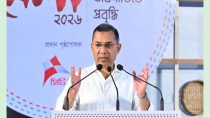
It must be noted that the United States, the European Union and others shed crocodile tears for the Rohingya but are unwilling to take any effective step. Their aim seems to be to keep the problem alive. No solution to the Rohingya problem will come by relying on them. The problem must be solved by improving ties with Myanmar, with help from China and, if needed, from India. Chinese President Mr. Xi Jinping proposed a China Myanmar Bangladesh corridor during Prime Minister Mr. Tarique Rahman’s China visit. If it is carried out, the Rohingya problem can be solved easily. The new spirit that the ICJ ruling brought to the Rohingya and Bangladesh must be put to use. We hope China and other friendly countries will come forward sincerely to solve the Rohingya crisis.