Government Targets 2.5 Million New Jobs in SME Sector: PM
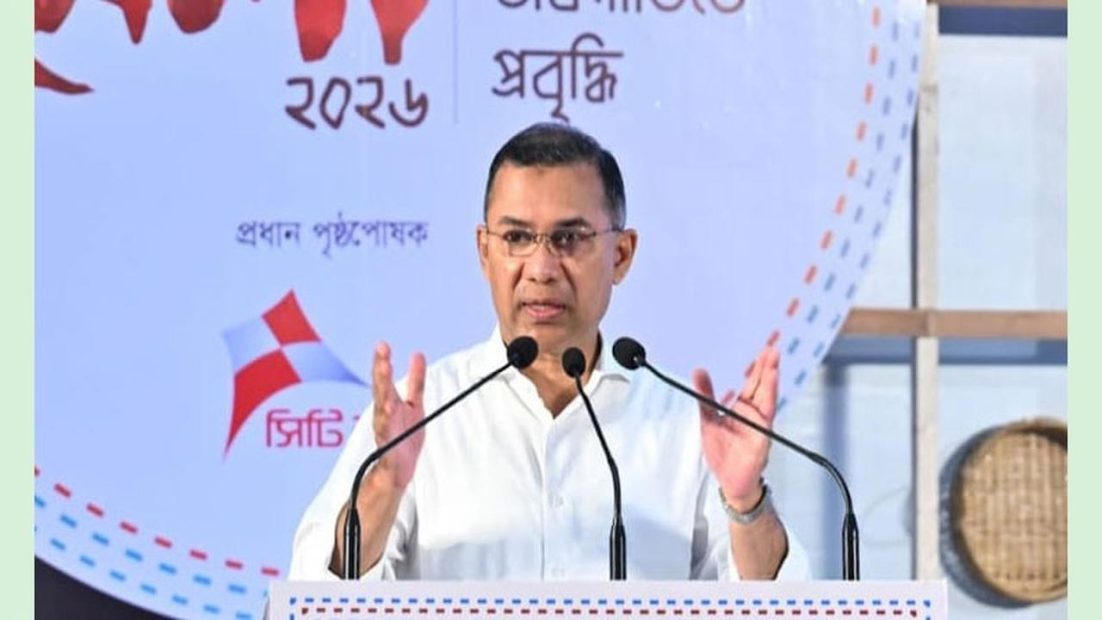
Prime Minister Tarique Rahman has said the government plans to create more than 25,000 new entrepreneurs across the country over the next four years. Under a programme of the SME Foundation, the government aims to develop 100 new entrepreneurs every year in each of the country’s 64 districts. This initiative is expected to produce more than 25,000 entrepreneurs over the next four years.
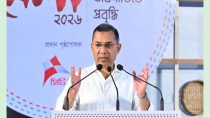
He said the growth and expansion of small and medium enterprises (SMEs) are essential for achieving economic prosperity and self-reliance. Therefore, the SME sector is one of the government’s key priorities. The Prime Minister made the remarks on Sunday at the inauguration of the 13th National SME Product Fair at the Bangladesh-China Friendship Conference Centre in Agargaon, Dhaka.
He said the government had set a target of increasing the contribution of cottage, micro, small and medium enterprises to 35 per cent of GDP by 2031 and creating 2.5 million new jobs in the sector. Considering changing economic conditions, technological progress, global trade developments and the challenges Bangladesh will face after graduating from the Least Developed Country (LDC) category in 2029, the government has drafted the National SME Policy 2026. The policy will soon be placed before the Cabinet for approval.
He said the main objective of the policy is to establish Bangladesh as a manufacturing hub and an export gateway. The government also aims to turn the country’s economy into a US$1 trillion economy by 2034. To achieve this target, the government plans to integrate SMEs with the national production system, industrial supply chains and domestic and international value chains, alongside large industries.
The Prime Minister said SMEs must not remain limited to local markets. They should be developed as supporting manufacturers, component suppliers and raw material producers for large industries and become part of export-oriented production systems.
He highlighted the sector’s important role in job creation, poverty reduction, women’s entrepreneurship, rural economic development and foreign currency earnings. Countries such as South Korea, Japan, Indonesia, Vietnam, Germany and Italy have achieved economic prosperity through the development of SMEs.
He noted that small and medium enterprises account for around 90 per cent of businesses worldwide and make significant contributions to employment and GDP. Bangladesh must also prioritise SME production and expansion to achieve economic prosperity and self-reliance.
The Prime Minister identified a lack of capital and technology, complicated access to loans, shortages of skilled workers and marketing difficulties as major obstacles to the sector’s growth. He said these challenges must be addressed through easy-term loans, modern training, incentives for women and young entrepreneurs, and coordinated public-private initiatives. The government has already begun taking steps to remove these barriers.
Bangladesh has demonstrated its capabilities in the global market through the readymade garment industry. Tarique Rahman said it was now time to expand into new sectors, including leather goods, light engineering, agro-processing, plastics, handicrafts, information technology and creative industries.
Citing Italy’s industrial cluster-based production model, he said different regions of the country were known for specialised products. Some areas specialise in leather goods and footwear, while others produce ceramic tiles. Through the coordination of SMEs, Italy has established a strong position in the global market.
The Prime Minister said the SME Foundation had already identified 177 potential industrial clusters across Bangladesh. Initiatives have been taken to develop these clusters under the ‘One Village, One Product’ and creative economy programmes. He also announced plans to establish a National Creative and Design Centre and expand its activities across the regions to promote traditional and creative local products.
He stressed the need to improve product design, quality and packaging to increase the international recognition of Bangladeshi products. The government will also provide support to private sector initiatives in this regard. The Prime Minister said the government plans to organise trade fairs in major international business centres, including Singapore, London and Paris, to help Bangladeshi SME entrepreneurs showcase their products directly to foreign buyers.
Referring to Bangladesh’s participation in the recently held COP31 conference in Türkiye, he said various Bangladeshi products, including jute goods, were displayed there. Foreign buyers showed interest and many expressed their willingness to place orders. However, Bangladesh could not fully utilise the opportunity because entrepreneurs were not adequately prepared to receive orders.
He said entrepreneurs must be prepared to accept orders immediately at international trade fairs in the future, with the necessary banking and transaction facilities available at the venues. The government also plans to provide training in branding, digital marketing and e-commerce to at least 50,000 entrepreneurs through the SME Foundation over the next five years.
He said initiatives had also been taken to expand markets for local products under the ‘Made in Bangladesh’ and ‘Created in Bangladesh’ brands, provide support for geographical indication (GI), trademark and design registration, and connect entrepreneurs with domestic and international buyers.
Highlighting the role of women entrepreneurs, the Prime Minister said women account for more than half of the country’s population and their skills, labour and creativity make important contributions to economic activities. Around 60 per cent of the entrepreneurs participating in this year’s SME fair are women. They are marketing their products through boutiques and clothing businesses, handicrafts, food processing and digital platforms.
He said the government was considering special initiatives to remove barriers faced by women entrepreneurs in accessing finance, technology, training, business networks and product distribution. The Prime Minister urged people to consider becoming employers through the SME sector rather than spending years seeking jobs. He said the struggles and achievements of the entrepreneurs receiving awards would inspire new business owners.
Industry, Commerce and Textiles and Jute Minister Khandaker Abdul Muktadir chaired the programme. Finance and Planning Minister Amir Khasru Mahmud Chowdhury, FBCCI Administrator Md Fazlul Haque and Industries Secretary Abdun Naser Khan attended as special guests. SME Foundation officials, entrepreneurs and other stakeholders were also present.
Earlier, at 11:00am, the Prime Minister inaugurated the fair under the theme ‘Prosperity through SMEs, Growth in the Economy’. He later visited different stalls and spoke with entrepreneurs. As part of the fair, he presented the National SME Entrepreneur Awards 2026 to eight entrepreneurs in seven categories and one special category. The categories included Best Medium Entrepreneur of the Year, Best Small Entrepreneur of the Year, Best Micro Entrepreneur of the Year (for both men and women), Best Startup, Green SME Business, Technology-driven Creative Entrepreneur and Special Entrepreneur.
Eight Entrepreneurs and Businesses Receive National SME Awards
Eight individuals and businesses have received the National SME Entrepreneur Awards 2026 in recognition of their contributions to agriculture, technology, manufacturing, environmental sustainability and other sectors. Prime Minister Tarique Rahman handed over the awards to the winners at a ceremony held on Sunday morning at the Bangladesh-China Friendship Conference Centre in Dhaka. Earlier, he inaugurated this year’s National SME Product Fair under the theme ‘Prosperity through SMEs, Growth in the Economy’.
Among the winners, S M Faruk Hasan was named Best Medium Entrepreneur of the Year (Male). His company, Stylish Footwear and Leathergoods, manufactures various types of footwear and leather products. Syed Aminul Kabir received the Best Small Entrepreneur of the Year (Male) award. His company, Star Agro Processing Industries, produces and supplies various products, including spice powders, pickles, tomato paste and coconut oil.
Haniam Maria Chowdhury was named Best Small Entrepreneur of the Year (Female). Her company, Tahoor Studio, manufactures abayas, hijabs, kaftans, prayer garments, shirts, trousers, panjabis and corporate uniforms. Farzana Islam received the Best Micro Entrepreneur of the Year (Female) award. Her company, Craftimation, produces handicrafts made from bamboo and jute, miniature items made of wood and metal, rickshaw-art-inspired products and resin artwork.
Ankur AI was named Best Startup of the Year. Its founder is Mashrur Hossain. The company uses the Internet of Things (IoT), artificial intelligence and big data analytics in agriculture to provide farmers with information-based advice on soil, weather and crops.
Its products include the ‘Porokh’ device, which can quickly test soil, and the solar-powered ‘Albatross Weather Pod’, a weather monitoring system. Polieco Recycling Industries was selected for the Best Green SME Business award. The company’s entrepreneur is Hamid Hasan. It recycles used plastic bottles to produce recycled polyethylene terephthalate (rPET), a raw material made from recycled plastic. Its products are exported to Europe, where they are used as industrial raw materials.
Md Musnad-e-Ahmad received the Best Technology-driven Creative Entrepreneur award. His company, Skytech Solutions, provides technology-based services, including business process outsourcing (BPO), artificial intelligence, data analytics and automation. The Special Entrepreneur Award went to Md Siddique Bhuiyan Cynthia, a transgender entrepreneur. His company, Cynthia Fashion, manufactures various types of clothing.