Ganga Treaty to Expire on December 12: Bangladesh Demands Guarantee Clause in New Deal, India Remains Silent
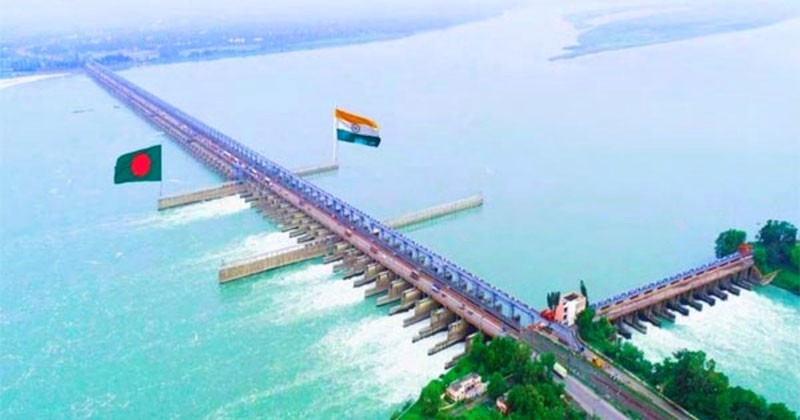
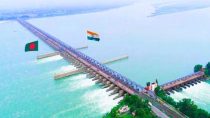
The Ganges water sharing treaty between Bangladesh and India, signed 30 years ago, ends on 12 December. Yet less than three weeks before it ends, nobody knows when the two countries will start formal talks on a new treaty or a renewal. Bangladesh wants a guarantee clause in the new treaty to secure its fair share of water. India has not yet stated clearly when it will sit for formal talks.
In this situation, the 91st meeting of the Joint Committee of the Joint Rivers Commission (JRC) of Bangladesh and India took place in Dhaka on Sunday. The meeting finalised the annual report on carrying out the Ganges water sharing treaty in 2026. The two sides did not discuss the new treaty. It was a regular meeting to watch how the treaty is carried out. Mr. Anwar Kadir, a JRC member and head of the Bangladesh side of the Joint Committee, said this is not a meeting on the new treaty. He said it is a regular meeting of the Joint Rivers Commission.
The JRC notice says the Ganges water sharing treaty was signed between Bangladesh and India on 12 December 1996. Under Article 4 of the treaty, the two countries formed a Joint Committee of their representatives to watch how it is carried out. Since 1997, the committee has watched the water flow at Farakka and Hardinge Bridge and has made annual reports on it. This year, the 89th meeting took place in Dhaka on 8 April. The 90th meeting took place in Kolkata on 22 May.
The 91st meeting finalised the 2026 annual report. Mr. Anwar Kadir led the Bangladesh side and Mr. Sharad Chandra led the Indian side. On the future of the Ganges treaty, Bangladesh does not want only to extend the old treaty. It wants a new treaty that protects the national interest. The government especially wants a guarantee clause, which would assure Bangladesh a fixed amount of water in the dry season.
Earlier, Water Resources Minister Mr. Shahiduddin Chowdhury Annie said Bangladesh wants a new treaty in place of renewing the old one. He said Bangladesh will propose a guarantee clause in it. The 1977 water sharing treaty had a guarantee clause to secure Bangladesh’s share of water. The 1996 treaty did not keep it. As the downstream country, Bangladesh must get the water it needs in the dry season on time. The treaty must also consider floods, river erosion and crop loss from extra flow in the monsoon.
Article 12 of the treaty says it stays in force for 30 years from signing and can be renewed with the mutual consent of both countries. So both countries must agree to extend it, and it has no rule for automatic extension. Article 2 of the current treaty sets the water sharing formula from January to May. It uses the water available at Farakka in every 10 day period. If Farakka has 70,000 cusecs or less, each country gets an equal share. If it has 70,000 to 75,000 cusecs, Bangladesh gets 35,000 cusecs and India gets the rest. If it has 75,000 cusecs or more, India gets 40,000 cusecs and Bangladesh gets the rest. However, the treaty assures 35,000 cusecs to each country in three 10 day periods from 11 March to 10 May.
The Bangladesh government has already formed a high level technical committee to discuss the Ganges treaty. Mr. Rashed Al Mahmud Titumir, the Prime Minister’s Adviser on Finance and Planning, leads the committee. It includes representatives of the water resources ministry, the foreign ministry and other ministries, and river experts.
Sources say Bangladesh proposed talks to India last June. In August it asked India to form its own delegation. Even then, it got no schedule for formal talks. Meanwhile, Water Resources Minister Mr. Shahiduddin Chowdhury Annie has reportedly sent a letter to India’s water resources minister on 17 November. He urged India to start talks soon. It is not known what the Indian side has decided about the letter.
If no new deal is made after the treaty ends, Bangladesh’s biggest worry will be the water flow in the next dry season. The sharing formula and the assurance in the current treaty are tied to its 30 year term. From January to May, farming, fishing, river transport, irrigation and the ecological balance of Bangladesh’s south western region depend largely on Ganges water. If the dry season flow falls, salinity may rise, farm output may suffer and rivers may lose depth.
Still, it is wrong to conclude that India will cut off all water for Bangladesh once the treaty ends. The two countries may reach a new treaty, an interim deal or some other diplomatic arrangement.
An analysis the Lowy Institute published on 16 November says the two countries keep talking about water at the technical level despite strain in their political ties. But the leaders of both countries must show goodwill to turn this contact into talks on a new treaty at the political level.