Bangladesh Must Prudently Harness the Potential of Matarbari Deep-Sea Port
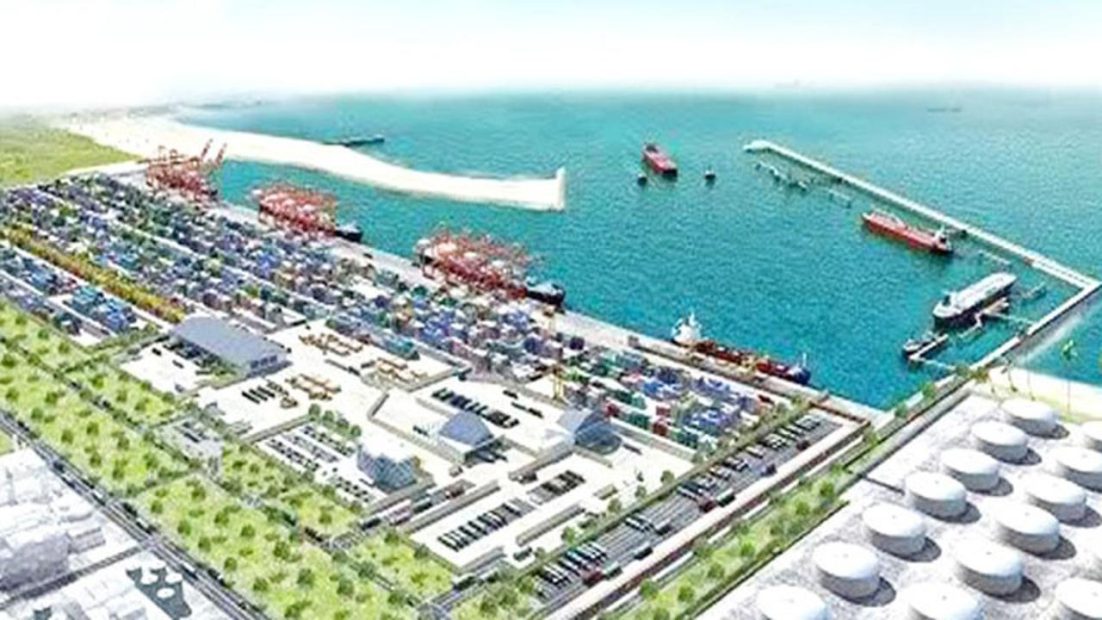
Bangladesh’s overall economy and foreign trade largely depend on maritime transport. However, it is regrettable that for many years, the limited depth of the country’s two main seaports—Chittagong and Mongla—has prevented large mother vessels and bulk cargo ships from docking directly at its ports. As a result, a significant portion of Bangladesh’s import and export containers has had to rely on foreign transshipment ports such as Colombo, Singapore and Port Klang.
This lengthy process of transporting goods through feeder vessels costs Bangladeshi businesses additional time and money. It also creates uncertainty in the supply chain. Building a deep-sea port was therefore a pressing necessity to overcome this longstanding structural weakness.
Against this backdrop, the initiative to build the country’s first deep-sea port at Matarbari in Maheshkhali upazila of Cox’s Bazar was undertaken. The project has now moved beyond the boundaries of physical infrastructure and emerged as a major centre of international geopolitics and regional strategic calculations.
The history of the Matarbari Deep-Sea Port is an interesting example of how a project can evolve through different stages. Initially, there was no specific blueprint for building a deep-sea port in the area. In 2014, during the previous Awami League government, Bangladesh and Japan finalised plans primarily to build a coal-fired power plant.
Construction of the power plant at Matarbari, about 14 kilometres inland from the sea, began in 2017. To ensure an uninterrupted coal supply, plans were made to excavate a 14-kilometre-long and 250-metre-wide artificial navigation channel from the coast.
At this stage, the Japan International Cooperation Agency (JICA) presented a groundbreaking preliminary study. Its technical assessment found that a fully-fledged commercial deep-sea port could be built to the south of the channel by making minor changes to its design. The proposal was based on the need to ensure the maximum use of land and reduce construction costs by using the same channel for two mega projects.
The Bangladesh government accepted the technical proposal, which was considered logical. As a result, a broader development plan gradually took shape around the navigation channel initially excavated for the power plant. The plan included a deep-sea port and, eventually, a large industrial zone.
Behind this massive development initiative lies Japan’s long-term economic strategy, known as the Bay of Bengal Industrial Growth Initiative, or BIG-B. Its main objective is to develop integrated industrial, commercial, energy and transport infrastructure in the Chittagong and Cox’s Bazar areas, focusing on the Bay of Bengal region.
Under this master plan, Matarbari Deep-Sea Port will serve not only as a centre for imports and exports but also as a hub for LNG terminals, modern transport systems and internationally competitive industrial zones. In other words, it is expected to evolve from an ordinary port into a major transit hub for global trade.
Following Prime Minister Tarique Rahman’s recent visit to Japan, the BIG-B initiative has gained fresh momentum. A joint statement by the top leaders of the two countries placed particular emphasis on improving regional connectivity, strengthening the capacity to address natural disasters and geopolitical risks, and attracting investment through public-private partnerships.
It is estimated that the region could attract around $60 billion to $65 billion in domestic and foreign investment over the next few decades, potentially creating employment for approximately 2.8 million people. However, behind these promising economic prospects lie several important geopolitical and strategic questions that demand careful consideration from Bangladesh as an independent and sovereign state. Mega infrastructure projects such as deep-sea ports are not merely structures made of concrete and steel. They are also major instruments for determining a country’s long-term strategic position.
India’s involvement has been a relevant issue of discussion since the beginning of the Matarbari project. The initial concept of Japan’s BIG-B initiative included a plan to develop a broader regional market involving not only Bangladesh but also India’s northeastern states, Nepal, Bhutan and Myanmar.
India’s northeastern states are geographically connected to the country’s mainland through a narrow stretch of land known as the Siliguri Corridor. Access to Bangladesh’s territory and port facilities could make the transportation of goods and trade in these states much easier and less expensive.
Although the recent joint statement by Bangladesh and Japan referred to connectivity and regional cooperation, it did not directly mention India or any other specific country. However, the vision of developing Matarbari as a regional trade hub makes it clear that the project is not intended to serve only Bangladesh’s domestic needs.
This has sparked a sensitive debate in the country’s domestic politics. Several political parties and civil society representatives have questioned whether India is being granted any special or unconditional corridor facilities in the name of connectivity.
Past experience has shown that unequal transit agreements or unconditional access to port facilities can raise concerns about a country’s sovereign control. The idea of creating a larger regional market is certainly positive from an economic perspective. However, before finalising any such initiative, Bangladesh must establish strong domestic political consensus and ensure full legal guarantees to protect its national interests.
In this geopolitical context, China’s position and the broader strategic dynamics of the Indo-Pacific region are just as important as India’s role. The joint statement between Bangladesh and Japan highlighted the concept of a “Free and Open Indo-Pacific”, which is primarily a strategic initiative of the United States, with Japan as one of its key partners. China, on the other hand, views the initiative as a US-led strategy, supported by its allies, to limit China’s sphere of influence.
China has a long history of substantial investment and strategic partnership with Bangladesh. It has been directly involved in several of the country’s mega projects and port development initiatives. Japan, too, is keen to significantly expand its economic and strategic presence in Bangladesh.
Against this backdrop of complex competition, an important question is how China will assess Japan’s massive investment in Matarbari and how it might respond. However, China has not viewed the Bangladesh-Japan initiative negatively. Apart from geopolitical considerations, the economic and environmental sustainability of the Matarbari project also requires an objective assessment.
The project’s cost has already increased by approximately 37 per cent compared with its original approved budget. There are also concerns about the long-term and recurring costs of dredging. As Matarbari lacks natural deep-water conditions, the 16-metre-deep channel will require extensive maintenance dredging every year to remain navigable. Experience from various port projects in the past warns that recurring dredging costs can sometimes consume much of a project’s expected economic benefits, turning it into a case of the “sunk cost fallacy”.
If domestic and foreign cargo volumes fall short of expectations, the burden of loan repayments and huge operating costs will ultimately fall on ordinary taxpayers. Moreover, another major concern is whether a project that originated from coal-based infrastructure will remain sustainable in an era when the world is moving towards green energy.
Bangladesh must carefully determine its course of action as it faces these multiple challenges and opportunities. First and foremost, the country needs to formulate a Strategic Security and Regional Connectivity Policy, placing national interests above all else. A comprehensive legal framework must be established before the port becomes operational to ensure national ownership, cybersecurity and strategic neutrality without any ambiguity. Clear legal boundaries must be established between commercial and military access when granting transit or corridor facilities to foreign countries or organisations. The government must maintain the highest level of vigilance to ensure that the port does not become a military or strategic logistics corridor for regional powers under any circumstances.
Second, Bangladesh must demonstrate diplomatic maturity in maintaining geopolitical balance. It should maintain a delicate balance in its relations with China, Japan, India and the United States rather than leaning too heavily towards any particular bloc. While welcoming Japanese investment, Bangladesh should continue its development partnership with China. It should also take advantage of the economic opportunities offered by India’s vast market without surrendering its bargaining power by granting unconditional facilities.
The government has already assured the public at the highest level that Matarbari Port will remain open to all and that investment proposals from any country will be considered in light of Bangladesh’s national interests. Turning this policy position into reality will be one of the biggest challenges in the coming days.
Third, the government must closely monitor the massive foreign debt burden to ensure that it does not become a financial trap for the country’s economy. There must be a clear plan for repayment capacity, the project’s return on investment (ROI) and the involvement of local entrepreneurs. It must also ensure that foreign investment comes with mandatory provisions for technology transfer and the development of local workforce skills. Otherwise, the infrastructure may look impressive, but its actual economic benefits may never reach ordinary people.
In conclusion, Matarbari Deep-Sea Port has opened up extraordinary economic opportunities for Bangladesh. It could transform the country’s maritime trade and emerge as a key hub for regional connectivity. However, turning this potential into reality will require strong national consensus that rises above narrow political divisions and emotional reactions. Only by strengthening legal safeguards for national sovereignty and economic security can Bangladesh reap the expected benefits of the Matarbari project.
History will ultimately judge whether Bangladesh used this opportunity to establish itself as a self-reliant and strategically capable state or failed to make the most of it.
The author is a journalist and columnist.
rintuanowar.com