
Garment Exports Grow Despite Mounting Challenges
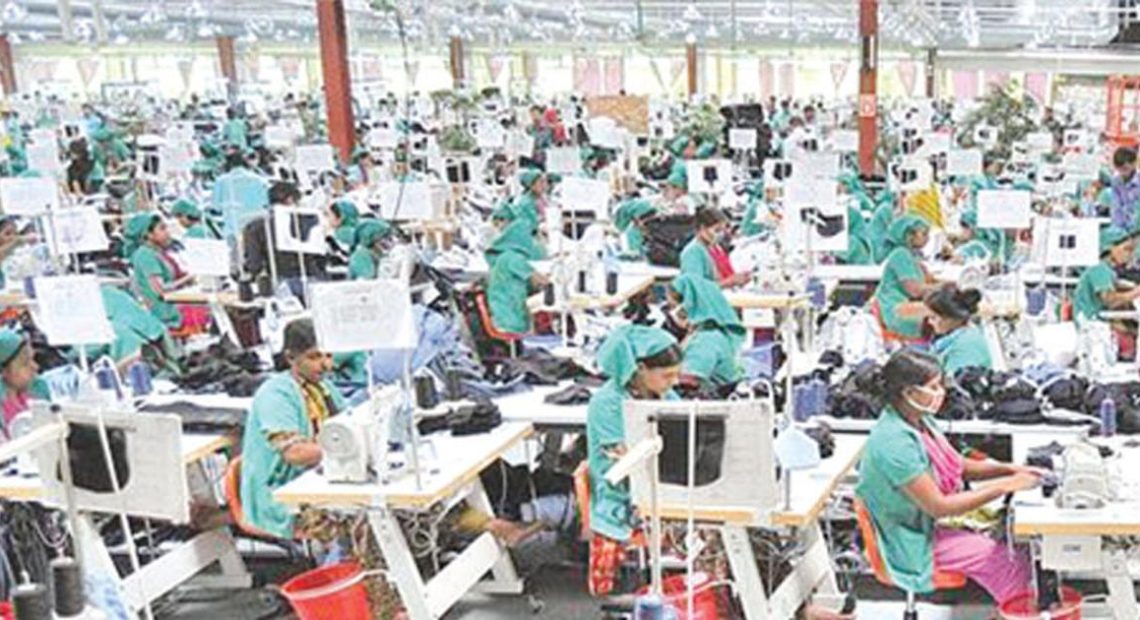
Despite disruptions to production caused by gas and power shortages and various other challenges in the country’s industrial zones, demand for Bangladeshi readymade garments (RMG) is rising in the global market. As a result, the country’s garment export sector has recorded positive growth at the beginning of the 2026-27 fiscal year. Relevant stakeholders believe that export earnings could have increased significantly if the gas and power situation had remained normal.
In the first two months (July-August) of the 2026-27 fiscal year, Bangladesh earned $7.50 billion from garment exports, compared with $7.13 billion in the same period of the previous fiscal year. As a result, garment export earnings increased by 5.12 percent year-on-year. According to the data, as garment exports recovered, Bangladesh’s overall merchandise exports increased by 13.14 percent year-on-year to $4.43 billion in August. According to the Export Promotion Bureau (EPB), exports of several non-RMG products also performed well in August, supporting the country’s efforts to diversify its export basket.
Meanwhile, under the new tariff policy of the US administration, Bangladesh faces a 10 percent tariff, while the rate is 12.5 percent for its major competitors China and Vietnam. Therefore, Bangladesh enjoys a 2.5 percentage-point tariff advantage over its competitors. Due to this tariff advantage, some buyers are shifting orders from those countries to Bangladesh, which has also contributed to export earnings.
However, Bangladesh Garment Manufacturers and Exporters Association (BGMEA) President Mahmud Hasan Khan said there had been no significant improvement in the export situation in August. He said garment exports stood at only $3.17 billion in August last year, when shipments to the United States declined due to reciprocal tariffs and exports to the European Union also fell. Therefore, the increase in garment exports this year was largely influenced by the low base of the previous year. The BGMEA president said that although exports reached $3.61 billion in August against the comparatively low base, showing a high growth rate, there had actually been no significant improvement in the export situation.
Mahmud Hasan Khan said overall export growth stood at 5.12 percent in the first two months of fiscal year 2026-27, which was below the industry’s target. He said that amid the ongoing gas crisis, high interest rates and unfavorable global trade conditions, this growth undoubtedly reflects the industry’s capability and resilience to survive even during a challenging period.
According to the latest data released by the Export Promotion Bureau (EPB), exports increased by 5.43 percent to $9.16 billion in the first two months of the 2026-27 fiscal year, compared with $8.69 billion in July-August of the previous year.
The readymade garment (RMG) sector was the main driver of this growth. Exports from the sector increased by 13.92 percent last month to $3.89 billion. Both knitwear and woven garment exports increased in August compared with the same month of the previous year.
The EPB said the growth was driven by strong demand in major markets, growing buyer confidence in Bangladesh as a reliable sourcing destination, and expanded production capacity. The agency also said increased exports of higher-value products and efforts to diversify products and markets contributed to higher export earnings. According to the latest EPB data, the garment sector achieved this export earnings growth during the first two months of the current fiscal year. Year-on-year figures also showed significant growth in garment exports in August. Garment exports stood at $3.17 billion in August 2025, rising by 13.92 percent to $3.61 billion in August this year.
Among the sub-sectors of the garment industry, knitwear recorded relatively higher growth. Knitwear export earnings stood at $2.03 billion in August 2026, up 14.88 percent from the same period in 2025. Meanwhile, woven garment exports increased by 12.70 percent to $1.57 billion during the same period.
Products recording notable growth included jute and jute products (37.09 percent), pharmaceuticals (28.52 percent), leather and leather products (24.85 percent), printed materials (24.83 percent), engineering products (23.88 percent), and other footwear (15.29 percent).
During July-August, particularly notable growth was recorded in printed materials (41.89 percent), pharmaceuticals (38.94 percent), other footwear (27.32 percent), and jute and jute products (22.26 percent).
The United States, Bangladesh’s single largest export destination, recorded 26.09 percent growth in imports from Bangladesh in August. During July-August, exports to the country increased by 11.90 percent.
The United Kingdom regained its position as the second-largest export market, followed by Germany, Spain and the Netherlands. Among emerging markets, exports to Turkey surged by 141.03 percent, while exports to South Korea and Saudi Arabia increased by 42.37 percent and 42.09 percent, respectively.
According to EPB data, exports of frozen and live fish declined by 10.25 percent to $73.19 million during July-August. During the same period, agricultural exports fell by 9.10 percent to $158.78 million, plastic products declined by 4.27 percent to $42.82 million, cotton and cotton products decreased by 13.02 percent to $82.24 million, and exports of man-made filaments fell by 10.56 percent to $63.29 million.
Stakeholders view the continued growth in the garment sector positively. Bangladesh Apparel Voice founder and Chief Executive Officer (CEO) Mahmud Rubel said the continued growth in both knitwear and woven garments reflects foreign buyers’ confidence in Bangladeshi apparel in the global market and the sector’s sustainable capacity. He said that to maintain the current growth trend, greater emphasis should be placed on global market demand, competitiveness and further strengthening the overall capacity of the garment sector.