
Cabinet Approves New Pay Structure
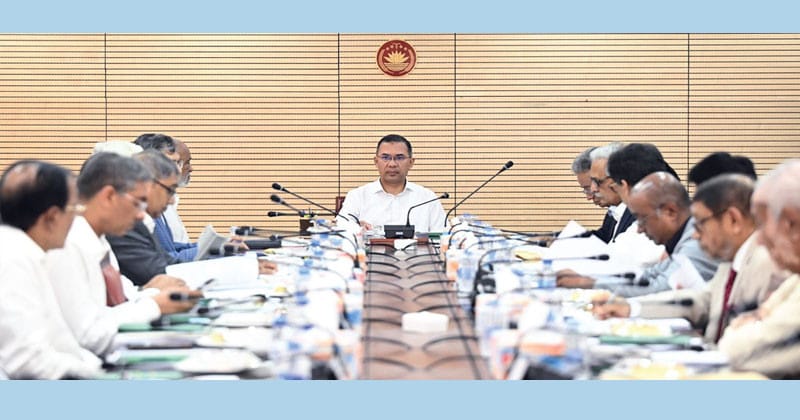
The National Pay Scale 2026, a major structural modification designed to adjust government employee wages after a nearly 12-year break, has been formally authorized by the Cabinet. The high-level conference, which was chaired by Prime Minister Tarique Rahman at the Secretariat, ended with the approval of the new national civilian scale and the matching Joint Forces Instructions 2026 for the armed forces, both of which are set to take effect on July 1, 2026. This overall policy change seeks to combat ongoing inflation, reduce growing living expenses, and restore a sensible, modern financial structure for the public sector.
Cabinet Secretary Mr. Nasimul Goni outlined the urgency of the reform in an interview with reporters at the Press Information Department conference room after the meeting. He noted that the previous pay scale, which was set up in 2015, left employees without a modification for 12 years rather than the usual five-year cycle. Mr. Goni noted that the National Pay Commission 2025 had to be established because of the significant impact this long-standing inequality has on living standards. The government created a balanced package taking into account state financial capability, economic indicators, and employee welfare after thoroughly reviewing the commission and armed forces findings over a period of eight successive sessions.
The newly authorized scale completely resets core remuneration factors while maintaining the current 20 wage divisions. The grade ratio is effectively compressed from 1:1.945 to 1:1.78, with the minimum starting basic pay set at Tk 20,000 for the 20th grade and the maximum at Tk 1,56,000 for the first grade. As a result, basic pay for officials in grades 1 through 10 would grow by up to 100%, while workers in grades 11 through 20 will see an increase of up to 142% combined with proportional increases in other supplemental allowances.
Addressing pension management, Mr. Goni emphasized the government’s long-term commitment to the ‘One Grade, One Pension’ or ‘One Rank, One Pension’ program, which is scheduled for gradual introduction by 2030 owing to complicated financial implications and a lack of historical data for pre-2019 retirees. The cabinet authorized slab-structured net pension increases ranging from 55% to 100% as an urgent safety net for senior ex-employees, guaranteeing more relief for lower-ranking retirees receiving up to Tk 9,000. In addition, the administration expanded mobile and digital communication allowances for all grades and instituted a new Tk 3,000 monthly disability allowance for children of public employees with special needs.
The financial package will be implemented over the financial years 2026–2027 and 2027–2028 to manage budget sustainability and reduce macroeconomic inflationary pressure. While standard allowances go into effect in January 2028, basic pay adjustments for lower-income students in grades 10 through 20 will be applied in three distinct phases until July 2027. To provide a smooth integration of the whole benefit pool, which includes over 920,000 retirees and 2.4 million active employees, a parallel legal service pay scale reflecting such intervals has been developed for court officials.
The national medium-term financial framework has already allocated Tk 105,580 crore for the expected extra yearly expenditure needed to achieve these structural changes. Formal circulars and relevant statutory regulatory instructions would be issued within the week after legal vetting, according to Cabinet Secretary Mr. Nasimul Goni. To ensure smooth implementation across all government ministries, the Finance Division will provide detailed instructions on individual wage fixing procedures, retirement benefits, and departmental duties.
A 2020 ban on field-level assistant agriculture officials, also called block supervisors, being placed directly inside their home districts was removed by the Cabinet in a different administrative decision made during the same briefing. Although these officers will work locally to advise farmers, address production obstacles, and lead agricultural extension efforts, their strategic location will purposely stay clear of their immediate residential districts. It is anticipated that this focused geographic flexibility would improve professional responsibility, minimize needless travel stress, maximize field productivity, and strengthen grassroots agricultural support networks.