Powerless Yet Prestigious: Who Is the New Deputy Leader?
Stalin Sarkar
The position of Deputy Leader of the National Parliament is mostly symbolic and ineffective, although the presidency is constitutionally the highest office in the state. People holding this position on the Treasury Bench to the right of the Prime Minister have been seen to execute almost no significant administrative function since the Fifth National Parliament. The position is extremely prestigious and attracts a lot of public attention, even though it lacks functional authority. Even though he didn’t have the official title, BNP ex-Secretary General Mirza Fakhrul Islam Alamgir first held that position in the Thirteenth National Parliament, which increased his influence.
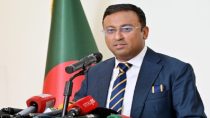
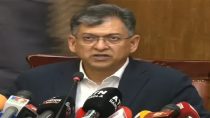
President Mirza Fakhrul Islam Alamgir moved into Bangabhaban after being elected as the nation’s 23rd president on August 20, leaving the prestigious position. Although Home Minister and BNP Standing Committee member Mr. Salahuddin Ahmed has been seen holding the position, the dominant BNP parliamentary party has not yet formally elected a new Deputy Leader. Due to this dynamic, there is a lot of discussion on social media over whether Mr. Salahuddin Ahmed will be formally appointed or if he would just continue to hold the position. The public has seen both ruling parties choose prominent leaders for the position for the last 35 years under the parliamentary system, as well as parliaments operating completely without one.
Supporters and political observers have suggested several individuals as possible candidates for the position amid considerable speculation on social media. Some consider senior BNP leader Dr. Khandaker Mosharraf Hossain to be a strong candidate, while others consider Home Minister Mr. Salahuddin Ahmed to be the front-runner because of his good performance. In addition to names like Advocate Zainul Abedin, Dr. Abdul Moyeen Khan, and Mr. Mirza Abbas, there have also been concerns that the seat may remain open to prevent internal conflict. Parliamentary rules state that MPs on the Treasury Bench choose the Deputy Leader, although the PM has the final say over who is selected.
The BNP government, headed by PM Tarique Rahman, completed major appointments after the government was formed following the Thirteenth National Parliament election. Mr. Salahuddin Ahmed was observed sitting in the chair that Mr. Mirza Fakhrul Islam Alamgir had previously occupied during the August 30 parliamentary session. Since then, responsible BNP officials have avoided making obvious public declarations, while fans of other leaders have filled social media with images suggesting possible nominations.
Speaking on condition of anonymity, a BNP member of parliament pointed out that it is still unknown what the party high leadership has instructed and whether the deputy leader post would be filled at all. The anonymous politician went on to say that if an appointment is made, things like earlier party donations, seniority, MPs’ general acceptability, and parliamentary performance are probably going to be given top priority. Vacancy is a possible administrative alternative, as shown by Ms. Khaleda Zia’s effective four-year term as the Eighth National Parliament without a deputy leader.
According to reports, the role has been purposefully left empty for strategic reasons, even though the party high command has methodically filled every major senior post. Dr. Khandaker Mosharraf Hossain, a senior member of the Standing Committee, and other prominent members of the parliament have been given important positions as part of the reorganization of the government. Given the major political costs associated with marginalizing senior leaders, political experts see the choice as having significant political consequences. A warning against inner conflict is provided by historical instances, such as West Bengal Chief Minister Ms. Mamata Banerjee’s marginalization of veteran politicians in favor of younger leaders, which finally backfired when her party was overthrown.
Dr. A. Q. M. Badruddoza Chowdhury was appointed Deputy Leader by Ms. Khaleda Zia in the Fifth National Parliament, a position he held in the Sixth National Parliament, following the reorganization of the parliamentary system. Twenty-one years later, Ms, Syeda Sajeda Chowdhury was appointed to the Seventh National Parliament by Awami League leader Ms. Sheikh Hasina. She held this position for several periods until her death, at which point Ms. Matia Chowdhury took over. In the past, senior, well-respected, experienced leaders have often held this symbolic role, creating a solid history of power and unanimity within the national assembly.
PM Tarique Rahman and the BNP parliamentary party have complete control over the selection of the Deputy Leader because this is the first elected parliament in many years. It is still important to choose a widely accepted leader who stays clear of pointless controversy and gives the opposition no opportunity to create political problems. To avoid internal division, citizens have a valid expectation that the office will be filled by someone with wide acceptance. Thus, ahead, party unity and parliamentary stability depend on the leadership making a wise and thoughtful choice.