
Smartphones Priced at Tk 5,500 Coming in October
- Government’s Landmark Initiative to Bridge the Digital Divide
Faruk Hossain
In this age of information technology revolution, a large portion of the country’s population — most of them low-income — still remains outside digital facilities. Overall development is not possible without bringing this lagging population along in this era of digital transformation. Therefore, to bridge this digital divide, the current BNP government, led by Prime Minister Tarique Rahman, is moving forward with a landmark initiative to deliver the benefits of information technology to farmers, laborers, rickshaw-pullers, day laborers, and marginalized communities. Starting next October, affordable smartphones manufactured in domestic factories are set to be launched in the market. While an ordinary smartphone currently costs between 9,000 and 10,000 taka, preparations are nearly finalized to bring modern data- and voice-enabled devices within the reach of ordinary people for just 5,000 to 6,000 taka. The government’s goal is to bring the 70 million people currently outside digital services under high-speed internet and data connectivity within the next 18 to 24 months, ensuring 100% network coverage nationwide. Those concerned expect that this smartphone — designed with an affordable price, easy installment facilities, and usability suited to marginalized people — will bring revolutionary change to the daily quality of life, productivity, and livelihoods of ordinary people currently outside digital facilities.
Those concerned say that the government, BTRC, Bangladesh Bank, mobile operators, and local handset assembly companies are working jointly to deliver low-cost smartphones to low-income people. If everything goes according to plan, a sample of the first domestically assembled device could be unveiled within this September. Subsequently, large-scale distribution of this affordable smartphone to ordinary consumers through nationwide distributors and dealers is expected to begin by mid-October.
The Prime Minister’s Adviser for Posts, Telecommunications and Information Technology, Rehan Asif Asad, said they are trying to bring the country’s 70 million people who are still not on data (digital services) onto data. He said they are trying to deliver 5G data service to every city, port, and remote area of the country, and are trying to make devices affordable and accessible to everyone.
He said that as a government elected by the people’s vote, it is their responsibility to look after everyone in society and deliver services to all. For that section of people for whom even this price might be challenging, the social welfare fund will be used if needed. He said they are prepared, if necessary, to use subsidies from that fund to make the phone even more affordable, or to find ways to sell it within the current price range.
The Adviser further said that Bangladesh Bank has lifted its earlier restrictions on offering EMI facilities for mobile phone purchases. As a result, any bank can now offer customers EMI facilities for buying mobile phones.
Rehan Asif Asad said the government cannot implement this initiative alone. For this reason, mobile phone manufacturers, mobile operators, and Bangladesh Bank have been engaged to play their respective roles. He said the first locally produced phone could be available in the market soon, and full-scale local production through dealers is expected to begin by mid-October.
Currently, about 140 million mobile connections are active in the country, but a large portion of subscribers remain deprived of modern information technology services. Statistics show that about 50% of the country’s people still rely on 2G or basic voice networks, and about 70 million subscribers use feature phones (button phones). As a result, this huge population is being deprived of modern citizen services, agricultural and health information, and digital financial transactions available through the internet.
Those concerned say that the production cost of an ordinary smartphone is concentrated in the display and processor. An LCD screen costing 17 US dollars is used; the cost for the motherboard, processor, and other necessary parts is set at 23 dollars; and the cost for the battery and casing is set at 15 to 16 dollars. Altogether, the total production cost of making a handset comes to about 55 US dollars. Following discussions between the government and local manufacturers, manufacturing companies have proposed to provide a subsidy of up to 1,000 taka per device. Combined with tax exemptions on the import of necessary raw materials and local production, along with loan facilities announced in the budget, it is becoming possible to keep the final retail price within 5,500 taka.
BlackBerry-Style Design: Two-Thirds Touchscreen and Physical Keyboard
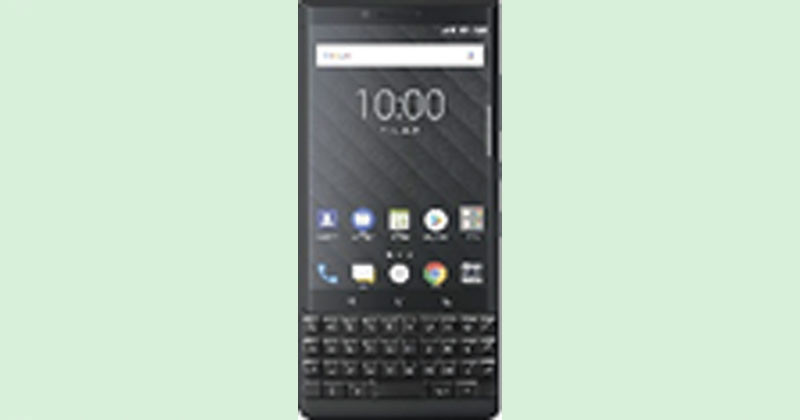
Striking and practical changes have been made in the smartphone’s design. Considering the purchasing power and usage habits of ordinary people, the device has been given a modern form. Many users in rural areas still feel more comfortable with button phones than touchscreens. Additionally, using a full-screen LCD costing 18 to 20 dollars would multiply the phone’s production cost many times over. To solve this problem, domestic researchers and mobile manufacturing companies have modernized the concept of the historic “BlackBerry” or “Palm” phones. The upper two-thirds (2/3) of this new phone will feature a touchscreen display, while the lower one-third (1/3) will have a physical keyboard. This keyboard will include Bengali characters alongside English letters, making it easier for rural people to type and run apps.
Bundles, EMI Facility, and SOF Fund
Alongside ensuring the handset is available at 5,500 taka, the government has taken various initiatives to reduce the financial burden on marginalized customers. As part of a joint initiative with mobile operators, a free three-month bundle package of high-speed data and voice calls will be provided with the handset. This will offset a significant portion of the customer’s initial expenses after purchasing the device, and those concerned believe the phone’s effective cost will come down to between 2,000 and 3,000 taka. Additionally, while commercial banks previously offered easy installment facilities for electronics products, there were certain restrictions from Bangladesh Bank regarding mobile phones. Through the current government’s initiative, the central bank has withdrawn those restrictions. As a result, customers will now be able to purchase this smartphone through any commercial bank or financial institution in low-interest or interest-free monthly installments. There is also a plan to use the approximately 1,200 crore taka currently held in the “Social Obligation Fund” (SOF) — a social responsibility fund operated under the Bangladesh Telecommunication Regulatory Commission (BTRC) — for the extremely poor population (about 20 million). The Adviser said that from this social welfare fund, built with public money, necessary additional subsidies will be provided to supply this smartphone free of charge or at a nominal price to extremely poor and marginalized people. This will ensure equal digital rights across all levels of society.
Zakaria Shahid, President of the Mobile Phone Industry Owners Association of Bangladesh (MIOB), said this initiative was taken so that ordinary people can stay digitally connected. With this phone, customers will be able to access basic services via buttons while also using apps like WhatsApp, imo, Facebook, and YouTube. He said this model is initially being prepared, and it will be further upgraded later.