
Taltali Power Plant’s ‘Light’ Casts a Shadow Over the Coast: Pollution, Livelihood Crisis and Environmental Disaster Alleged
Jahangir Kabir Mridha, Barguna
‘Oh Taltali Coal Power Company! You are giving us electricity today by taking away our lives! We spent our entire lives happily and comfortably with our families by catching hilsa in the Payra-Bishkhali rivers. Today, we are forced to live an inhumane life.’ Fisherman Hazrat Ali Boyati of Joyalbhanga village in Barguna’s Taltali upazila said these words with regret, along with several others.
A 350-megawatt power plant is supplying electricity to the national grid. Yet people living around the plant are now raising questions over pollution, livelihood crises and health risks: who is paying the price for this development?
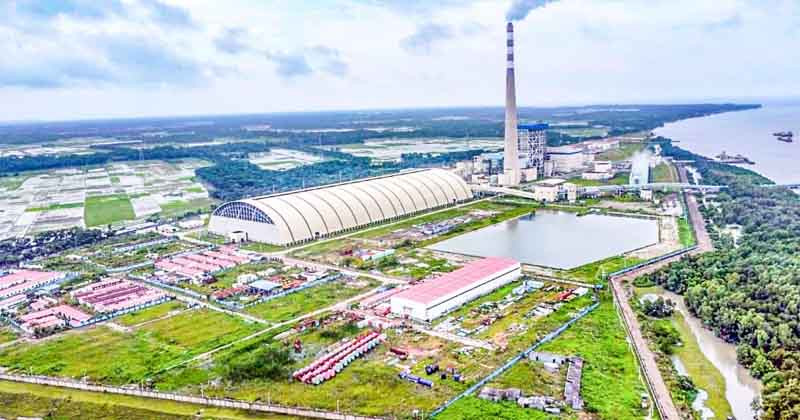
A coal-fired Taltali thermal power plant has been built at the mouth of the Payra River in the Ankujanpara area of Nishanbaria Union in Taltali upazila of Barguna. The plant has an installed capacity of 350 MW, while various documents mention its net or derated capacity as 307 MW.
It is operated by Barishal Electric Power Company Limited. The company is a private independent power producer formed as a joint venture between Sinohydro and Isotec. The project has a commercial operating period of 25 years and began commercial production on January 1, 2023. When the plant was established, local people expected electricity generation, employment and a boost to the local economy.
But a few years after production began, the list of complaints from local residents has continued to grow. Toxic smoke, coal transportation, coal dust, waste, hot water and river pollution have now become major concerns for local communities. Recent reports have also highlighted health risks among local people, particularly complaints of skin diseases and breathing difficulties.
The biggest concern is over the river and fisheries resources. The confluence of the Payra and Bishkhali rivers was once an important habitat for hilsa and various other fish species. Thousands of fishermen in vast areas including Taltali, Patharghata and Amtali depended on these rivers and the estuary for their livelihoods. Recent reports say that many fishermen are now spending idle time with their boats and nets because they are not getting the expected amount of fish.
Fishermen allege that, in addition to hot water and waste from the power plant entering the river, coal dust mixes with the water during coal unloading, damaging the aquatic environment. However, independent and long-term scientific research is needed to determine how much of the alleged damage to the environment and livelihoods is directly caused by the power plant.
Another major environmental concern is the location of the plant. The power plant is situated near the banks of the Payra River and the sea estuary. Within only two to three kilometres of the plant are the Tengragiri forest, Tengragiri Eco Park and Shubasandhya sea beach. On the other side of the river lies the Haringhata forest. As a result, environmentalists are concerned about the long-term impact of smoke, ash and waste from coal combustion.
Local residents allege that smoke and coal dust emitted from the plant are falling on homes, trees and farmland. There are also complaints of reduced production of fruits from coconut, betel nut, palmyra and other fruit-bearing trees. Farmers claim that layers of dust and ash are accumulating on leaves and disrupting the normal growth of trees.
There are also many complaints about health risks. Some local residents report skin diseases, while others complain of breathing difficulties, coughing and allergies. In June 2026, local women raised allegations of health risks and livelihood crises linked to the power plant at a gathering in Taltali.
Meanwhile, allegations of irregularities and the theft of valuable equipment related to the project have also come under renewed discussion. There have been allegations of theft or smuggling of various materials and equipment from the plant since its construction. There are calls for an investigation into the truth of these allegations, the extent of the losses and the role of those involved.
The main questions raised by local people about the environmental impact of the thermal power plant are: To what extent are the conditions of the environmental clearance being followed in practice? How is coal being transported and stored? Where are ash and other waste materials being disposed of? Are the temperature and chemical quality of used water being tested before it is discharged into the river? Are the river water, sediment and fish regularly being tested for heavy metals or other pollutants?
According to experts, answering these questions requires more than the power plant’s own environmental reports. Data should be collected on air quality around the plant, river-water temperature, dissolved oxygen, salinity, heavy metals, sediment, fish species and breeding conditions, as well as the quality of soil in agricultural land.
Local residents allege that political decisions and influence at the highest level of the then government created the conditions for establishing the coal-fired project in Taltali. There are even local-level allegations that former Prime Minister Sheikh Hasina received unethical financial benefits in connection with the project. Calls have been made for an investigation into the project’s approval, land acquisition, environmental clearance, power purchase agreement, financing and financial transactions involving those concerned.
According to Monir Hossain Kamal, general secretary of the Barguna District Committee for the Protection of Citizens’ Rights and a journalist, putting the lives, livelihoods and environment of people in a particular region at risk in the name of national development is not compatible with sustainable development. He asked, electricity is indeed being added to the national grid, but if the people in the production area have to pay the price with their lives and livelihoods, then who will determine the social cost of that development?
The people of Taltali demand that the truth must first be established independently before any question of shutting down the power plant is considered. A joint scientific investigation should be conducted involving the Department of Environment, Bangladesh Water Development Board, Department of Fisheries, health authorities and university experts.
Comparative data should be published showing what changes have taken place over the past few years in the rivers, fish, agriculture, forests, air quality and public health. Because the question of Taltali is no longer only about generating 350 MW of electricity. It is about the water of the Payra-Bishkhali rivers, the habitat of hilsa, the livelihoods of fishermen, farmers’ land, the Tengragiri forest, coastal biodiversity and people’s right to live a healthy life.
The national grid is receiving electricity and the lights are on—this is the reality of development. But if that light brings smoke into the homes of people in the production area, pollution to the rivers and a livelihood crisis, the people of Taltali are now seeking an answer to the question of how sustainable such a model of development really is.