The CNG Syndicate Behind Battery-Powered Auto-Rickshaws
Eklach Haque
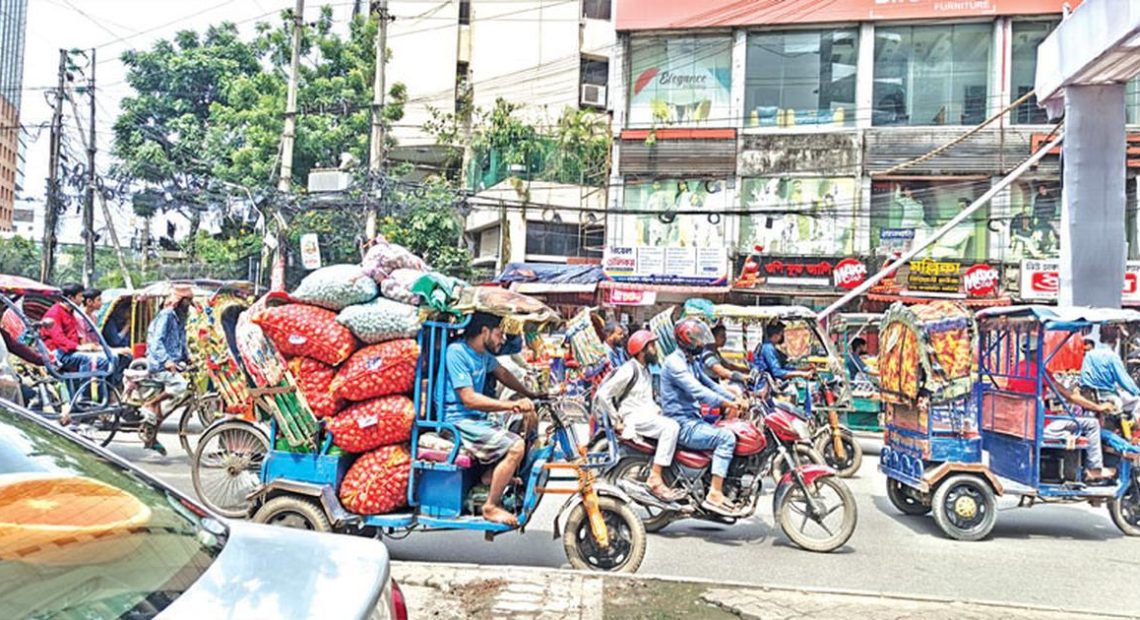
Battery-powered auto-rickshaws have now become a major problem for Dhaka. Neither drives nor bans have been able to stop them. Their numbers are increasing day by day. Although hundreds of thousands of battery-powered auto-rickshaws operate on Dhaka’s roads, there is no accurate figure. Transport sector insiders say influential groups previously involved in the CNG-powered auto-rickshaw business are now turning to battery-powered auto-rickshaws. Questions have also been raised over the lack of effective police action. Several police personnel are also reportedly involved in the battery-powered auto-rickshaw business.
From narrow lanes to major roads, these three-wheelers are widespread. Their unauthorised operation on busy roads is causing traffic congestion and accidents. Although various government decisions have sought to control and stop battery-powered auto-rickshaws on the capital’s major roads, their numbers have increased rather than declined.
Meanwhile, allegations have emerged that a dumping business has developed behind drives against battery-powered auto-rickshaws in different areas of the capital. During police drives, battery-powered auto-rickshaws are seized and kept at designated locations. After two or three days, many of the vehicles are reportedly released in exchange for money. During the period they remain detained, owners are required to pay drivers their daily rental according to the agreement.
They further said that influential individuals, politically powerful groups and some members of law enforcement agencies were previously alleged to have been involved in Dhaka’s CNG-powered auto-rickshaw business. The nature of that business has changed due to the high price of CNG-powered auto-rickshaws, complications surrounding registration and number plates, and various changes in business control.
Now, those influential individuals or groups are investing in battery-powered auto-rickshaws. A CNG-powered auto-rickshaw, including its registration number, costs more than Tk 2 million to purchase. In contrast, a battery-powered auto-rickshaw can be purchased for around Tk 150,000. As the latter requires comparatively less capital, investors are shifting from CNG-powered auto-rickshaws to battery-powered vehicles. The lower investment allows people to enter the business with limited capital. An auto-rickshaw can be purchased and rented to a driver for Tk 600 per day.
Drivers, however, say they also lose their income when their vehicles are seized. In many cases, they operate the vehicles on a daily rental basis. Even when the vehicle is detained and they have no income, they remain under pressure to pay rent to the owner. As a result, they suffer losses on both sides—with their income halted and uncertainty over when the vehicle will be released.
They also allege that because many police personnel own battery-powered auto-rickshaws, police drives sometimes seize only one or two vehicles while allowing the others to continue operating.
Nasir, a battery-powered auto-rickshaw driver in the Mugda area, said many of the current owners of battery-powered auto-rickshaws were previously involved in the CNG-powered auto-rickshaw business. Many are now investing in battery-powered vehicles because they generate higher daily profits with less investment. He added that battery-rickshaw spare parts are inexpensive and the vehicles break down less frequently.
Noore Alam, a ride-sharing motorcycle driver, said that when he goes out with his motorcycle, he has to show documents, a licence, a helmet and comply with various other requirements. But battery-powered auto-rickshaws are operating on major roads without any documents or safety measures, while police do not take action against them.
Dr. Iftekharuzzaman, executive director of Transparency International Bangladesh (TIB), said that even if the legal gaps concerning battery-powered rickshaws are addressed and enforcement is ensured to the highest possible level, a sustainable solution to the core problem would still remain elusive.
According to him, one of the key sources of the syndicate involving political leaders and activists, bureaucrats and sections of law enforcement agencies is the shortage of adequate, people-friendly public transport in the city compared with citizens’ needs. A section of those responsible for controlling the syndicate and holding the authority to do so are themselves protecting the anarchy.
He said a long-term strategy must be formulated and implemented immediately to develop planned and sustainable urbanisation and infrastructure, along with a diverse and people-friendly transport system.
The syndicate centred on battery-powered rickshaws and the irregularities surrounding it are essentially symptoms of long-standing disorder resulting from unplanned urbanisation and infrastructure, roads and transport systems that are inadequate to meet the needs of the growing urban population.