Highest Level of Human Rights Protection and Freedom of Expression Ensured in Seven Months: Mahdi Amin
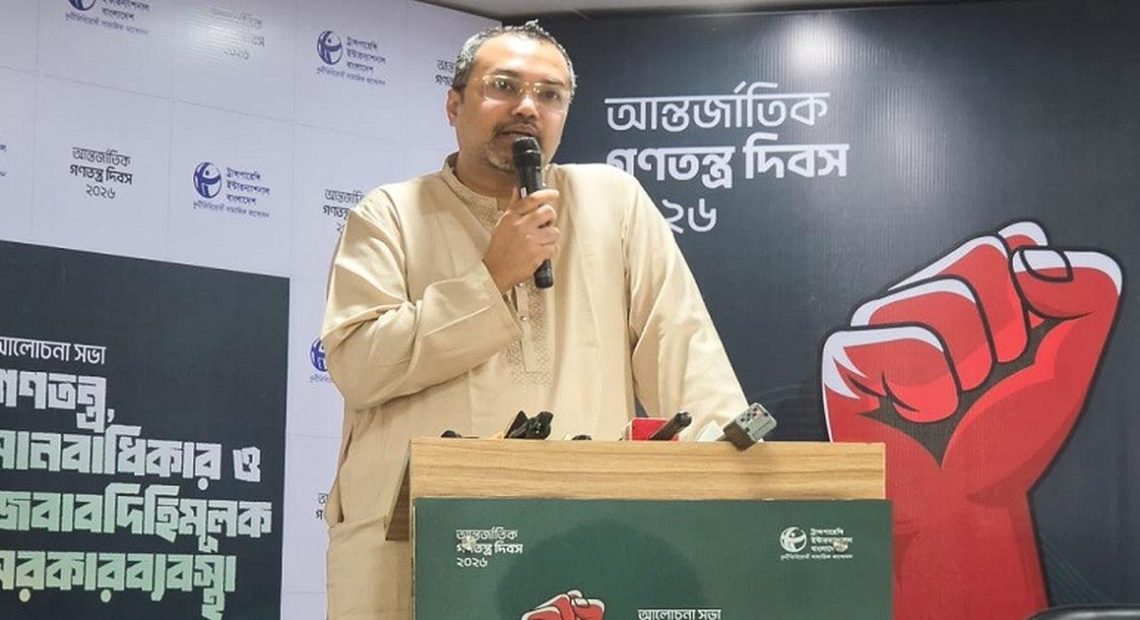
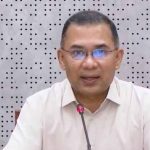
Mahdi Amin, spokesperson for the Prime Minister’s Office, said unprecedented freedom of expression and civil and human rights have been ensured for the people of the country during the government’s seven months in office. He said there had been no state-sponsored human rights violations, enforced disappearances, extrajudicial killings or deaths caused by torture or abuse during this period. Differences of opinion, political paths, ideologies or political values of opposition parties have also not been suppressed or denied under state patronage.
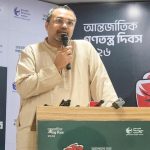
He made the remarks at a discussion titled “Democracy, Human Rights and an Accountable System of Government” organised by Transparency International Bangladesh (TIB) in Dhanmondi, Dhaka, on Tuesday morning. Mahdi Amin said, “To our knowledge, no human rights violations of any kind have occurred under state patronage or out of political vengeance in a democratic state system.”
He said that in the past, lists of people holding dissenting views were prepared from a particular office or from the highest level of the state, followed by direct intervention on orders. In the current democratic state structure, if any isolated undesirable incident or administrative error occurs at the local level, immediate accountability measures are taken. Swift action is taken when any crime is committed, and the rule of law is ensured.
Speaking of institutionalising this democratic process on a permanent basis, the Prime Minister’s Office spokesperson said that, unlike in the past, shortcomings or irregularities at the grassroots level are not being covered up. Investigations and remedial measures are being taken as soon as information is received. The culture of repression from the centre is being dismantled, and action is being taken by giving importance to the complaints of people at the grassroots.
Regarding the July mass uprising, Mahdi Amin said the historic movement did not belong to any particular political party or group. From students of schools, colleges, madrasas and universities to garment workers, rickshaw pullers, expatriates, women, teachers, lawyers, doctors and journalists, people from all walks of life played their respective roles. Everyone united at one point against fascist rule and forged national unity.
Regarding taking stakeholders’ opinions in lawmaking, he said more than 100 ordinances issued by the previous interim government had been converted into full-fledged laws during the first session of the current Parliament. It was rare in the past to see such a large number of laws passed through the parliamentary process so quickly. Stakeholders’ opinions were also sought in drafting the new laws. The drafts had been made public beforehand.
He said lawmaking is an ongoing process. After 17 years of misrule, an elected government has begun running the state. Members of Parliament involved in lawmaking are trying to reflect the views of people from all walks of life. Although it is not possible to make changes that are 100 percent perfect at the first attempt, necessary amendments are being made at various stages in practical areas after taking stakeholders’ opinions.
Mahdi Amin said democracy does not simply mean casting a vote for one day every five years. The true measure of democracy is how much the expectations and trust of the people, reflected in the vote received by the winning party in a general election, are reflected in running the state during the following five years.
He said the current government believes that the people of this country are the sole source of state power and its rightful owners. Therefore, the BNP government is committed to running the country with 100 percent accountability and full transparency towards the people.
Mentioning that Bangladesh will move forward with the country’s civil society, media, private sector and especially young people and women serving as key driving forces, he said one of the government’s top priorities is to build a people-friendly and inclusive state by utilising the potential and talent of young people.
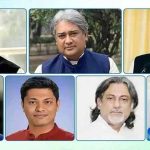
The discussion, moderated by TIB Executive Director Dr Iftekharuzzaman, was also attended by BNP International Affairs Secretary Barrister Muhammad Naushad Zamir, Dr Manisha Chakraborty, a member of the Central Committee of BASAD, and physician and young politician Tasnim Jara. Academics, senior journalists, civil society representatives, young students from various educational institutions and young people from volunteer organisations were also present at the event.