Metro rail’s overall safety must be ensured
Metro rail is without doubt an important addition to public transport in the capital. It makes travel easy for lakhs of people every day in a city full of traffic jams. It also saves time and working hours. But the success of a modern public transport system cannot be judged only by fast trains or the number of passengers.
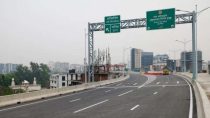
Passenger safety, the environment of stations and nearby areas, clear financial management and accountability in project work are equally important. Sadly, many questions and worries have arisen about metro rail in these areas. A report published in Daily Inqilab yesterday said there are not enough street lights in many places on the road under the metro rail from Diabari in Uttara to Mirpur. Large areas stay in darkness after evening.
Local residents, traders and drivers say muggers, robbers and other anti social groups use this chance. After 8 PM, many rickshaw pullers do not want to travel in that area. Ordinary pedestrians also suffer from fear. The question is why the road under an important public transport corridor should stay dark.
Why is there delay in setting up permanent lights even after crimes have happened there? It is not acceptable to keep citizens’ safety at risk while waiting for government tenders or fund approval. If the metro rail authority, Dhaka North City Corporation and law enforcement agencies lack coordination, they must fix it at once. They must set up enough and durable lights along the whole road.
They must also make CCTV cameras work, run regular police patrols and place permanent police guards where needed. The problem is not only in Diabari to Mirpur. Crime prone spots under the metro rail must be identified and acted on quickly. A working system must also be built for citizens to report complaints.
Along with safety, people also have questions about metro rail’s income and spending. A huge number of passengers use the service every day, and crores of Tk come in from ticket sales. According to media reports, ticket sales earned about 244 crore Tk in the 2023 to 2024 fiscal year. In the 2024 to 2025 fiscal year, the early estimate puts this income at about 400 crore Tk. Money also comes from shop rent, advertising and other sources.
But past reports have shown unclear accounts of this huge money, its management and how it shows up in the public treasury. A Bonik Barta report said ticket money was not shown directly as income in the audited financial statements of DMTCL after the metro rail began. The project’s assets and liabilities had not been formally handed over to the company. So part of the money was recorded as deferred income. A report by a JICA consultant firm also pointed to such accounting problems.
It must be made clear where the income is deposited and how it is counted. It must also be made clear how much goes to operating costs and loan instalments. The link with government accounts must be explained too. Leasing of commercial space in and around metro stations must also be clear and fair. Many media outlets have reported wrongdoing and leasing at low prices for station shops, ATM booths, advertising and other commercial space.
In some places, people have also been accused of setting up illegal shops and collecting rent or extortion money. These charges must be investigated and strict action taken against those responsible. Metro rail’s finances need regular independent audits and yearly income and spending reports. They also need effective action to investigate wrongdoing.
DMTCL is a state owned company, but its accounts must be clear to the public. Huge sums were spent on building the metro rail from loans and public money. The loan principal and interest will finally be paid from the people’s money.
On the other hand, strict accountability is needed for time and cost in extending metro rail and building new lines. The extension of MRT Line 6, which now runs from Uttara to Motijheel, up to Kamalapur has been delayed several times. According to the latest information, civil work on the Motijheel to Kamalapur section is 84.85% done. Electrical and mechanical work is 58% done. The target to start commercial service on the new section is July 2027. Earlier, officials had said January 2027, and then April or May.
Time has been extended again and again, and cost has risen too. So it is natural for people to doubt the new deadline. The authorities cannot finish their duty only by giving assurances. The costs of MRT Line 1 and Line 5, approved recently by ECNEC, also need deep review. Under the ECNEC approval of 16 September, the cost of MRT Line 1 stands at about 114,395 crore Tk. The first approved cost in 2019 was 52,561 crore Tk.
The cost of the northern part of Line 5 has also risen to about 89,848 crore Tk. The cost of the new southern part of Line 5 is set at about 45,503 crore Tk. Inflation, dollar exchange rates, building material prices, land acquisition and technical problems can raise project costs. This cannot be denied. But these reasons cannot place unusual cost increases beyond question.
Experts have also raised concern because the cost per kilometre of Bangladesh’s projects is much higher than metro projects in other countries. If the projects taken under the previous fascist government had cost problems, the present government must check and fix them. Repeating the same cost rise and wrongdoing is not acceptable at all. To make metro rail a true asset of the people, the government must ensure the safety of passengers and pedestrians.
It must also ensure clear income and spending, control of project time and cost, and accountability of the authorities. A situation where costs rise in the name of development while citizens’ safety and public interest are ignored cannot go on.