Sharsha farmers smile over good jute prices
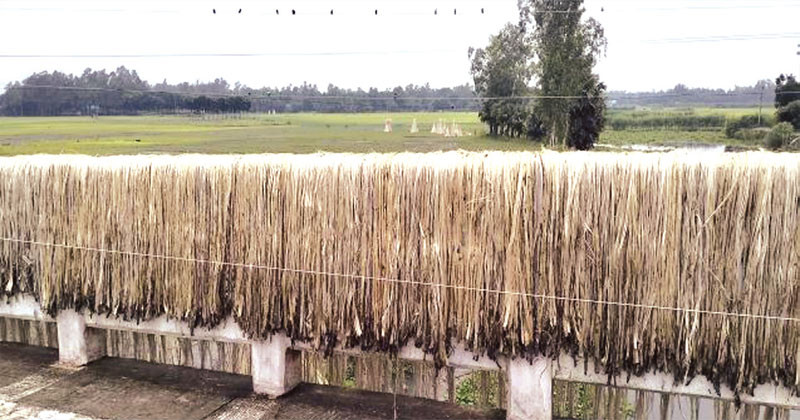
New jute has begun arriving in the markets of Sharsha, a border upazila of Jashore. This year, farmers are selling it at nearly one thousand taka more per maund compared to last year. Alongside a bumper jute yield this season, adequate rainfall meant farmers faced no water shortage for jute retting either.
A tour of the market found that while new jute sold for 2,600 to 2,800 taka per maund at the start of last year, farmers this year initially sold it for 3,500 to 3,600 taka. The price has since risen further, reaching 3,800 to 4,000 taka. As a result, compared to last year, farmers are getting 1,000 to 1,200 taka more per maund.
According to the upazila agriculture office, jute yield in Sharsha has been quite good this year. Jute cultivation, which covered 5,000 hectares of land last year, has risen to 5,503 hectares this year — an increase of 503 hectares within a year. Moreover, while farmers faced severe difficulties with jute retting last year due to insufficient rainfall, that problem did not arise this year. Meanwhile, although the yield and price are good, farmers have complained of a somewhat higher production cost, saying that labor wages in particular have gone up this time. While laborers could be hired for 400 taka in wages last year, higher wages now have to be paid per laborer for cutting, retting, and stripping the fiber from jute. As a result, production costs have risen by 200 to 300 taka per maund compared to last year.
Farmer Mr. Shimul Hossain told Inqilab that the jute yield has been very good this year, and that he is also getting a good price — earning 1,000 to 1,200 taka more per maund from selling new jute compared to last year.
Jute trader Mr. Alamgir Hossain said he buys jute from local farmers and supplies it to various markets, including Kushtia, Faridpur, Khulna, and Bogura.
Sharsha Upazila Agriculture Officer Mr. Dipak Kumar Saha said farmers in Sharsha upazila are in a fairly profitable position with jute cultivation this year. They are pleased due to favorable weather, good yield, and satisfactory prices. He added that farmers are reaping these benefits because of the government’s incentives, free distribution of high-quality seeds, and regular guidance from the agriculture department.