Hazrat Shahjalal International Airport's 'Third Terminal' Boeing to purchase 11 aircraft during PM's US visit, European Union to soon sign 10 Airbus deal Japanese consortium to operate and maintain third terminal, Experts disappointed over delay in deal, Will give a major boost to aviation sector and overall economy: Professor Abu Ahmed Runway management is a challenge to fully utilize capacity, permanent solution needs to be considered: Air Commodore Md. Noor-e-Alam
New Horizon For Foreign Investment
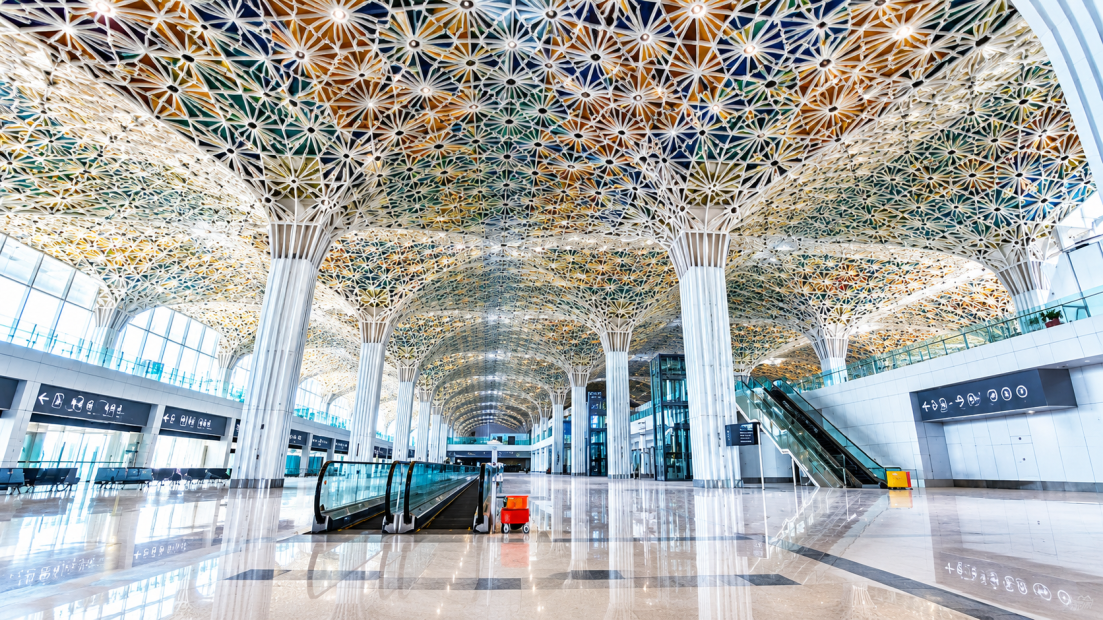
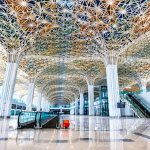
If everything goes as planned, the newly built third terminal of Hazrat Shahjalal International Airport in Dhaka will be inaugurated on December 16. The government has brought another piece of good news with the opening of the terminal. A deal to purchase new aircraft from US aircraft manufacturer Boeing is also expected to be finalised this week.
Biman Bangladesh Airlines has signed a major deal worth around $3.7 billion with US-based Boeing. Under the deal, 14 modern aircraft will be added to its fleet, including eight Boeing 787-10 Dreamliners, two Boeing 787-9s and four Boeing 737-8 MAX aircraft.
Prime Minister Tarique Rahman will leave Dhaka on September 21 to attend the 81st session of the United Nations General Assembly. He is scheduled to return to Dhaka from New York on the night of September 25. Sources said the prime minister is also expected to meet US President Donald Trump during the visit.
During the UN General Assembly session, an agreement may be signed to purchase 11 Boeing aircraft. In a letter sent on August 31, US President Donald Trump had already expressed his hope of meeting Prime Minister Tarique Rahman in person.
Meanwhile, Biman Bangladesh Airlines is preparing to sign a deal within the next few weeks to add Airbus aircraft to its fleet. This would bring another 21 aircraft to the national flag carrier’s fleet. Biman currently has 19 aircraft in its fleet.
The expansion is expected to have a positive impact on the country’s economy and foreign investment. Several investors have already expressed interest, while many companies are in the pipeline to explore investment opportunities.
The International Monetary Fund (IMF) recently forecast that, under the current trend, Bangladesh’s economy could reach $677 billion by 2030. The country could become the world’s 32nd-largest economy. During this period, its GDP could surpass the economies of countries such as Malaysia, Vietnam and Thailand.
Relevant officials and experts believe the opening of the third terminal will further strengthen the IMF’s forecast. Meanwhile, UK-based aviation services company Menzies Aviation has sought an opportunity to work as the second passenger handling operator at the airport’s third terminal. The company provides services at 349 airports worldwide.
If selected, Menzies plans to invest $12 million in the first year. According to the company, the investment would create more than 1,000 direct jobs in the first year. It could also create more than 4,500 indirect jobs through the supply chain and local economy. Several other companies are also interested in providing passenger handling services at the new terminal.
Turkey-based Çelebi is one of them. It operates at 70 stations in 60 airports worldwide. UAE-based dnata is also interested and provides services at more than 146 airports in 35 countries. Swissport, a Switzerland-based aviation services company, has also expressed interest. It is one of the leading companies in the global aviation services sector and operates at more than 312 airports in 49 countries.
Multinational aviation and technology services company SATS is also interested in providing second passenger handling services. Although several companies have expressed interest in becoming the second passenger handling operator, the government has yet to sign the final agreement with the Japanese consortium, which would be the first party responsible for operating the third terminal in partnership with the Civil Aviation Authority of Bangladesh (CAAB). The agreement could be signed at any time.
After the final agreement is signed, a Japanese consortium comprising Japan Airport Terminal Co., Sumitomo Corporation, Nippon Koei and Narita International Airport Corporation will take responsibility for operating and maintaining the third terminal at Hazrat Shahjalal International Airport.
Experts say the third terminal will bring major changes to the country’s aviation sector. It will not only increase passenger handling capacity but also provide more modern, safe, comfortable and world-class services.
Annual passenger handling capacity will rise from the current eight million to around 20 million. The terminal will also offer improved immigration facilities, faster baggage handling within 15 to 40 minutes, and international-standard facilities.
At the same time, the terminal will create greater opportunities for cargo handling for export and import trade. This will help accelerate the growth of the ready-made garment sector and other industries.
Experts said the development will improve Bangladesh’s image internationally, encourage international companies to invest and help turn the country into a regional aviation hub. According to them, Bangladesh has a major opportunity to become a regional aviation hub because of its geographical location at the crossroads of South Asia, Southeast Asia and the Middle East. To achieve this, the country needs to increase airport capacity, use modern technology and ensure international-standard services.
Financial sector analyst Professor Abu Ahmed told Inqilab that the inauguration of the third terminal on December 16 and the addition of 21 Boeing aircraft to Biman’s fleet will give significant momentum to Bangladesh’s aviation sector and the overall economy.
He said, “Once this terminal is operational, a revolutionary change will come in Bangladesh’s business and trade, revenue earnings, employment and tourism sectors.” At the same time, he said, it would bring new momentum and vitality to the country’s economy, which has remained sluggish for a long time.
However, he expressed disappointment that the final agreement has not yet been signed to award ground handling services to a foreign company such as the Japanese consortium. Professor Abu Ahmed urged the authorities to complete the formal discussions and evaluation of the proposal with the Japanese consortium without wasting time, so that the operation, maintenance and ground handling process of the third terminal can be completed quickly.
Professor Abu Ahmed said, “There will be a problem if approval is delayed. It has to be done quickly. Once we have done it, we have to send a message to the world.” He said this would improve Bangladesh’s image internationally, create employment and open the way for new foreign investment.
According to sources, terminals 1 and 2 currently cover a total area of around 100,000 square metres. The third terminal will add around 203,000 square metres of new infrastructure. As a result, the total area of the three terminals will reach around 303,000 square metres.
The opening of the third terminal will also bring major changes to the airport’s cargo handling capacity. At present, the airport can handle 84,000 tonnes of import cargo. After the third terminal becomes operational, the capacity will rise to around 357,000 tonnes.
Export cargo handling capacity will also increase to around 747,000 tonnes. Passenger service capacity will also increase. The airport currently has 62 check-in counters. With the third terminal, the number will rise to 189. The number of passport control counters will increase to 236. There will also be scope to increase the number of boarding gates to 34 in the future.
Car parking capacity will rise from the current 800 vehicles to around 2,030 vehicles. At the same time, if the third terminal provides modern facilities and faster services, Bangladesh’s international image will improve further. More than 12 foreign airlines have already expressed interest in launching new flights to Dhaka or expanding their existing operations. Domestic airlines—Biman, US-Bangla Airlines, Air Astra and Novoair—are also planning to add new aircraft and expand their fleets.
Meanwhile, Menzies said its investment would not be limited to airport operations if it gets the opportunity to provide passenger handling services at the third terminal. The company also plans to focus on developing skilled human resources for Bangladesh’s aviation sector and increasing local capacity. To this end, it plans to establish a ‘Menzies Training Academy’ in Dhaka.
The academy would provide international-standard aviation training and create opportunities for Bangladeshi citizens to build long-term careers in the sector, according to the company. CAAB sources said that once the third terminal is fully operational, Dhaka airport will become a major regional aviation hub. Its annual passenger handling capacity will increase from eight million to 24 million.
The development of a modern cargo village and logistics facilities will expand cargo handling and trade. Bangladesh’s ready-made garments and other export products will be able to reach global markets faster and at lower costs. The addition of new Boeing aircraft is also expected to accelerate the process of launching direct flights on the long-awaited Dhaka-New York route by 2027.
This will bring major benefits to Bangladeshis living in the United States and businesspeople. It will also help Biman regain its market share after a long gap. At present, foreign airlines carry most international passengers departing from Dhaka. With new aircraft, Biman Bangladesh Airlines will be able to increase its passenger capacity and retain a significant amount of foreign currency within the country.
On the other hand, the modernisation of the aviation sector through the third terminal, along with financing support from the US Export-Import Bank, is expected to increase foreign investors’ confidence in Bangladesh’s macroeconomic prospects. Recently, international rating agency Moody’s upgraded Bangladesh’s economic outlook to ‘stable’. Improved air connectivity is needed to build on this progress.
Better air connectivity will make travel easier for foreign and domestic tourists and businesspeople, creating new employment opportunities in the hotel, restaurant and tourism sectors. Air Commodore Md. Nur-e-Alam, member (ATM) of CAAB, said the passenger handling capacity of Hazrat Shahjalal International Airport would exceed 20 million once the third terminal becomes operational.
He said terminals 1 and 2 currently have the capacity to serve around eight million passengers a year. However, more than 12.6 million passengers are actually using the two terminals each year.
The third terminal will create additional capacity to handle around 12 million passengers. However, Md. Nur-e-Alam identified runway management as a major challenge in making full use of the third terminal’s capacity.
He said the addition of several high-speed taxiways under the third terminal project has significantly reduced runway occupancy time. The airport can currently handle an average of 20 to 22 flights per hour. This could increase to a maximum of 24 to 26 flights per hour in the future. The CAAB member said the use of a second runway at Shahjalal airport is under discussion. However, the airport is surrounded by residential areas on all sides, creating a shortage of available land.
Even if another runway is built, additional land would be required to install an Instrument Landing System and other facilities to use it as an emergency runway. He said future planning for the runway is also necessary. The authorities need to find a permanent solution to the runway shortage within the remaining lifespan of the current runway after its third overlay. If necessary, the government may consider building a new airport at another location in the future.