Demand at Just 9%, Power Cuts at 37%: What’s Behind Mymensingh’s Power Crisis?
Bangladesh has seen some improvement in its overall power supply lately, but Mymensingh continues to face far heavier load shedding than other regions. For several years now, Mymensingh has ranked at or near the top of the list of regions most affected by power outages.
Gas supply to power plants increased on September 15 after nearly two months, and this helped improve the national supply picture. Yet on that same day, the Mymensingh power zone alone accounted for 44 percent of the country’s total load shedding.
The Mymensingh power zone covers six districts: Mymensingh, Netrokona, Kishoreganj, Tangail, Jamalpur, and Sherpur. At peak demand time of 9 p.m., the zone needed 1,640 megawatts of electricity but faced a shortfall of 455 megawatts. At the same time, the entire country’s total load shedding stood at 1,032 megawatts.
From May to July this year, Mymensingh accounted for 37 percent of all load shedding recorded nationwide during peak demand hours. Yet this region makes up only 9 percent of national electricity demand. During the same period, Dhaka’s load shedding stood at 15 percent, and Khulna ranked third with 12 percent. A major disruption in the country’s LNG supply began on July 21. Even before that, in May, Mymensingh had accounted for about 56 percent of the load shedding recorded during peak demand hours nationwide. In other words, even though Mymensingh represents only 9 percent of national power demand, it has had to carry 37 percent of the country’s total load shedding burden. The crisis has deepened further as cheaper gas based power generation has declined, forcing greater reliance on costlier furnace oil power plants.
A Crisis That Has Lasted for Years
Data from May to July across the years 2023 to 2026 shows the same pattern in Mymensingh. The region has consistently ranked at or near the top of the list of areas most affected by power outages. In May to July 2023, Mymensingh accounted for 18 percent of the total load shedding recorded during daily peak demand hours, the highest among the country’s nine power zones. In the same period in 2024, Mymensingh accounted for 32 percent of the country’s total load shedding, again the highest of all zones.
However, 2025 showed a partial exception. From May to July that year, Rangpur accounted for 44 percent of national load shedding during peak demand hours, the highest in the country. Mymensingh ranked second, with 20 percent of load shedding.
Gas Shortage Has Cut Production
Reduced gas supply to the Mymensingh region has sharply cut power generation at Rural Power Company Limited (RPCL) relative to its capacity. The company’s output has now fallen to just 13 percent of its full capacity.
As a result, the region must rely more heavily on costly furnace oil based power generation. This has also raised the per unit cost of electricity production in Mymensingh.
Officials have identified limited local generation capacity and declining output from existing power plants as key reasons behind the region’s long running power shortage.
RPCL’s gas based power plant in Mymensingh had a plant load factor, or PLF, of 70 percent in the 2020 fiscal year. That figure fell to just 13 percent by the 2025 fiscal year.
Meanwhile, the region’s two furnace oil power plants saw comparatively higher use. In fiscal year 2025, United Mymensingh recorded a PLF of 42 percent, and United Jamalpur recorded 45 percent.
Plant load factor is an efficiency measure used in the power sector. It shows how much electricity a power plant actually generated during a given period compared to its full capacity.
The picture six years ago looked almost the opposite. In fiscal year 2020, RPCL’s PLF stood at 70 percent, while United Mymensingh’s PLF was only 29 percent and United Jamalpur’s was 43 percent.
Costly Generation Has Replaced Cheap Power
RPCL had long served as a relatively low cost source of power generation. In fiscal year 2020, RPCL generated each unit of electricity at an average cost of 3.41 taka. In comparison, United Mymensingh’s per unit generation cost stood at 11.96 taka, and United Jamalpur’s at 12.28 taka. But as RPCL’s usage fell sharply, its per unit generation cost rose to 19.51 taka by fiscal year 2025.
Even so, the two furnace oil plants had even higher generation costs due to their higher fuel expenses. That year, United Mymensingh’s per unit generation cost reached 24.95 taka, and United Jamalpur’s reached 24.02 taka. One major reason behind RPCL’s rising per unit cost is the economic effect of reduced plant use. Even when output falls sharply, a power plant’s fixed costs remain the same. These fixed costs then get spread across fewer units of electricity, raising the cost per unit.
The Same Crisis at the National Level
This problem is not limited to Mymensingh. Bangladesh has around 12,000 megawatts of gas based power generation capacity nationwide. But due to insufficient gas supply, these plants often operate at 5,500 megawatts or less. As a result, the country cannot make full use of its power generation capacity because of the ongoing fuel shortage.
Plans for a New Gas Based Power Plant
Despite the fuel supply crisis, the government is planning to build another gas based power plant in the Mymensingh region. To supply gas to the new plant and other facilities in the area, authorities are constructing a separate 60 kilometer gas pipeline from Dhanua in Gazipur to Mymensingh. Alongside this, Rural Power Company Limited, or RPCL, is building a 360 megawatt combined cycle gas based power plant at Shambhuganj in Mymensingh.
However, the new project faces a major challenge in securing an adequate and reliable gas supply.
A monitoring report by the Implementation Monitoring and Evaluation Division (IMED) on the Dhanua Mymensingh gas pipeline project noted a shortfall in gas from domestic sources. The report said the new project must have an uninterrupted gas supply to meet its goals.
The IMED report identified reliance on domestic gas availability as a risky basis for the project’s sustainability. It recommended keeping high speed diesel as a backup fuel in case gas supply gets disrupted. Mr. Md. Zahurul Islam, a member for planning and development at the Power Development Board, said the new plant would help reduce load shedding in Mymensingh if it receives an adequate gas supply. He said the existing power plant currently does not get enough gas, which is why authorities are building a separate gas pipeline.
Transmission Capacity Being Expanded
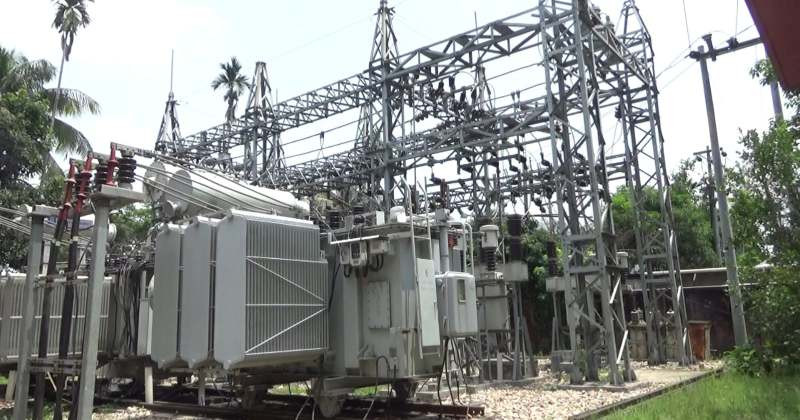
Alongside power generation, authorities have also taken steps to expand transmission capacity in the Mymensingh region. Under the Power Grid Network Strengthening Project, Power Grid Bangladesh is building a high capacity transmission line connecting Kaliakair with Shambhuganj. A new substation is also under construction at Shambhuganj. If local power generation remains insufficient, this transmission infrastructure will allow more electricity to reach Mymensingh from other parts of the country. However, work on this transmission expansion project is moving slower than scheduled. The project was originally set to finish in June last year. Its deadline has since been extended to June 2027.
According to the latest update, physical progress on the project stood at 74 percent as of September. Mr. Md. Zahurul Islam of the Power Development Board said construction of the substation has already finished, and work on the related transmission lines is ongoing. He said completing the transmission line would allow more electricity to flow into the Mymensingh region from the national grid.
Overall, three key factors drive Mymensingh’s power crisis: limited local generation, gas supply shortages, and constraints in transmission capacity. If authorities can complete the new power plant and pipeline while ensuring adequate gas supply and finishing the transmission infrastructure, the region’s long running load shedding problem could see improvement.